
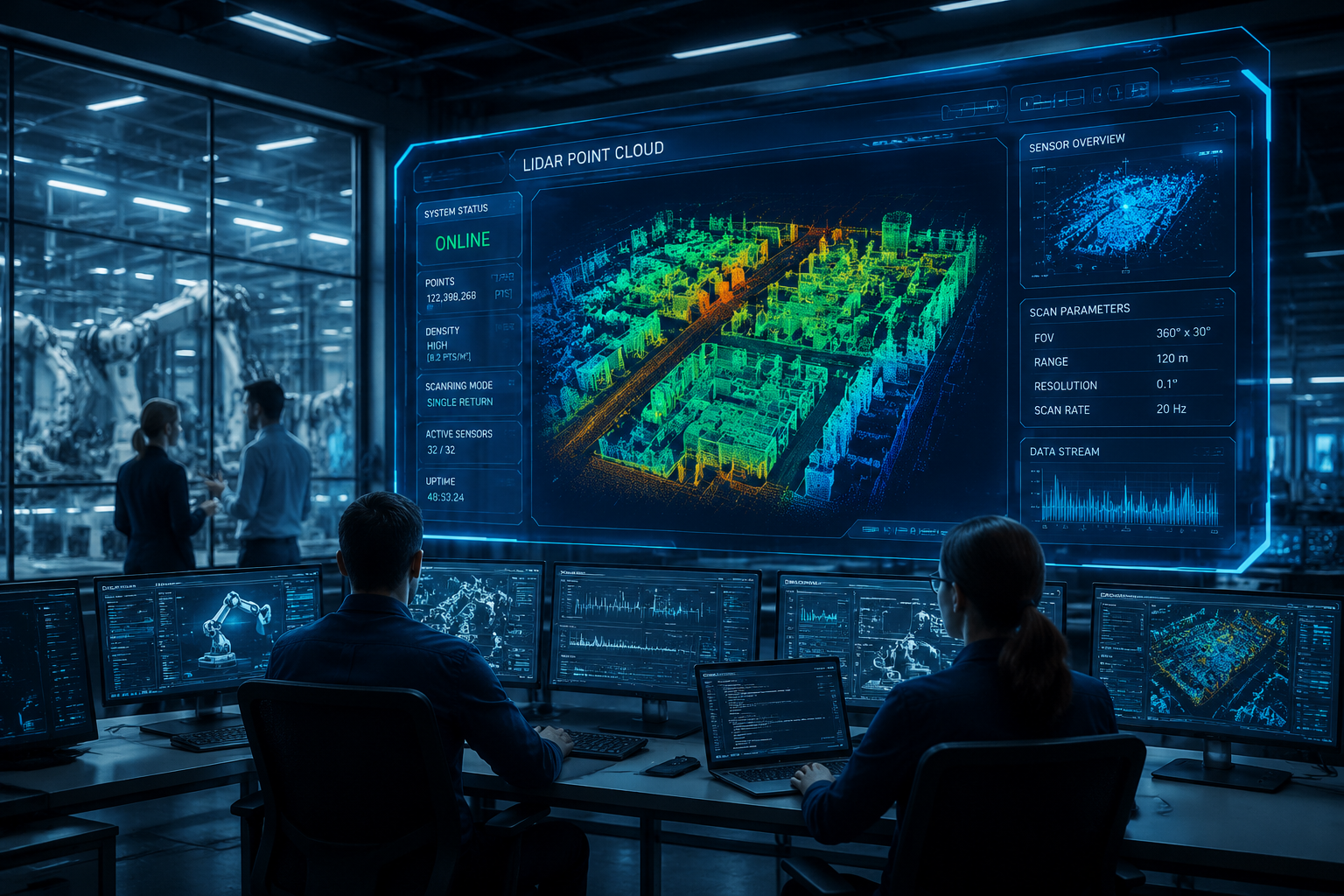
Introduction: Why LiDAR Selection Matters More Than Ever in 2026
As robotics, autonomous systems, and industrial automation continue to scale globally, LiDAR has become a foundational sensing technology for machine perception.
However, the challenge in 2026 is no longer whether LiDAR is useful — but which LiDAR system fits a specific application environment.
Different industries now demand different combinations of:
- Range
- Resolution
- Cost efficiency
- Environmental robustness
- Software integration capability
This guide provides a practical, engineering-focused framework to help you select the right LiDAR system based on real-world deployment needs.
1. Understanding the Three Main LiDAR Architectures
Modern LiDAR systems generally fall into three categories, each optimized for different use cases.
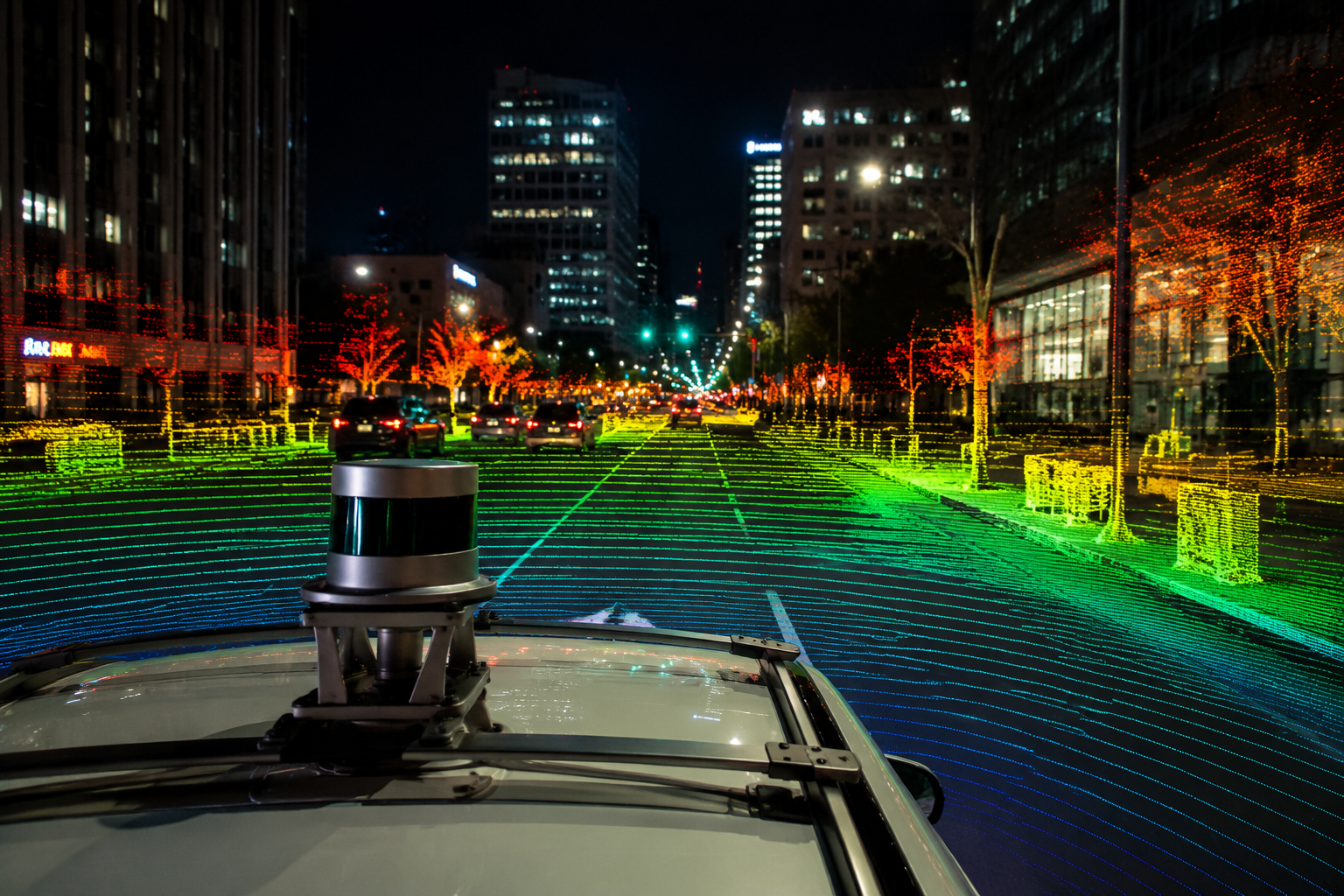
1.1 Mechanical Spinning LiDAR
Mechanical LiDAR remains widely used due to its:
- Long detection range
- High angular coverage
- Mature performance in outdoor environments
It is commonly deployed in:
- Autonomous driving systems
- Large-scale mapping projects
- Outdoor robotics platforms
However, the presence of moving parts introduces mechanical wear and maintenance considerations.
1.2 Solid-State LiDAR
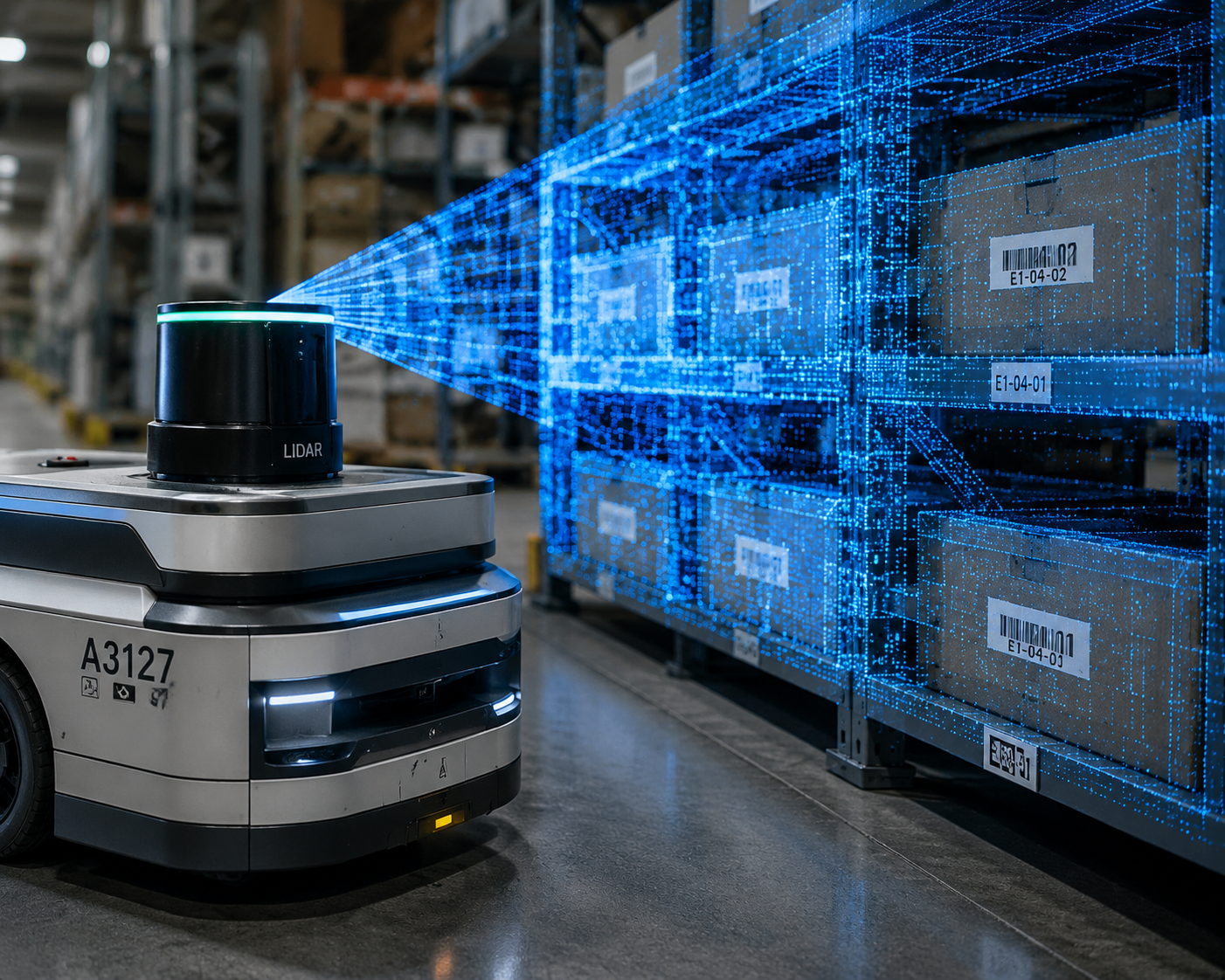
Solid-state LiDAR eliminates moving mechanical components, offering:
- Higher durability
- Compact form factor
- Lower maintenance requirements
It is widely used in:
- AMR (Autonomous Mobile Robots)
- Factory automation
- Indoor navigation systems
Its tradeoff is often reduced range compared to high-end mechanical systems.
1.3 MEMS-Based LiDAR
MEMS LiDAR provides a balance between cost and performance:
- Fast scanning response
- Lower power consumption
- Flexible integration into compact systems
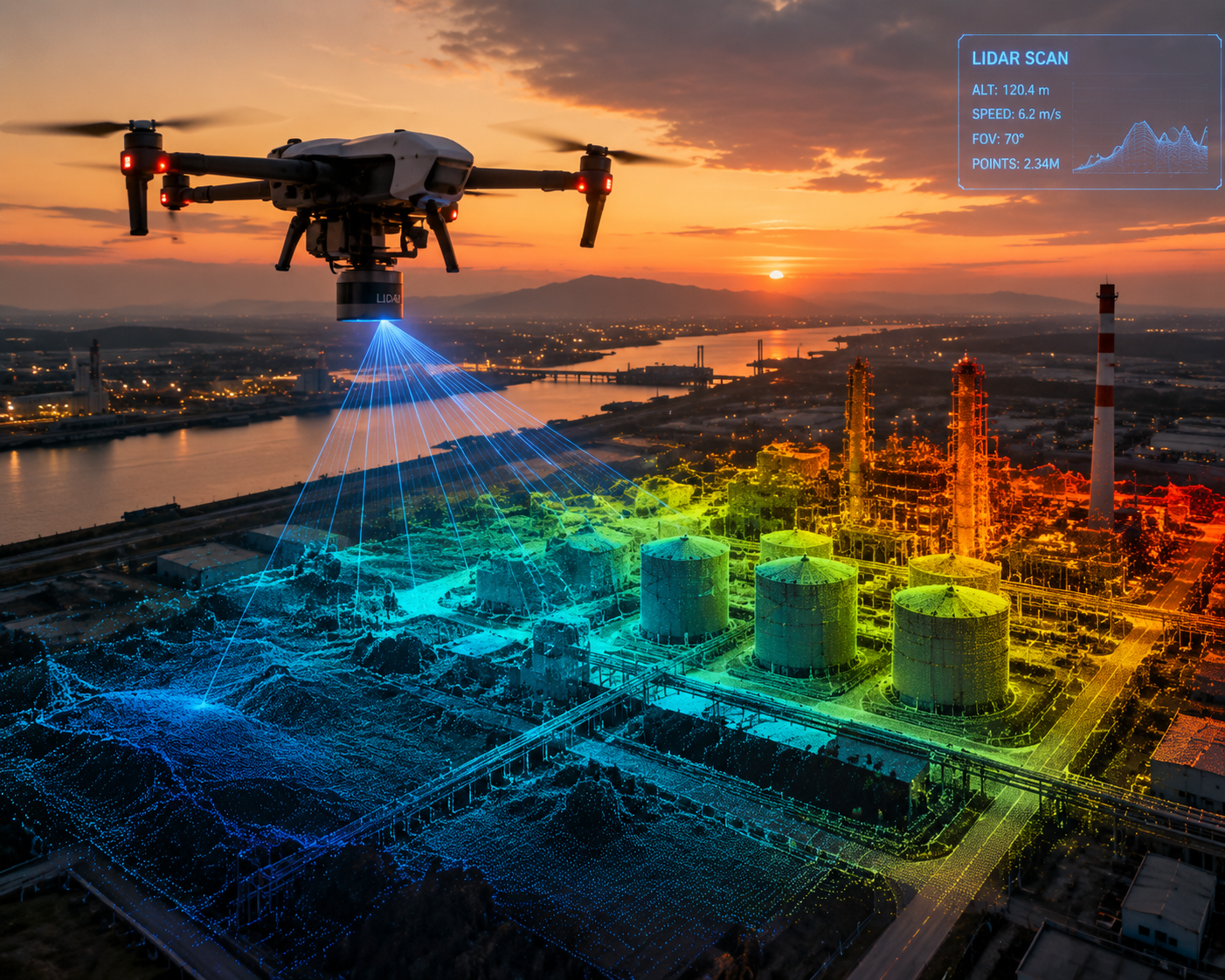
Typical applications include:
- Drones
- Consumer robotics
- Smart devices
2. Key Engineering Factors for LiDAR Selection
Selecting LiDAR is not about choosing the most advanced specification, but the best system match for operational requirements.
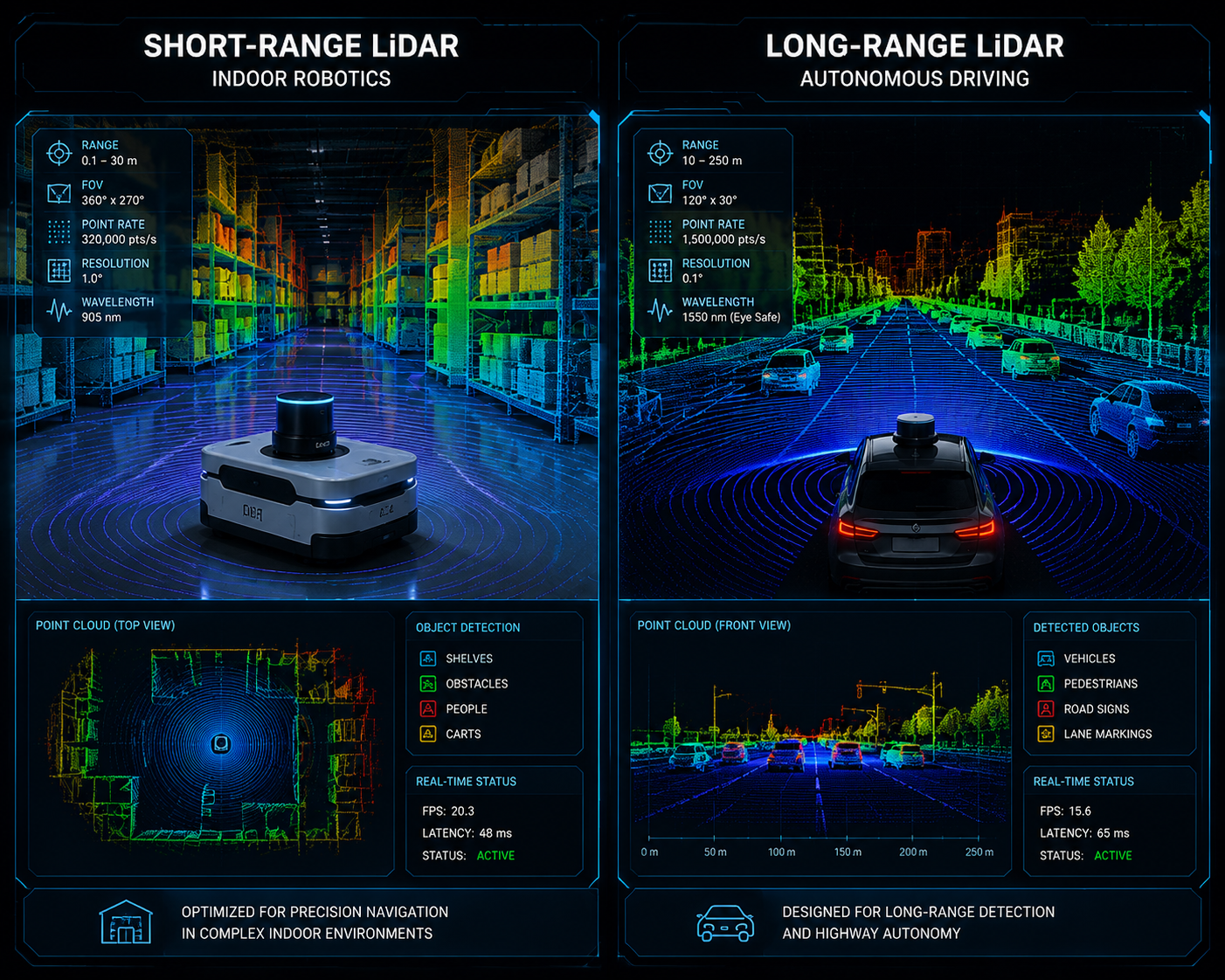
2.1 Detection Range vs Application Scale
Different environments require different sensing ranges:
- 5–30m → Indoor robotics / warehouse automation
- 30–100m → Industrial inspection / outdoor AMR
- 100m+ → Autonomous driving / large-scale mapping
Long-range performance is critical for safety and prediction in dynamic environments.
2.2 Point Cloud Density and Resolution
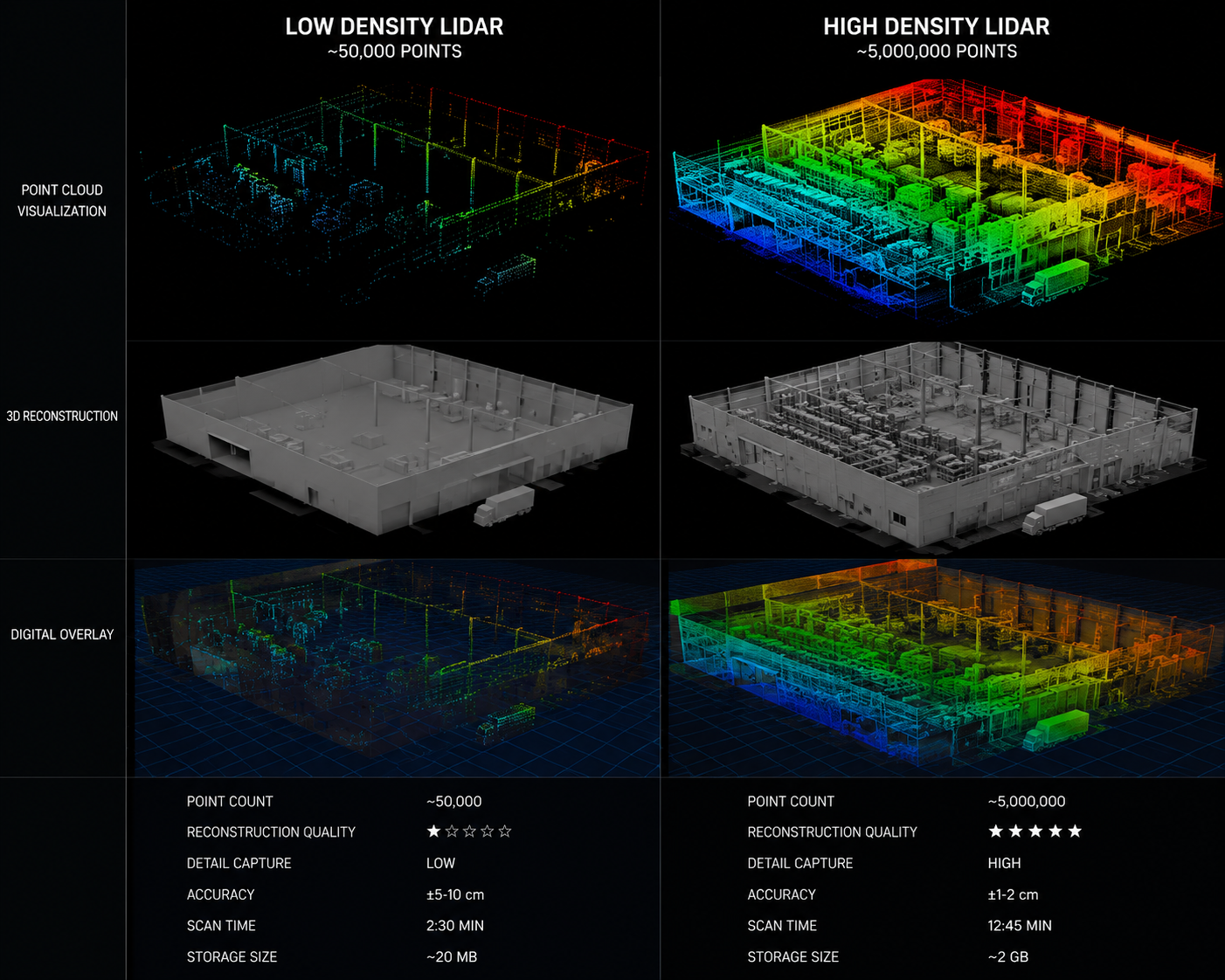
Higher resolution LiDAR provides richer environmental detail but increases processing load.
- High density → Mapping, SLAM, autonomous navigation
- Medium density → Inspection and obstacle avoidance
- Low density → Basic detection systems
Trade-off between computation cost and perception accuracy must be considered.
2.3 Environmental Robustness
Real-world deployment conditions include:
- Dust and fog
- Rain and humidity
- Strong vibrations in industrial environments
Industrial-grade LiDAR must maintain stable performance under these conditions.
🖼️ Image Prompt:
Industrial robot operating in dusty factory environment while LiDAR system continues scanning accurately, environmental particles visible, protective sensor housing, dramatic lighting, realistic engineering scene
2.4 Software Ecosystem and Integration
Modern LiDAR is no longer just hardware — it is part of a perception system.
Key integration factors include:
- ROS compatibility
- SLAM support
- SDK and API flexibility
- AI perception pipeline integration
3. Real-World Application Scenarios
Understanding application context is essential for selecting the right LiDAR system.
3.1 Industrial Robotics and AMR Navigation
In warehouse and factory environments, LiDAR enables:
- Real-time obstacle detection
- Autonomous navigation
- Path optimization
Solid-state LiDAR is often preferred due to reliability and compact size.
3.2 Infrastructure and Construction Monitoring
LiDAR is widely used in:
- Tunnel scanning
- Road deformation analysis
- Construction progress tracking
High-resolution systems enable accurate 3D reconstruction of complex environments.
3.3 Energy and Utility Inspection
In solar, wind, and power infrastructure:
- Automated inspection drones
- Fault detection
- Predictive maintenance systems
LiDAR improves safety and reduces manual inspection costs.
4. Common Mistakes in LiDAR Selection
Many procurement decisions fail due to avoidable errors:
❌ Choosing based only on price
Low-cost sensors may reduce short-term spending but increase integration and maintenance costs.
❌ Ignoring software ecosystem
Hardware without strong software support limits scalability.
❌ Over-specifying requirements
Over-engineering leads to unnecessary cost and system complexity.
5. Practical LiDAR Selection Framework (2026 Model)
A simplified decision framework:
- Autonomous driving → Long-range spinning LiDAR
- Industrial robotics → Solid-state LiDAR
- Cost-sensitive embedded systems → MEMS LiDAR
The optimal choice always depends on system architecture, not specifications alone.
Conclusion: From Sensors to Intelligent Perception Systems
LiDAR has evolved from a standalone sensor into a critical component of intelligent perception systems powering robotics, automation, and smart infrastructure.
In 2026, successful system design depends on understanding not just sensor specifications, but full-stack integration:
- Environment
- System architecture
- Data processing capability
- Long-term scalability
The right LiDAR selection ultimately defines the reliability and intelligence of the entire autonomous system.









