

Introduction: Why LiDAR Supply Planning Matters for Enterprise Projects

For automotive suppliers, robotics manufacturers, and industrial automation companies, selecting the right LiDAR sensor is only one part of a successful project.
A sensor may meet every technical requirement during initial testing, but what happens when the project moves from prototype development to pilot production and large-volume procurement?
Can the same model be supplied consistently? Are sufficient quantities available? Will the supplier maintain realistic delivery schedules? What happens if a product becomes discontinued or its production lead time changes?
These questions are particularly important for companies developing autonomous mobile robots (AMRs), automated guided vehicles (AGVs), autonomous driving systems, industrial equipment, and intelligent perception platforms.
A supply interruption involving one critical sensor can affect engineering schedules, production planning, customer delivery commitments, and overall project costs.
For this reason, professional procurement teams should evaluate LiDAR supply capabilities alongside technical specifications and commercial pricing.
This guide explains how OEMs and enterprise buyers can reduce LiDAR sourcing risks and build a more reliable procurement strategy.
1. Understand the Different Stages of LiDAR Procurement
One common procurement mistake is treating prototype purchasing and production purchasing as the same activity.
In reality, LiDAR requirements often change as a project progresses.
Stage 1: Engineering Evaluation
At the beginning of a project, engineering teams typically need a limited number of sensors to evaluate:
- Measurement performance
- Detection range and field of view
- Point cloud quality
- Interface compatibility
- Software integration
- Environmental performance
At this stage, buyers should prioritize product availability, technical documentation, and sample delivery.
A supplier should help verify that the proposed model matches the actual engineering requirements.
Stage 2: Prototype and Pilot Production
After initial evaluation, the project may move into prototype development or pilot production.
Purchasing requirements become more demanding.
Companies may need multiple units within a relatively short period, sometimes across different development locations.
Important considerations include:
- Availability of additional units
- Consistency of model and hardware revision
- Repeat-order pricing
- Delivery coordination
- Technical support during integration
Procurement teams should avoid assuming that successful sample delivery automatically guarantees the same availability for future orders.
Stage 3: Volume Procurement and Production
When a project enters commercial production, supply planning becomes even more important.
Buyers may need to coordinate:
- Monthly or quarterly purchasing forecasts
- Multiple delivery batches
- Production schedules
- Inventory planning
- Long-term product availability
- Replacement and after-sales arrangements
For larger projects, procurement teams should discuss anticipated demand with their suppliers before issuing individual purchase orders.
Early communication makes it easier to identify potential supply constraints.
2. Verify Actual Product Availability Before Issuing a Purchase Order
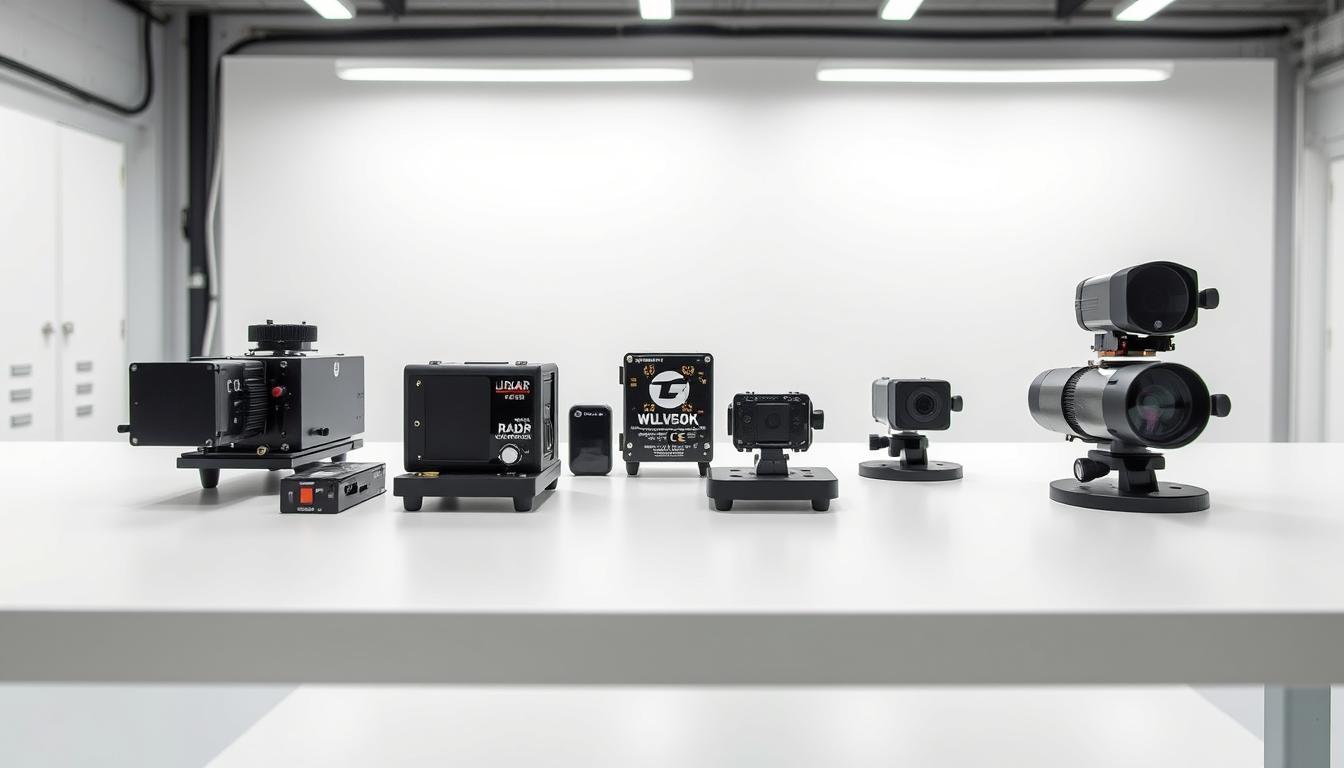
Product availability is one of the most important factors in LiDAR procurement.
However, statements such as “available soon” or “normally ships within two weeks” are not sufficient for projects with strict delivery deadlines.
Buyers should request clear information about the current supply situation.
Five Questions to Ask Your LiDAR Supplier
1. Is the requested model physically in stock?
Ask whether the quoted quantity is currently available or needs to be sourced from the manufacturer.
2. Is the available stock sufficient for the complete order?
A supplier may have a limited quantity available even when the requested order is much larger.
3. What is the estimated replenishment lead time?
If additional units are required, ask for the estimated procurement and delivery timeline.
4. Can the order be delivered in multiple batches?
For some projects, partial delivery can help engineering and production teams maintain their schedules.
5. How long can the quoted availability be maintained?
Inventory can change quickly. Buyers should confirm stock again before payment and final order confirmation.
A professional quotation should distinguish between confirmed inventory, expected replenishment, and estimated future availability.
This distinction helps purchasing teams make realistic decisions.
3. Build a Multi-Brand Sourcing Strategy
Relying on a single LiDAR manufacturer may create unnecessary supply risks, particularly when a project requires specialized sensors or large quantities.
Different manufacturers offer different product portfolios, technologies, interfaces, and supply arrangements.
Depending on the application, procurement teams may evaluate products from:
- Hesai
- RoboSense
- Seyond
- Livox
- Other industrial and automotive LiDAR manufacturers
However, multi-brand sourcing does not mean replacing one sensor with another without engineering approval.
Different LiDAR models may have significant differences in:
- Detection range
- Field of view
- Point cloud characteristics
- Measurement performance
- Communication interfaces
- Software development kits
- Mechanical dimensions
- Environmental specifications
Before considering an alternative product, engineering teams should establish the essential technical requirements.
A useful approach is to separate requirements into three categories:
| Requirement | Evaluation Priority |
|---|---|
| Critical performance requirements | Must meet |
| System integration requirements | Must be validated |
| Commercial and supply preferences | Can be compared |
This allows procurement teams to explore alternative sourcing options without compromising system performance.
For OEM projects, any proposed replacement should undergo the required engineering validation before approval.
4. Manage Product Lifecycle and Discontinuation Risks
Product lifecycle management is particularly important in automotive and industrial applications.
A LiDAR model selected during the development stage may not remain available throughout the entire commercial lifecycle of a project.
Manufacturers may introduce upgraded versions, revise hardware configurations, or discontinue older products.
This can create challenges for companies that have already completed integration and validation.
What Procurement Teams Should Check
Before selecting a LiDAR model for long-term use, consider requesting:
- Current product lifecycle status
- Product revision information
- Discontinuation announcements, if available
- Recommended replacement models
- Hardware compatibility information
- Software and SDK support status
- Expected availability for future purchasing
For example, when a manufacturer announces a product upgrade, buyers should not automatically assume that the new version is a direct replacement.
Engineering teams should verify mechanical, electrical, software, and performance compatibility.
For ongoing production projects, early notification of product changes can help reduce unexpected redesign and revalidation costs.
5. Reduce Delivery Risks Through Better Order Planning
International LiDAR procurement often involves several stages, including supplier confirmation, product preparation, export arrangements, international transportation, and destination customs clearance.
Poor coordination between these stages can result in missed delivery targets.
Establish a Clear Delivery Schedule
For larger purchasing projects, buyers should request a delivery plan that includes:
- Purchase order confirmation
- Product availability verification
- Estimated preparation time
- Expected dispatch date
- Shipping method
- Estimated transportation time
- Destination delivery arrangements
If the order cannot be fulfilled in one shipment, discuss partial deliveries.
For example, a robotics manufacturer may require an initial batch for engineering validation, followed by additional quantities for pilot production.
Splitting deliveries may help maintain project progress, provided the additional logistics costs and delivery conditions are agreed upon.
Consider International Shipping Terms
Buyers should also clarify the Incoterms used in the quotation.
For international LiDAR shipments, common arrangements may include:
- EXW
- FCA
- CPT
- CIP
- DAP
- DDP, where available and appropriate
The chosen Incoterm affects the allocation of transportation responsibilities, costs, risks, and customs-related obligations.
For example, under DAP, the seller arranges delivery to the named destination, while the buyer generally handles import clearance and applicable import duties and taxes.
Always confirm the named destination and the precise costs included in the quotation.
6. Evaluate the Supplier’s Ability to Support Long-Term Projects
A competitive unit price is important, but it should not be the only factor in supplier selection.
For OEMs and industrial customers, a reliable sourcing partner should provide clear communication and practical support throughout the purchasing process.
Key Supplier Evaluation Criteria
| Evaluation Area | What Buyers Should Verify |
|---|---|
| Product sourcing | Ability to identify and source requested models |
| Availability | Clear stock and replenishment information |
| Quotation | Transparent pricing and commercial terms |
| Delivery | Realistic and communicated lead times |
| Documentation | Access to relevant technical and commercial documents |
| Technical support | Ability to assist with product-related questions |
| After-sales service | Clear warranty and RMA arrangements |
| Communication | Timely responses and clear order updates |
It is also useful to understand the supplier’s actual business role.
A manufacturer, authorized distributor, independent sourcing company, and trading supplier may operate under different commercial arrangements.
Buyers should understand where products are sourced, which documentation is available, and who is responsible for order fulfillment and after-sales coordination.
Clear supplier information reduces misunderstandings during procurement and supplier qualification.
7. How to Prepare a More Effective LiDAR Purchasing Forecast

A purchasing forecast helps suppliers understand future requirements and evaluate whether the expected demand can be supported.
Instead of requesting quotations for isolated orders, OEMs and integrators can provide an estimated procurement schedule.
A useful forecast may include:
| Information | Example |
|---|---|
| Product model | Hesai AT128 |
| Initial sample quantity | 2 units |
| Pilot order | 10 units |
| Estimated production demand | 50 units |
| Expected purchasing period | Quarterly |
| Delivery destination | United States |
| Target delivery schedule | Based on project milestones |
These figures are illustrative only.
A forecast does not need to be a firm purchase commitment. It provides an initial basis for supply planning and commercial discussion.
For projects involving several LiDAR models, each model should have a separate quantity and delivery estimate.
This helps suppliers assess sourcing requirements and identify potential delivery constraints earlier.
8. Why Total Procurement Cost Matters More Than Unit Price
When comparing LiDAR suppliers, procurement teams should evaluate the total purchasing cost rather than focusing exclusively on the quoted unit price.
A lower unit price may not represent the most economical option if the supplier cannot meet the required delivery schedule or provide the necessary documentation.
Total procurement cost may include:
- Product purchase price
- International freight
- Insurance, where applicable
- Customs duties and import taxes
- Customs clearance charges
- Local delivery costs
- Engineering integration expenses
- Potential replacement and maintenance costs
For large-volume projects, even small differences in delivery arrangements or product availability can influence overall project economics.
A structured quotation comparison helps purchasing teams evaluate suppliers on a consistent basis.
9. How LIDARSEEK Supports LiDAR Sourcing for Enterprise Projects
LIDARSEEK provides LiDAR and intelligent perception product sourcing support for international customers across automotive, robotics, industrial automation, and autonomous system applications.
Our portfolio includes products from multiple manufacturers and covers different LiDAR technologies and application requirements.
We understand that enterprise purchasing involves more than identifying a product with suitable specifications.
Customers may also need assistance with availability checks, quantity-based quotations, delivery coordination, and technical documentation.
Our support includes:
Multi-Brand Product Sourcing
We help customers identify relevant LiDAR models across different manufacturers based on their project requirements.
Availability Verification
We check product availability and estimated replenishment lead times before order confirmation.
B2B Quotations
We prepare quotations based on the requested model, quantity, delivery destination, and applicable commercial terms.
Batch Delivery Coordination
For projects involving multiple units or phased purchasing, we can discuss available supply arrangements and delivery options.
Technical Information and Support
We assist customers in obtaining relevant datasheets, specifications, interface information, and available integration resources.
Whether you are purchasing a few units for prototype development or planning a larger order for production, early communication helps us evaluate the sourcing requirements more effectively.
Conclusion: Treat LiDAR Supply Planning as Part of Project Planning
For automotive OEMs, Tier 1 suppliers, robotics manufacturers, and industrial automation companies, LiDAR procurement should be considered an important part of overall project planning.
A suitable sensor must meet technical requirements, but a successful purchasing strategy must also consider availability, product lifecycle, delivery schedules, documentation, and long-term support.
By verifying stock, understanding replenishment lead times, preparing purchasing forecasts, and evaluating suppliers carefully, companies can reduce avoidable procurement risks.
The best time to discuss supply requirements is before a project reaches its most demanding production stage.
Planning a LiDAR Purchase for Your Next Project?
LIDARSEEK supports international B2B customers sourcing Hesai, RoboSense, Seyond, Livox, and other LiDAR products.
Send us your requested model, estimated quantity, application, and delivery destination.
Our team can help check availability, prepare a quotation, and discuss suitable sourcing and delivery arrangements.
Contact LIDARSEEK
Email: lidarseektech@gmail.com
Website: https://lidarseek.com/
Request a Quote | Check Product Availability | Discuss Bulk Purchasing









