
When sourcing LiDAR sensors for a robotics or autonomous system project, requesting a quotation may seem straightforward. Simply send the product model and quantity, receive a price, and place an order.
However, professional LiDAR procurement is rarely that simple.
A quotation based on incomplete technical information can lead to incorrect product configurations, missing accessories, unexpected delivery costs, software compatibility issues, or delays during project integration.
For robotics OEMs, AMR and AGV manufacturers, autonomous driving developers, and industrial system integrators, a well-prepared Request for Quotation (RFQ) can significantly improve supplier communication and purchasing efficiency.
Whether you are purchasing one sensor for prototype development or hundreds of units for production, this guide explains the 12 essential details to include in a LiDAR RFQ.
1. Specify the Exact LiDAR Model or Required Performance

Start by identifying the LiDAR model you want to purchase.
If your engineering team has already selected a product, provide the complete model name and version.
For example:
- Hesai JT128
- Hesai AT128
- RoboSense Airy
- RoboSense B-Pearl
- Livox MID-360S
- Seyond Robin W
Do not assume that similar product names or product families have identical specifications.
Different models may have different detection capabilities, interfaces, mechanical dimensions, firmware versions, or accessories.
If you have not selected a specific model, provide your application requirements instead.
A qualified supplier should be able to help identify suitable alternatives across different product brands.
Procurement tip: Ask suppliers to confirm the exact model and configuration in their quotations. This helps prevent misunderstandings when comparing offers from multiple vendors.
2. Describe Your Application and Operating Environment
A LiDAR suitable for one robotics application may not be appropriate for another.
Explain how and where the sensor will be used.
Common applications include:
| Application | Typical Requirements |
|---|---|
| Indoor AMR | Navigation, mapping, obstacle detection |
| Industrial AGV | Positioning, navigation, defined-area detection |
| Outdoor Mobile Robot | Environmental perception, wider coverage |
| Robot Dog | 3D perception, terrain awareness |
| Autonomous Vehicle | Long-range environmental perception |
| Warehouse Automation | Pallet detection, obstacle avoidance |
| Drone Mapping | Lightweight sensing and 3D reconstruction |
Also specify the operating environment:
- Indoor or outdoor operation
- Temperature range
- Exposure to dust, water, or vibration
- Lighting and weather conditions
- Mounting height and installation position
These details help suppliers assess whether a sensor’s specifications are suitable for the intended application.
3. Define Detection Range and Field of View Requirements
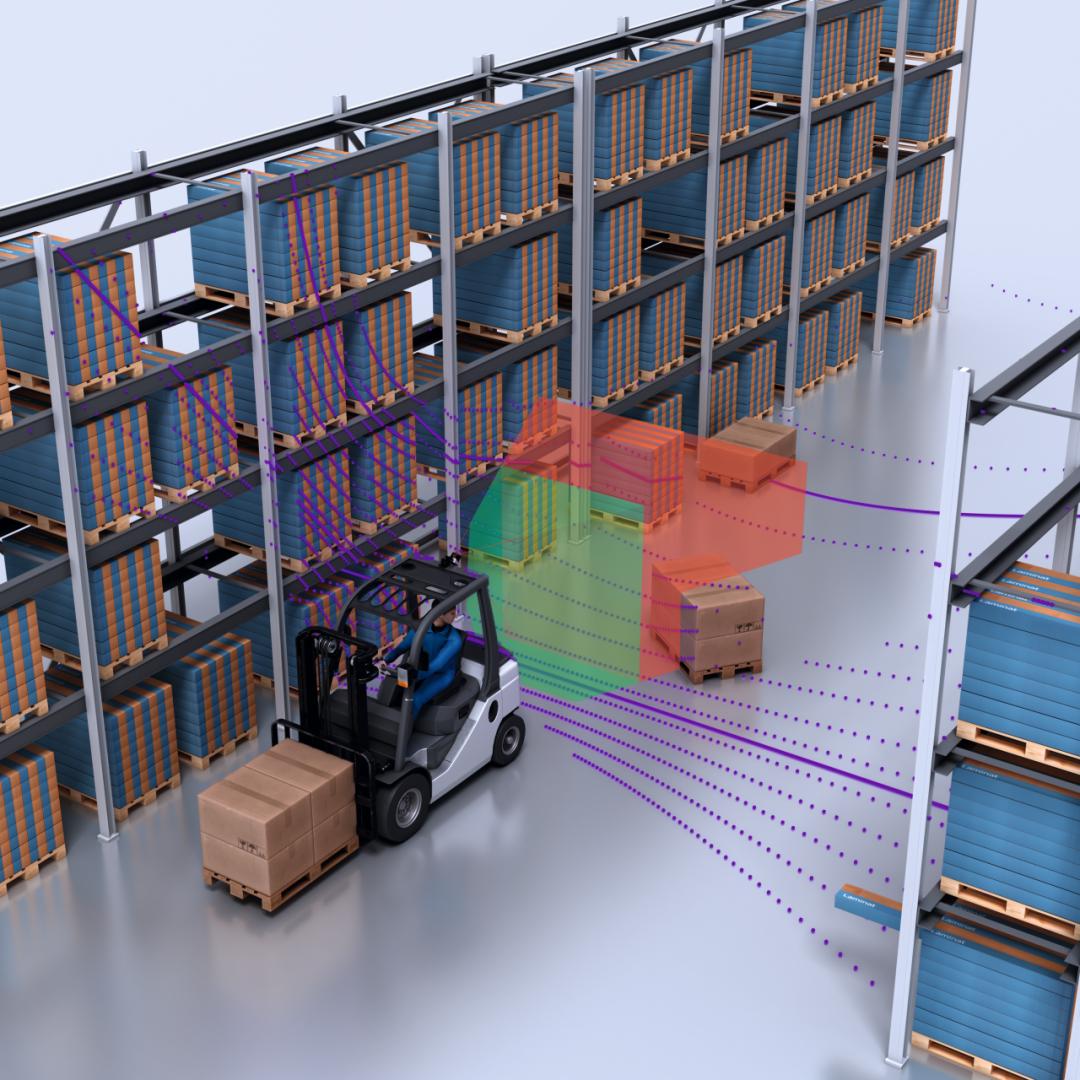
Detection range and field of view (FOV) are among the most important specifications when selecting LiDAR.
However, maximum detection range alone does not determine whether a sensor is suitable.
Consider the following:
- Required detection distance
- Horizontal field of view
- Vertical field of view
- Angular resolution
- Performance at different target reflectivities
- Near-field detection requirements
- Blind zones caused by installation geometry
For example, a mobile robot operating in a warehouse may need reliable detection of nearby pallets, low obstacles, and people.
An outdoor autonomous vehicle may require different coverage and detection performance.
When comparing sensors, make sure that range specifications are evaluated under comparable target reflectivity and measurement conditions.
Important: Always refer to the manufacturer’s datasheet for the exact test conditions behind advertised performance figures.
4. Confirm Communication Interfaces and Electrical Requirements
Hardware compatibility is essential before purchasing.
Include the following information in your RFQ:
| Parameter | Information to Confirm |
|---|---|
| Power supply | Required input voltage |
| Power consumption | Typical and maximum consumption |
| Communication | Ethernet, CAN, or other supported interface |
| Connector | Connector type and pinout |
| Data output | Supported output protocols |
| Mechanical dimensions | Sensor size and mounting requirements |
| Protection rating | IP rating, where applicable |
For Ethernet-based LiDAR sensors, also check network configuration and data transmission requirements.
For embedded robotics systems, verify that the sensor can operate with the intended onboard computing platform.
5. Specify Your Software and Development Environment
A sensor may meet the hardware requirements but still require significant engineering work if its software interface does not match the existing system.
Before requesting a quotation, identify your development environment.
For example:
- ROS or ROS 2
- Ubuntu Linux
- NVIDIA Jetson
- x86 industrial computer
- Custom embedded platform
- Proprietary perception software
Ask whether the relevant SDKs, drivers, sample code, API documentation, and integration manuals are available.
If your system uses multiple sensors, also consider synchronization requirements.
For projects combining LiDAR, cameras, IMUs, and GNSS, timing and coordinate-frame management may be important parts of the integration process.
A supplier should help clarify available product documentation and identify any known compatibility limitations.
6. Confirm Accessories and Complete Product Configuration
One common procurement mistake is requesting a quotation for the sensor without confirming the required accessories.
Depending on the model, the complete purchasing requirement may include:
- Power cables
- Data cables
- Interface boxes
- Mounting brackets
- Connectors
- Protective components
- Development accessories
Some accessories may be optional, while others may be necessary for installation or operation.
Ask suppliers to specify exactly what is included in the quoted price.
This makes it easier to compare quotations accurately and reduces the risk of unexpected additional purchases.
7. Provide the Estimated Order Quantity
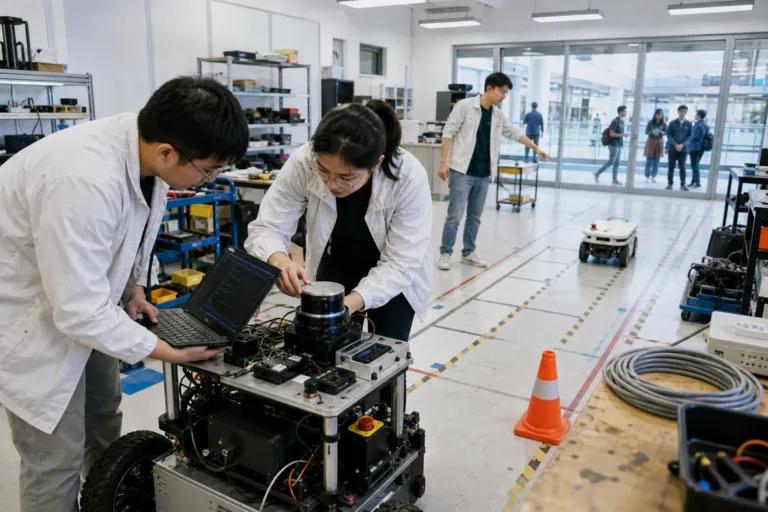
Order quantity directly affects purchasing arrangements.
A professional RFQ should distinguish between prototype requirements and future production demand.
For example:
| Purchasing Stage | Example Quantity |
|---|---|
| Initial evaluation | 1–2 units |
| Prototype development | 2–10 units |
| Pilot production | 10–50 units |
| Production deployment | 50–500+ units |
These are illustrative purchasing stages, not fixed industry standards.
If your project requires several delivery batches, explain the expected quantities and schedule.
For example:
- Initial evaluation: 2 units
- Engineering validation: 10 units
- First production batch: 50 units
- Subsequent orders: Based on production demand
This allows suppliers to evaluate stock availability, sourcing arrangements, and potential volume pricing.
For larger projects, ask whether batch delivery can be arranged.
8. Request Current Stock Availability and Realistic Lead Time
Product availability is particularly important when a robotics project has a fixed development or deployment deadline.
Do not rely only on a general statement such as “available” or “in stock.”
Ask suppliers to clarify:
- Current available quantity.
- Whether the stock is physically available.
- Whether the requested quantity can be allocated.
- Estimated lead time for additional quantities.
- Whether partial shipments are possible.
- Estimated dispatch date after payment and order confirmation.
For projects involving hundreds of sensors, confirm the delivery plan before finalizing procurement.
A supplier’s ability to communicate realistic supply arrangements can be just as important as the quoted unit price.
9. Confirm Warranty and Technical Support
LiDAR procurement should include more than product delivery.
For engineering projects, technical support can be important during installation, testing, and integration.
Before ordering, clarify:
- Warranty period and applicable terms
- Product documentation availability
- Technical troubleshooting support
- Software and SDK resources
- After-sales communication channels
- Procedures for handling defective products
For larger OEM projects, establish how technical questions and product issues will be communicated and handled.
It is also useful to confirm whether support is available during prototype testing and subsequent production deployment.
10. Specify Destination and Shipping Requirements
International procurement requires accurate shipping information.
When requesting a quotation, provide:
- Destination country
- City
- Postal code
- Complete delivery address, when available
- Preferred shipping method
- Required delivery deadline
Ask suppliers to distinguish between product cost and shipping cost.
You should also confirm the applicable Incoterms.
For example:
DAP (Delivered at Place)
Under DAP, the seller arranges transportation and bears the risk until the goods are made available at the named destination, ready for unloading.
The buyer generally handles import customs clearance, import duties, and applicable taxes.
Make sure the quotation clearly identifies the named destination and the agreed commercial terms.
For urgent engineering projects, express shipping may be appropriate. Larger shipments may require other logistics arrangements.
11. Request a Complete and Comparable Quotation
When receiving offers from different suppliers, compare the same product configuration and commercial conditions.
A professional quotation should clearly identify:
| Quotation Item | What to Check |
|---|---|
| Product model | Exact model and version |
| Unit price | Price per unit |
| Quantity | Quoted order quantity |
| Accessories | Included and optional items |
| Availability | Current stock status |
| Lead time | Estimated dispatch schedule |
| Shipping | Freight cost and method |
| Incoterms | DAP, FCA, or other agreed terms |
| Warranty | Applicable warranty conditions |
| Payment | Payment terms |
| Validity | Quotation validity period |
Avoid comparing quotations based only on unit price.
A lower price may exclude essential accessories, shipping, or technical support.
The better purchasing decision is the quotation that meets your technical, commercial, and delivery requirements.
12. Prepare a Clear RFQ Before Contacting Suppliers
A complete RFQ helps suppliers respond more accurately and reduces unnecessary communication.
Below is a practical template that robotics OEMs and procurement teams can use.
LiDAR RFQ Template
Company Information
- Company Name:
- Contact Person:
- Business Email:
- Country:
- Company Website:
Product Requirements
- Preferred Brand:
- Required Model:
- Product Category: 2D / 3D / Automotive LiDAR
- Estimated Quantity:
- Required Accessories:
Application Information
- Application: AMR / AGV / Robotics / Autonomous Driving / Other
- Operating Environment: Indoor / Outdoor / Both
- Detection Range:
- Field of View:
- Required Interface:
- Development Platform: ROS / ROS 2 / NVIDIA Jetson / Other
Purchasing Requirements
- Required Delivery Date:
- Destination Country:
- Destination City:
- Preferred Shipping Method:
- Incoterms:
- Expected Future Demand:
Additional Requirements
- SDK or Driver Support:
- Technical Documentation:
- Warranty Requirements:
- Special Project Requirements:
You do not need to complete every field if your project is still at an early stage.
Even a brief description of your application, estimated quantity, and destination can help a supplier start the evaluation.
Why Work with a Specialized Multi-Brand LiDAR Supplier?
For robotics manufacturers and system integrators, sourcing from a specialized LiDAR supplier can simplify the purchasing process.
Instead of evaluating products from multiple manufacturers independently, customers can access different brands and product categories through one sourcing channel.
LIDARSEEK provides LiDAR sensors and intelligent perception products for:
- Robotics and autonomous mobile robots
- AGV and warehouse automation
- Autonomous driving and ADAS development
- Industrial automation
- Drone mapping and surveying
- AI vision and sensor development
Our product portfolio covers multiple LiDAR technologies and manufacturers, including Hesai, RoboSense, Livox, Seyond, and other sensing brands.
We support customers with:
Product Selection
Identify suitable LiDAR models based on application requirements, technical specifications, and project budgets.
Multi-Brand Sourcing
Compare available products from different manufacturers to find suitable options for your project.
Technical Consultation
Obtain product documentation and technical assistance for sensor evaluation and integration.
Project-Based Quotation
Request pricing based on your preferred model, estimated quantity, destination, and delivery schedule.
Support from Prototype to Production
Discuss sourcing arrangements for initial testing, engineering validation, and subsequent production requirements.
Frequently Asked Questions
1. Can I request a LiDAR quotation without knowing the exact model?
Yes. You can provide your application, operating environment, required detection range, and estimated quantity. A supplier can help identify suitable models.
2. Can I request quotations for multiple LiDAR brands?
Yes. Comparing different manufacturers can help engineering and procurement teams evaluate performance, availability, and purchasing costs.
3. Can suppliers support bulk LiDAR orders?
Bulk purchasing arrangements depend on the product, available stock, manufacturer supply conditions, and required delivery schedule. Confirm these details before placing an order.
4. What information is most important for getting an accurate LiDAR quotation?
The most important details are the exact model or technical requirements, quantity, application, required accessories, destination, and delivery schedule.
5. Can I receive technical support before purchasing?
Ask the supplier about available product documentation, SDKs, integration resources, and technical consultation before placing your order.
Request a LiDAR Quotation from LIDARSEEK
Planning a new robotics project or sourcing LiDAR sensors for production?
Send us your requirements, even if you have not finalized the sensor model.
Our team can help you evaluate suitable LiDAR options, check product availability, compare different brands, and prepare a project-based quotation.
To get started, please share:
- Your preferred LiDAR model or application
- Estimated quantity
- Destination country
- Required delivery schedule
Contact LIDARSEEK
Website: https://lidarseek.com/
Email: lidarseektech@gmail.com
WhatsApp: +86 159 5882 2714
LIDARSEEK – LiDAR Sensors and Intelligent Perception Solutions for Robotics, Autonomous Systems, and Industrial Applications.









