
Introduction
Choosing a LiDAR sensor for a robot can be difficult.
Product names can be confusing, specifications may vary between suppliers, and different projects require very different sensing capabilities.
Two products frequently considered by robotics developers are the Livox MID360 and Livox MID360S.
LidarSeek currently lists the MID360/MID360S product at approximately $749, with the product page presenting specifications for the MID360S.
So what should buyers look at when comparing these sensors?
The most important factors include:
- Range
- Field of view
- Accuracy
- Point-cloud output
- Frame rate
- Weight
- Power consumption
- Operating temperature
- Protection rating
- Software integration
Quick Comparison
| Parameter | Livox MID360 / MID360S |
|---|---|
| Laser Wavelength | 905 nm |
| Laser Safety | Class 1 Eye-Safe |
| Range | 40 m @ 10% / 70 m @ 80% reflectivity |
| Blind Spot | 0.1 m |
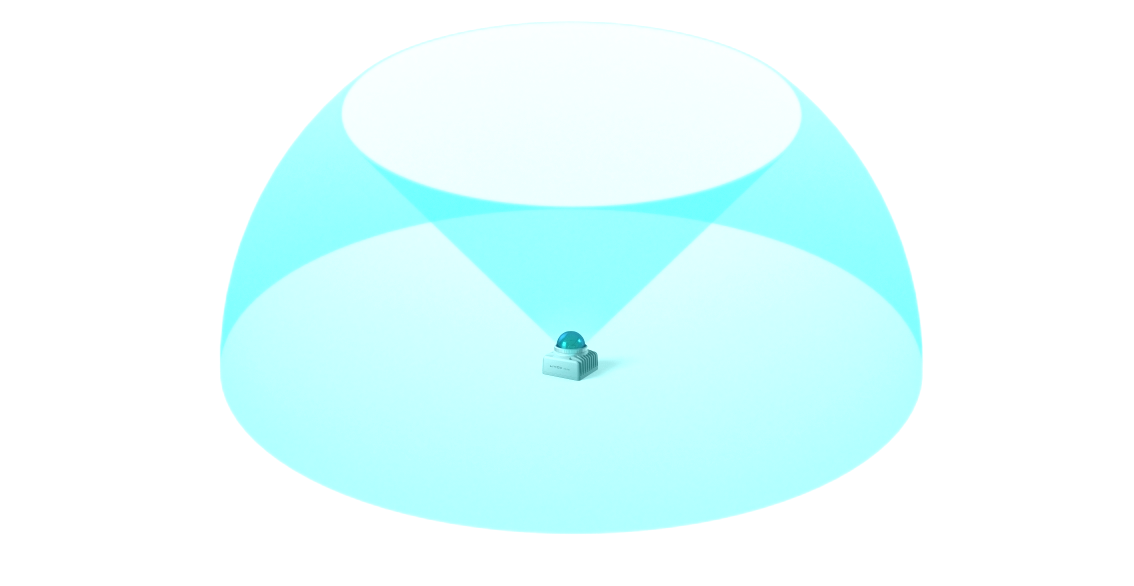
| Horizontal FOV | 360° |
| Vertical FOV | -7° to 52° |
| Frame Rate | 10 Hz |
| Accuracy | 1 cm (1σ) / 3 cm (3σ) |
| Weight | 265 g |
| Power | 6.5 W typical |
| Protection | IP67 |
| Operating Voltage | 9–32 V |
| Ethernet | UDP over Ethernet |
These specifications are from the current LidarSeek product listing.
MID360 vs MID360S: Why the Comparison Matters
For many buyers, the question is not simply which product has better specifications.
The more useful question is:
Which version best matches my application and purchasing requirements?
Robotics companies often need to purchase sensors for:
- Prototype development
- POC testing
- Small-batch production
- Large-scale robot deployment
Therefore, availability and procurement cost can be just as important as technical specifications.
360° Horizontal FOV
Both product naming and LidarSeek’s current listing emphasize the 360° horizontal coverage.
This is particularly valuable for mobile robots.
Imagine an AMR traveling through a warehouse.
The robot may encounter an obstacle from:
- Front
- Rear
- Left
- Right
A 360° horizontal perception system helps provide continuous environmental awareness.
This can reduce the need to install multiple directional sensors solely to cover the horizontal perimeter.
Detection Range
The current LidarSeek listing specifies:
40 m at 10% reflectivity
and
70 m at 80% reflectivity.
This illustrates an important point when comparing LiDAR specifications.
A LiDAR’s advertised maximum range should never be considered without looking at target reflectivity and environmental conditions.
A white reflective object may be detectable much farther away than a dark object.
Therefore, engineers should evaluate LiDAR range using realistic target conditions.
Blind Spot
The MID360S listing specifies a blind spot of approximately 0.1 m.
A small blind zone is particularly useful for compact robots.
If the sensor cannot detect objects very close to the robot, additional sensing technologies may be required.
For warehouse robots operating around shelves, pallets and people, near-field perception can be important.
Frame Rate
The current listing specifies a 10 Hz frame rate.
For autonomous navigation, update frequency matters because the robot’s perception system must continuously refresh its environmental model.
However, frame rate should be evaluated together with:
- Robot speed
- Point rate
- Processing latency
- Navigation algorithm
- Sensor placement
A higher frame rate alone does not automatically create a better perception system.
Accuracy
The current MID360S listing specifies:
1 cm (1σ) / 3 cm (3σ) accuracy.
This can be useful for applications involving:
- Mapping
- Localization
- Obstacle detection
- Robot navigation
For high-precision surveying applications, however, engineers should evaluate the complete system accuracy rather than relying only on the sensor’s ranging specification.
Size and Weight
The MID360 is designed to be compact.
The LidarSeek listing gives a weight of approximately 265 g and dimensions around 65 × 65 × 60 mm.
This is particularly attractive for:
- Small AMRs
- Mobile robots
- Research platforms
- Drones
- Compact autonomous machines
Every additional component on a mobile robot affects mechanical design, power consumption and payload.
Power Consumption
The current listing specifies approximately 6.5 W typical power consumption.
For battery-powered robots, this is an important consideration.
Lower sensor power consumption can contribute to:
- Longer battery life
- Smaller battery requirements
- Reduced thermal load
- Smaller robot design
For fleet operators, energy consumption also affects operating cost over time.
IP67 Protection
The MID360S product listing specifies IP67 protection.
This makes the product worth considering for applications where the sensor may encounter dust or water exposure.
Nevertheless, engineers should always evaluate actual operating conditions before deploying a sensor outdoors or in harsh industrial environments.
Livox MID360 for AMR
The MID360 is especially attractive for AMR applications because the robot often requires:
- 360° awareness
- Mapping
- Localization
- Obstacle avoidance
- Compact sensing hardware
For example, a warehouse AMR can use LiDAR data to construct a map and continuously estimate its position.
Livox MID360 for Industrial Robots
Industrial robots and mobile platforms can also use LiDAR for:
- Collision avoidance
- Navigation
- Factory mapping
- Autonomous transportation
- Safety monitoring
The appropriate sensor depends on the environment and safety architecture.
Livox MID360 for Mapping
The sensor can also be considered for 3D mapping applications.
The combination of wide FOV and 3D point-cloud output can help developers build spatial maps of:
- Warehouses
- Buildings
- Industrial facilities
- Robot operating environments
For professional surveying, however, the complete mapping system—including GNSS, IMU, calibration and processing—should be evaluated.
MID360 vs Automotive LiDAR
A common mistake is comparing all LiDAR sensors as if they serve the same purpose.
The MID360 is designed around applications such as robotics, mapping and industrial perception.
An automotive LiDAR designed for highway autonomous driving may prioritize:
- Longer range
- Automotive environmental requirements
- Higher point density
- Vehicle integration
- Advanced perception
Therefore:
MID360 is not necessarily “better” or “worse” than automotive LiDAR.
They are designed for different requirements.
Which One Should You Choose?
For most robotics developers, the decision can be simplified.
Choose MID360/MID360S when you need:
- 360° perception
- Compact hardware
- Moderate detection range
- Low power consumption
- Robotics integration
- Mapping
- Navigation
- Competitive cost
Consider another LiDAR when you need:
- Ultra-long range
- Automotive-grade highway perception
- Specialized surveying
- Extremely high point density
- Application-specific environmental performance
Why Purchase from LidarSeek?
LidarSeek focuses on affordable LiDAR procurement and provides products from multiple manufacturers.
The company’s catalog includes brands such as:
- Livox
- Hesai
- RoboSense
- Seyond
- LiShen
- Siminics
- SuTan
This allows buyers to compare different LiDAR technologies and price points.
For customers developing multiple robot platforms, this can simplify supplier evaluation.
Final Verdict
The Livox MID360/MID360S is a compelling option for robotics developers looking for a compact 3D LiDAR with:
- 360° horizontal coverage
- 40–70 m stated detection range depending on reflectivity
- 10 Hz frame rate
- 0.1 m blind zone
- 265 g weight
- IP67 protection
- Approximately 6.5 W typical power consumption
The most important step is not choosing a LiDAR based on specifications alone.
Instead:
Define your robot → define the environment → define range/FOV → calculate BOM → compare LiDAR options → test samples.
If you are currently evaluating MID360 or MID360S for an AMR, AGV or mapping project, contact LidarSeek for current pricing and availability.









