
Introduction
Modern robots need reliable environmental perception.
Whether the platform is an autonomous mobile robot, warehouse robot, humanoid robot, industrial vehicle or service robot, the robot needs to understand its surroundings before it can navigate safely.
LiDAR is one of the most important technologies for this task.
However, robotics developers face a major challenge:
Which LiDAR should we choose?
The answer depends on the robot’s size, operating environment, required perception range, field of view, computing platform and project budget.
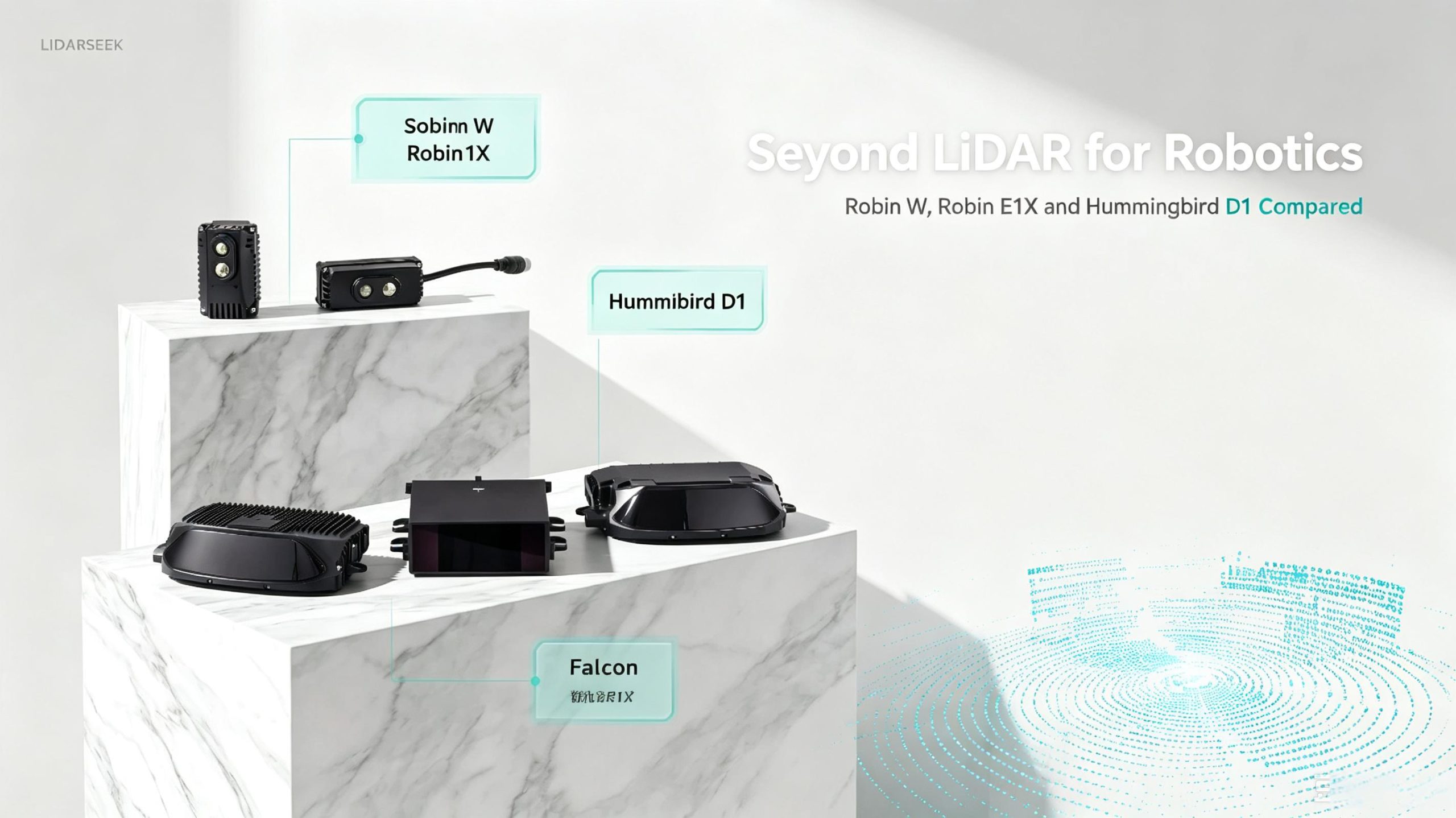
Seyond offers several LiDAR products that can be considered for robotics applications.
LidarSeek currently lists:
The current listed prices are approximately $1,725, $1,725 and $1,229 respectively.
Why LiDAR Is Important for Modern Robots
Robots operating in real-world environments need more than simple distance measurement.
They need to understand:
- Obstacles
- People
- Walls
- Vehicles
- Objects
- Free space
- Navigation corridors
- Dynamic objects
A LiDAR sensor can provide 3D spatial information that can be used by robotics software for:
- SLAM
- Obstacle avoidance
- Localization
- Navigation
- Mapping
- Object detection
- Autonomous driving
This makes LiDAR particularly useful for AMRs and autonomous mobile platforms.
Seyond Robotics LiDAR Price Comparison
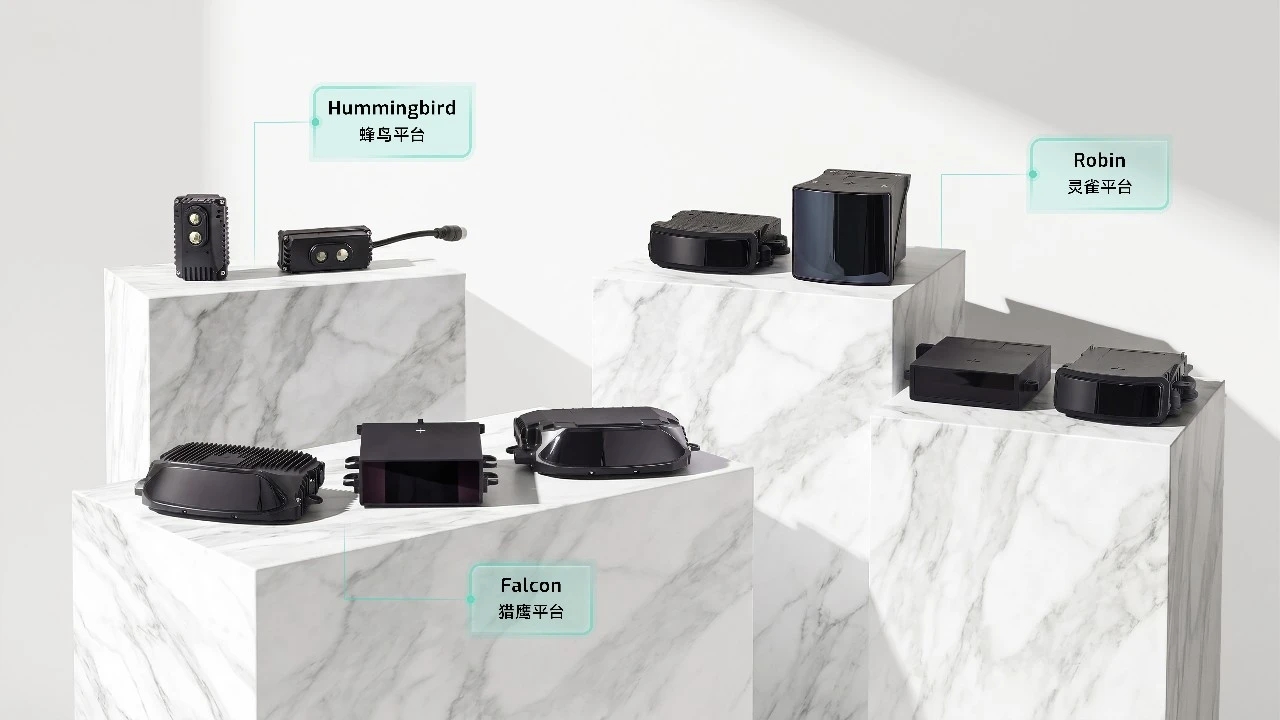
Here is a simple comparison of the three models currently listed on LidarSeek.
| Model | Current Price | Best Application | Price Position |
|---|---|---|---|
| Robin W | $1,725 | Wide-angle robot perception | Mid-range |
| Robin E1X | $1,725 | Robotics & industrial perception | Mid-range |
| Hummingbird D1 | $1,229 | Cost-sensitive robotics | Entry / Mid-range |
Prices may change according to inventory, promotions and order quantity.
1. Seyond Robin W
The Robin W is an attractive option for robotics developers looking for broad environmental perception.
LidarSeek describes Robin-series applications around robotics and intelligent perception, and its brand page specifically identifies robotics and industrial automation as key application areas.
Why Wide-Angle Perception Matters
Consider an autonomous mobile robot operating in a warehouse.
The robot may encounter:
- Workers
- Pallets
- Forklifts
- Shelves
- Boxes
- Other robots
If the sensor coverage is too narrow, the robot may require additional sensors to eliminate blind areas.
A wide-angle LiDAR can help simplify the perception architecture.
Potential applications
- AMR
- AGV
- Warehouse robots
- Mobile robots
- Humanoid robots
- Service robots
- Autonomous navigation
2. Seyond Robin E1X
The Robin E1X is another robotics-oriented option.
LidarSeek currently lists it at approximately $1,725.
This places it well below the price of the Falcon automotive models.
For a robotics company, this can be important.
A robot may require:
- One LiDAR
- Two LiDARs
- Four LiDARs
- Multiple sensors across an entire fleet
If a robot uses four sensors, even a relatively small difference in unit cost can become significant at production scale.
For example:
100 robots × 4 LiDAR sensors = 400 sensors
Therefore, sensor price becomes an important component of the overall BOM.
3. Seyond Hummingbird D1
The Hummingbird D1 is currently the most affordable Seyond product listed by LidarSeek.
Its listed price is approximately $1,229.
This makes it particularly interesting for:
- Robotics startups
- University research
- Prototype robots
- R&D projects
- Cost-sensitive applications
- Early-stage autonomous systems
For early development, reducing hardware costs allows engineering teams to allocate more budget to:
- AI development
- Navigation algorithms
- Mechanical design
- Computing
- Software integration
- Field testing
Robin W vs Robin E1X vs Hummingbird D1
The simplest way to approach the selection is to match the sensor to the project.
| Requirement | Robin W | Robin E1X | Hummingbird D1 |
| Robotics | ✓ | ✓ | ✓ |
| Industrial automation | ✓ | ✓ | ✓ |
| Autonomous navigation | ✓ | ✓ | ✓ |
| Wide-area perception | Strong candidate | Strong candidate | Depends on configuration |
| Prototype development | ✓ | ✓ | Excellent |
| Cost-sensitive project | Good | Good | Excellent |
| Large robot fleet | ✓ | ✓ | ✓ |
| Entry-level budget | — | — | Best candidate |
This table is a project-selection guide rather than a substitute for detailed technical specifications.
How Much Does LiDAR Cost for an AMR?
The answer depends on the robot architecture.
A simple AMR may only require one LiDAR.
A more complex autonomous platform may use multiple sensors.
For example:
Single-Sensor Architecture
1 LiDAR × $1,229 = approximately $1,229
Dual-Sensor Architecture
2 LiDAR × $1,229 = approximately $2,458
Four-Sensor Architecture
4 LiDAR × $1,229 = approximately $4,916
These calculations are only illustrative based on the current Hummingbird D1 listed price and do not include computing, software, mounting, cables or other hardware. The actual commercial price may vary.
This demonstrates why sensor selection can have a major impact on robot BOM cost.
LiDAR for Warehouse Robots
Warehouse environments are particularly suitable for LiDAR-based perception.
A warehouse robot may need to navigate through:
- Narrow aisles
- Open warehouse areas
- Loading zones
- Pedestrian areas
- Pallet storage
- Dynamic traffic zones
The LiDAR system can provide spatial information for localization and obstacle avoidance.
For these applications, engineers should consider:
- Detection range
- FoV
- Resolution
- Scan frequency
- Point density
- Size
- Weight
- Power consumption
- Communication interface
- ROS/ROS2 compatibility
LiDAR for Humanoid Robots
Humanoid robots create another interesting application.
Unlike traditional AMRs, humanoid robots operate in environments designed for humans.
They may encounter:
- Tables
- Chairs
- People
- Doors
- Stairs
- Small objects
- Moving obstacles
A compact LiDAR can provide additional environmental information to complement cameras.
A multimodal perception system may combine:
Camera + LiDAR + IMU + AI
This approach can provide more robust environmental understanding than relying on a single sensor type.
LidarSeek currently includes embodied robots, humanoid robots and quadruped robots among its broader product and solution categories.
LiDAR for Industrial Automation
Industrial automation requires reliable perception.
Typical applications include:
- AGVs
- AMRs
- Autonomous forklifts
- Warehouse automation
- Smart factories
- Safety monitoring
In these environments, engineers must consider not only sensing performance but also:
- Operating temperature
- Protection rating
- Vibration
- Dust
- Continuous operating time
- Integration
- Maintenance
Therefore, the lowest purchase price does not always produce the lowest overall system cost.
How to Select the Right Seyond LiDAR
Use these five questions before purchasing.
Question 1: How far does the robot need to see?
A warehouse AMR may not require the same detection range as an outdoor autonomous vehicle.
Question 2: How much coverage is required?
Determine whether one sensor is sufficient or multiple sensors are required.
Question 3: How fast is the robot moving?
Higher-speed robots may require faster perception and longer detection distance.
Question 4: What is the environment?
Indoor and outdoor applications have different requirements.
Question 5: What is the target BOM?
If the robot will be produced in large quantities, sensor price becomes a major factor.
Why Buy Seyond Robotics LiDAR from LidarSeek?
LidarSeek is not limited to one LiDAR manufacturer.
The website provides multiple brands and categories, allowing robotics companies to compare different solutions based on price and technical requirements.
The company promotes affordable LiDAR sensors with factory-direct pricing and competitive bulk rates.
This can be especially valuable for:
- Robotics startups
- OEM manufacturers
- System integrators
- Research laboratories
- University projects
- Warehouse automation companies
Seyond vs Other Robotics LiDAR Options
Before making a final decision, buyers should also compare Seyond against alternative manufacturers.
LidarSeek offers products from several LiDAR brands, including:
- Seyond
- Hesai
- RoboSense
- Livox
- LiShen
- Siminics
- SuTan
This gives buyers the opportunity to compare multiple technologies in one place.
For example, LidarSeek currently lists products such as Hesai XT16 and LSLidar C32 with different price and performance profiles.
Therefore, the best purchasing strategy is not necessarily to choose one brand immediately.
Instead:
Define the requirements → compare several sensors → test samples → select the best cost/performance solution.
Final Recommendation
For robotics developers, Seyond’s Robin W, Robin E1X and Hummingbird D1 provide different price points and application possibilities.
If your project requires broad perception and a stronger robotics-oriented solution, the Robin series deserves consideration.
If your primary objective is reducing initial hardware cost, the Hummingbird D1 is currently the most affordable Seyond option listed by LidarSeek.
Current listed prices are approximately:
Robin W — $1,725
Robin E1X — $1,725
Hummingbird D1 — $1,229
However, final selection should always be based on technical specifications, integration requirements and the actual robot environment.
Looking for the Right LiDAR for Your Robot?
Send LidarSeek your:
- Robot type
- Indoor/outdoor environment
- Required detection range
- Required FoV
- Number of sensors
- Estimated quantity
- ROS/ROS2 requirements
- Project stage
LidarSeek can help you compare Seyond with other LiDAR solutions and identify a suitable sensor based on your performance and budget requirements.









