
Executive Summary
The pursuit of full driving automation has always been a pursuit of perceptual fidelity. As autonomous systems evolve from assisting drivers to assuming complete control, the demands on their “eyes” have intensified exponentially. L3+ systems operating at high speeds require not just the ability to detect that something is there, but to understand precisely what it is, at distances that provide ample time for safe, comfortable decision-making. This requires a level of detail and range that pushes the very limits of sensor technology.
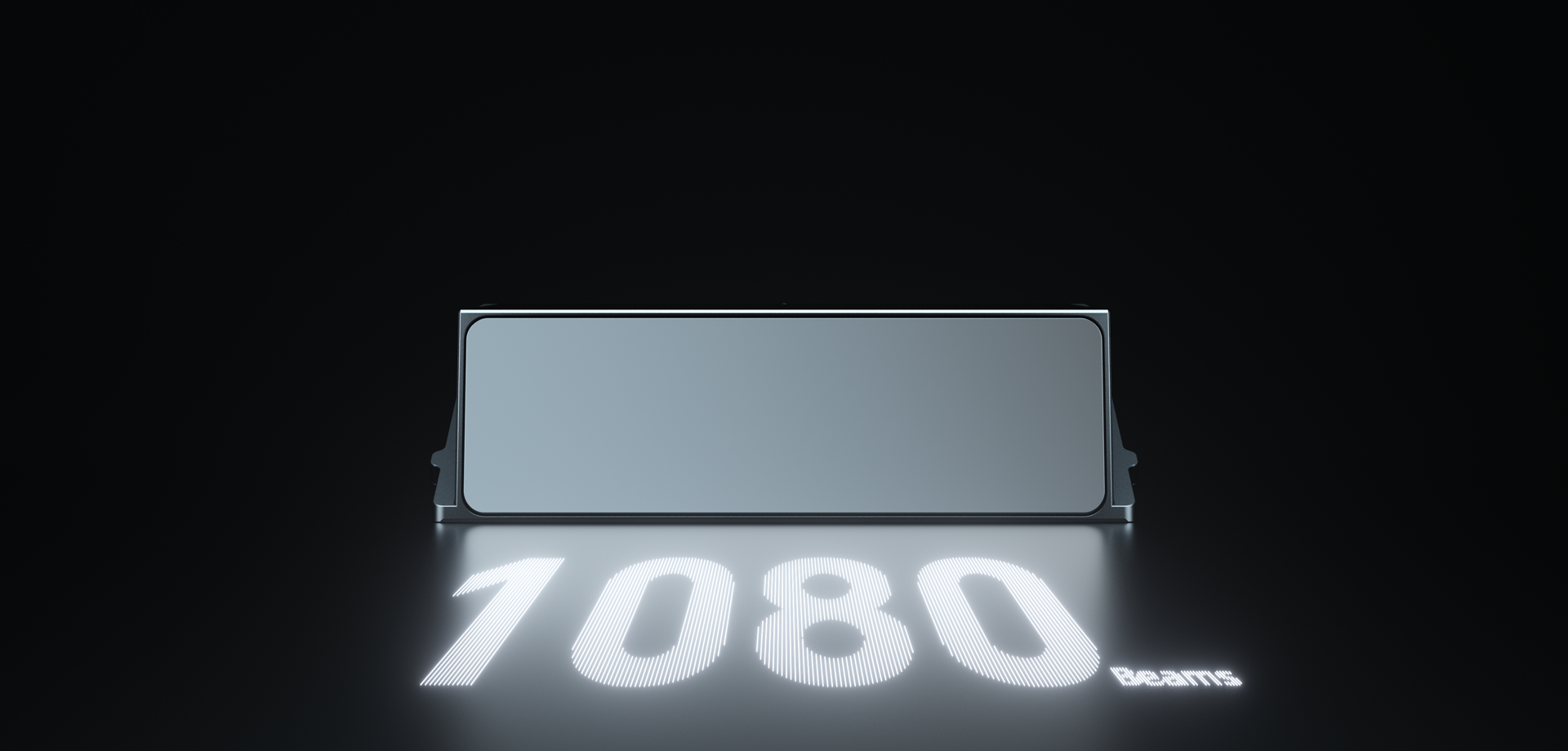
RoboSense’s EM4 is the answer to this challenge. As the world’s first “thousand-beam” ultra-long-range digital LiDAR, the EM4 shatters existing performance paradigms . It introduces an unprecedented 1080-line resolution, capable of providing a true 1080P 3D perception of the environment, and extends the boundaries of detection to an industry-leading 600 meters . Built on RoboSense’s next-generation digital EM platform, it is not merely an incremental improvement but a generational leap, designed from the ground up to meet the exacting requirements of high-level autonomous driving.
This comprehensive report provides an in-depth analysis of the RoboSense EM4. We will examine its groundbreaking “thousand-beam” digital architecture, dissect its industry-leading specifications and how they translate to quantifiable safety gains, explore its critical role in enabling L3/L4 autonomous systems, and evaluate its unique value proposition for sophisticated automotive clients and Robotaxi operators in Russia, Europe, and North America. For those at the vanguard of autonomous mobility, the EM4 is not just a sensor; it is the foundation for a new standard of safety and capability.
1. Introduction: The Quest for Perceptual Fidelity in the “Thousand-Beam” Era
The history of autonomous driving perception can be viewed as a continuous quest for higher fidelity. Early mechanical LiDARs, with their 16 or 32 beams, could detect the presence of large objects but struggled to classify them. The advent of 128-beam sensors provided the point density needed for reliable object recognition, enabling the first generation of commercial Robotaxi services. However, the industry’s ambition has not stood still. The goal is now to achieve safe, comfortable, and ubiquitous autonomy—from high-speed highways to complex urban centers, in all weather conditions.
This ambition demands a new class of sensor. A vehicle traveling at 145 km/h (90 mph), as referenced in new NHTSA active safety standards, needs to detect a small piece of debris or a lost tire not just at 100 meters, but at distances that allow for a graceful, non-emergency response . It needs the angular resolution to distinguish a tire from a pothole or a cardboard box from a shadow at extreme ranges. It needs to see the world with a clarity approaching that of human vision, but without its limitations.
RoboSense identified this need years ago and invested heavily in a fundamental technological shift: full digitalization. The result is the EM platform, and its flagship, the EM4. By moving from analog signal chains to a fully integrated, chip-based digital architecture, RoboSense has unlocked performance levels previously thought impossible . The EM4’s “thousand-beam” capability is not just a higher number; it represents a new tier of perceptual intelligence, providing autonomous systems with the rich, detailed data they need to operate safely and confidently at the highest levels of automation.
2. EM4: The Flagship of the Digital EM Platform
2.1 The EM Platform: A New Digital Foundation
The EM4 is the first product built on RoboSense’s next-generation EM platform, a technological architecture designed to leverage the full potential of chip-level integration . Since 2017, RoboSense has cultivated in-house chip design capabilities, and by 2024 had achieved full-stack, self-developed chip capabilities across the entire LiDAR signal chain, from laser emission and scanning control to signal reception and processing .
The EM platform’s digital architecture integrates two critical, custom-designed chips that have both obtained AEC-Q100 automotive-grade reliability certification :
- SPAD-SoC Chip: This large-array Single Photon Avalanche Diode System-on-Chip integrates the receiving system and echo recognition functions. By converting optical signals to digital data at the point of detection, it preserves raw information integrity, eliminates analog signal degradation, simplifies the system architecture, and reduces power consumption .
- VCSEL Chip: The Vertical-Cavity Surface-Emitting Laser chip provides efficient, precisely controlled illumination, enabling the sensor’s extraordinary 600-meter range while maintaining Class 1 eye safety .
This fully digital foundation offers several transformative advantages:
- Lossless Signal Integrity: Digitizing the echo signal at its source preserves the full fidelity of the return information, resulting in cleaner, more reliable point clouds .
- Generational Performance Scaling: With core functionality embedded in chips, the EM platform can follow a trajectory similar to Moore’s Law, with performance continuously improving and costs optimizing over time .
- Unprecedented Customizability: The digital architecture allows for flexible configuration of key parameters, enabling the platform to be tailored to specific customer and application needs .
2.2 Core Technological Innovations in EM4
Beyond its foundational architecture, the EM4 incorporates several proprietary technologies that set it apart .
High-Reflection Blooming Suppression
Highly reflective surfaces like road signs can cause “blooming” in traditional LiDARs, where the point cloud expands and obscures the true contour of the object. Using a patented spatiotemporal mixed encoding technology, the EM4 effectively suppresses this effect, delivering sharper object contours and more precise detail representation .
All-Condition Environmental Resilience
The EM4 is engineered to perform reliably in the most challenging conditions:
- Rain, Fog, and Dust Noise Reduction: The SPAD-SoC integrates a 1080-Core LEP (LiDAR Echo Processing) system. Combined with RoboSense’s proprietary “Large Echo Processing Model,” it intelligently identifies and filters out noise caused by precipitation and particulates, ensuring a clean point cloud even in adverse weather .
- Contamination Resistance: A proprietary optical path design ensures the sensor maintains accurate detection even when the housing is exposed to mud, dirt, or condensation .
Efficient Lossless Data Compression
The EM4 generates a massive amount of data—25.92 million points per second. To manage this within the bandwidth constraints of existing in-vehicle Ethernet systems, it features advanced real-time lossless data compression technology. This reduces the data stream from several gigabits per second to a few hundred megabits, achieving a 60% compression rate without any loss of information, allowing for seamless integration without costly upgrades .
2.3 Detailed Technical Specifications
The following specifications are compiled from RoboSense’s official documentation and validated by industry reports .
2.4 The Safety Dividend: Quantifiable Performance
The EM4’s specifications are not just numbers on a datasheet; they translate directly into quantifiable safety benefits that extend the response time of the autonomous driving system.
By detecting obstacles much earlier, the EM4 provides a significantly larger decision and response window. Compared to a LiDAR with a maximum range of 200 meters, the EM4 can detect the same obstacle 400 meters earlier. This translates to a 70% increase in available response time for the system to plan and execute a safe maneuver, allowing for more comfortable and less aggressive interventions .
This extreme range and resolution enable the system to detect and react to specific hazards at speeds that surpass stringent regulatory standards :
- Small Debris (40×25cm black box): Detectable at 250m, enabling emergency avoidance or braking at speeds up to 181 km/h.
- Traffic Cone: Detectable at 300m, enabling safe reaction at speeds up to 200 km/h.
- Lost Tire: Detectable at 170m, enabling safe reaction at speeds up to 147 km/h.
- White Vehicle: Detectable at 600m, enabling safe reaction at speeds up to 289 km/h.
These figures demonstrate that the EM4 provides the perceptual foundation for safe autonomous operation at speeds far exceeding current highway limits, creating a vast safety margin.
3. Transformative Application Scenarios
The EM4’s unparalleled performance makes it the sensor of choice for the most demanding applications in autonomous mobility.
3.1 L3/L4 Highway Autonomy and High-End ADAS
For passenger vehicles equipped with L3 conditional automation or high-end L2+ systems, the EM4 serves as the ultimate forward-facing sensor.
Key Requirements Met by EM4:
- Extreme Range for High Speeds: The 600m maximum range provides an enormous safety buffer, allowing the system to detect stationary vehicles or debris on the highway far in advance. The 300m range at 10% reflectivity ensures that dark-colored vehicles are detected with ample time for a smooth, comfortable response .
- 1080P Resolution for Classification: The 0.050°×0.025° angular resolution provides enough point density to reliably classify distant objects—distinguishing between a tire, a cone, and a piece of luggage—preventing unnecessary or incorrect evasive actions .
- Low Latency for Dynamic Response: The high point rate and efficient processing ensure that the perception system receives a highly detailed and up-to-date picture of the world, critical for reacting to sudden cut-ins or high-speed projectiles.
3.2 Robotaxi Fleets (L4 Autonomy)
The Robotaxi market is the most demanding proving ground for autonomous technology, requiring 24/7 operation in complex, unpredictable urban and suburban environments. The EM4 has rapidly become the sensor of choice for leading global players in this space.
Industry Validation:
The EM4, in combination with the E1 solid-state blind-spot LiDAR, has formed a “golden combination” that is being adopted by a significant portion of the L4 autonomous driving industry .
- Didi Autonomous Driving: In November 2025, RoboSense announced (design win) with Didi for its next-generation Robotaxi models. Each vehicle will be equipped with 10 digital LiDARs, including the EM4 and E1, to create a comprehensive all-weather, 24/7 perception suite .
- WeRide : In March 2026, WeRide and Geely’s Farizon Auto unveiled an upgraded version of their production-ready Robotaxi, the GXR. It is equipped with the EM4 as its primary “thousand-beam” digital LiDAR, alongside the E1 for blind-spot coverage. The companies plan to deliver 2,000 units of this upgraded GXR in 2026, deploying them in both domestic and international markets. WeRide reports that the EM4’s ultra-long range provides over 70% more reaction time in high-speed scenarios .
- Industry Leadership: RoboSense has stated that it collaborates with over 90% of the world’s leading L4 autonomous driving companies, including WeRide, Pony.ai, Baidu Apollo, and Waymo .
Why Robotaxi Leaders Choose EM4:
- Enhanced Safety Redundancy: The extreme range and resolution provide a level of perception that creates a massive safety buffer, crucial for building public trust and regulatory acceptance.
- True All-Weather Operation: The advanced noise filtering and contamination resistance ensure reliable performance in rain, fog, and at night, which is essential for commercial viability .
- Scalability and Maturity: As the industry’s only mass-producible “thousand-beam” digital LiDAR, the EM4 offers a clear path from prototype to fleet-scale deployment .
3.3 High-Definition Mapping and Surveying
The creation and maintenance of high-definition maps require sensors capable of capturing the world with extraordinary fidelity. The EM4’s 25.92 million points per second and sub-centimeter level accuracy make it an ideal tool for this purpose .
- Ultra-Dense Point Clouds: A single pass with an EM4-equipped mapping vehicle can capture the fine details of road markings, curb geometry, signage, and building facades that are essential for L3+ navigation.
- Long-Range Feature Capture: The 600m range allows for efficient mapping of highways and large infrastructure projects, capturing features at a distance that reduces the number of passes required.
4. Market Position and Commercial Validation
Since its launch in January 2025 at CES, the EM4 has achieved remarkable commercial traction, solidifying its position as the leading solution for high-level autonomy .
4.1 Design Wins with Global OEMs
The EM4 has secured production design wins from a prestigious list of global automotive manufacturers, demonstrating its appeal across diverse markets :
- Geely Auto Group: A major Chinese automotive group with numerous global brands.
- SAIC IM Motor: The premium electric vehicle brand of SAIC, one of China’s largest automakers.
- A Leading Global Pure Electric Pickup Truck Brand: A testament to the sensor’s versatility beyond passenger cars.
- A Joint Venture of a European Premium Automotive Brand: A critical validation from one of the world’s most demanding and safety-conscious automotive markets.
4.2 Mass Production and Scalability
A key differentiator for the EM4 is its readiness for mass production. It is the industry’s only mass-producible digital LiDAR with over 500 lines . By September 2025, the EM platform (including EM4 and EMX) had already entered full-scale mass production and delivery, with orders for 45 vehicle models from eight leading global automakers . This production maturity provides customers with confidence in supply chain stability and a clear path to cost reduction over time.
4.3 Unmatched Customization Capability
Leveraging its fully digital architecture, the EM platform offers an unprecedented level of customization . While the flagship EM4 is a 1080-line sensor, the platform can be tailored to meet specific needs:
- For ultra-high-definition applications, the EM4 can be configured with 520, 720, 1080, or even up to 2160 lines .
- This allows automakers to standardize on the EM platform across multiple vehicle lines, using a customized configuration for each model’s specific requirements and level of automation, while benefiting from a common supply chain and qualification effort.
5. Value Proposition for International Clients
For sophisticated clients in Europe, North America, and Russia, the EM4 offers a compelling and unique value proposition.
5.1 Generational Performance Leadership
The EM4 is not competing in the same category as other LiDARs; it has created a new category. Its “thousand-beam” resolution and 600-meter range are not incremental improvements but represent a generational leap. For applications where safety and performance are paramount—such as Robotaxi fleets or premium L3 vehicles—the EM4 provides a perceptual capability that no other single sensor can match .
5.2 Quantifiable Safety and Regulatory Headroom
The EM4’s performance is directly tied to safety outcomes. The 70% increase in system response time and its ability to detect small hazards at speeds exceeding NHTSA standards provide a clear, quantifiable safety advantage . This gives developers confidence that their systems can handle the most demanding edge cases and provides a buffer against future, more stringent safety regulations.
5.3 Future-Proof Digital Architecture and Customizability
Investing in the EM4 is an investment in a platform, not just a sensor. The fully digital, chip-based architecture ensures that the sensor can evolve through firmware updates and that performance will continue to improve over time. The ability to customize the line count from 520 to 2160 means that the same basic platform can serve a company’s needs for years, scaling from current L3 systems to future L4 applications .
5.4 Production Maturity and Global Supply Chain
The EM4 is not a “vaporware” prototype. It is in mass production, has secured multiple design wins from global automakers, and is being integrated into Robotaxi fleets that will soon be operating on roads worldwide . For international clients, this production maturity and RoboSense’s established global presence provide confidence in long-term supply and support.
5.5 Strategic Partnership with Industry Leaders
The EM4’s adoption by NVIDIA (as part of the DRIVE ecosystem), Didi, WeRide, and major global automakers validates its position as a cornerstone technology for the autonomous driving industry . Adopting the EM4 means aligning with the technology choices of the industry’s leaders.
6. Conclusion: The New Benchmark for Autonomous Perception
The RoboSense EM4 is more than just a new LiDAR; it is a declaration that the era of compromise in autonomous perception is over. By harnessing the power of a fully digital, chip-based architecture, RoboSense has delivered a sensor that meets the extraordinary demands of L3 and L4 autonomy head-on. Its 1080-line resolution, 600-meter range, and intelligent all-weather performance provide autonomous systems with a level of awareness that was previously the stuff of science fiction.
For clients in the demanding automotive markets of Europe, North America, and Russia—where safety, performance, and reliability are non-negotiable—the EM4 offers a proven, production-ready, and future-proof foundation. Its rapid adoption by leading global automakers and Robotaxi pioneers like Didi and WeRide is not a coincidence; it is a testament to its unparalleled capability .
As the industry moves decisively toward higher levels of automation, the perceptual requirements will only become more stringent. The EM4 answers that call today, establishing a new benchmark for what is possible and providing the “1080P HD 3D vision” that will enable the next generation of intelligent vehicles to navigate our world with unprecedented safety and confidence .









