
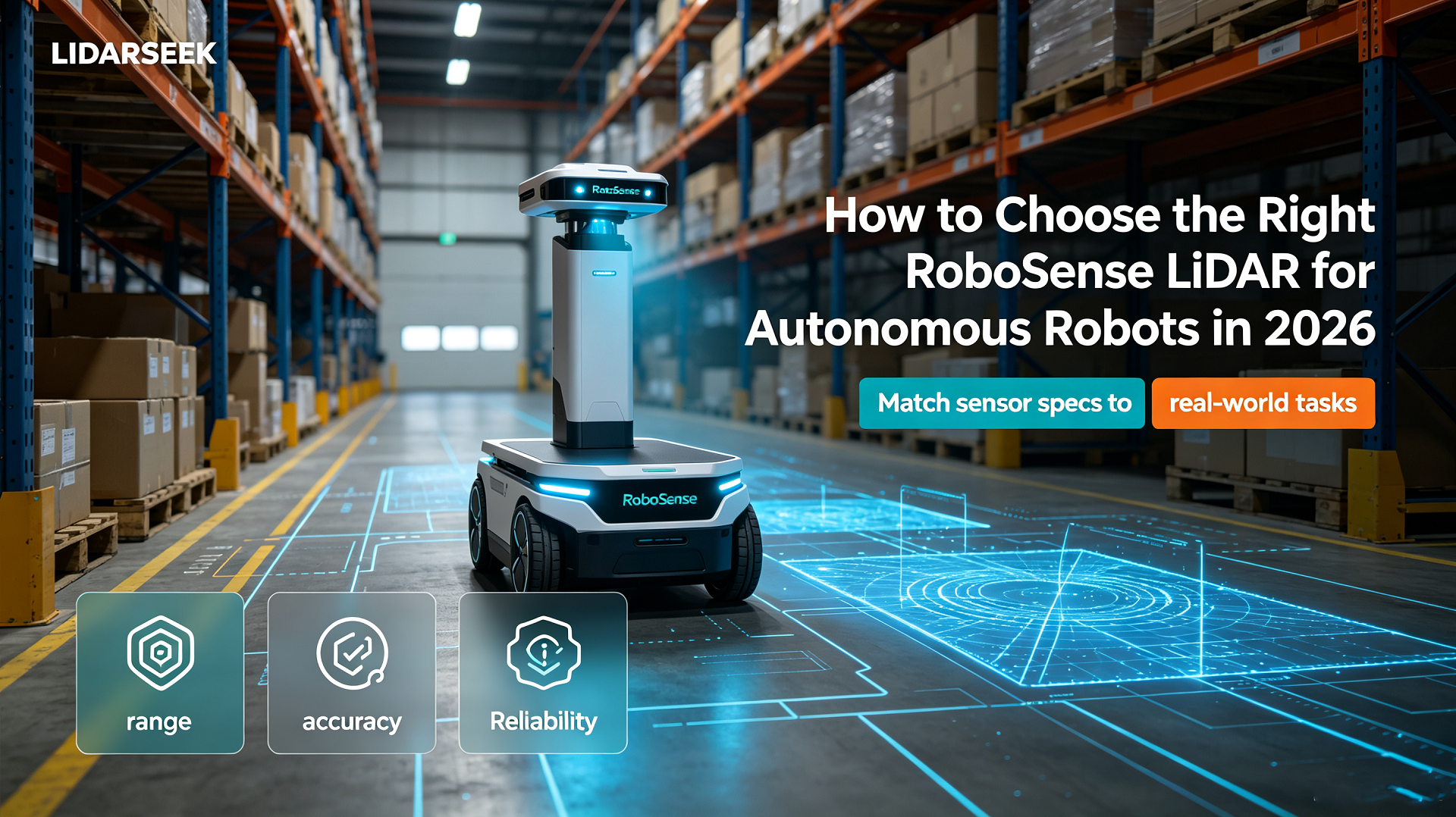
The robotics industry is entering a new era. Autonomous mobile robots (AMRs), automated guided vehicles (AGVs), delivery robots, cleaning robots, humanoid robots, drones, and industrial inspection platforms are rapidly transforming industries worldwide.
At the heart of every intelligent robot lies a perception system capable of understanding the surrounding environment in real time. Among all perception technologies available today, LiDAR remains the gold standard for precise 3D environmental sensing, obstacle detection, mapping, localization, and navigation.
As robotics applications continue to evolve, selecting the right LiDAR sensor has become one of the most important engineering decisions for robotics manufacturers, system integrators, and research institutions.
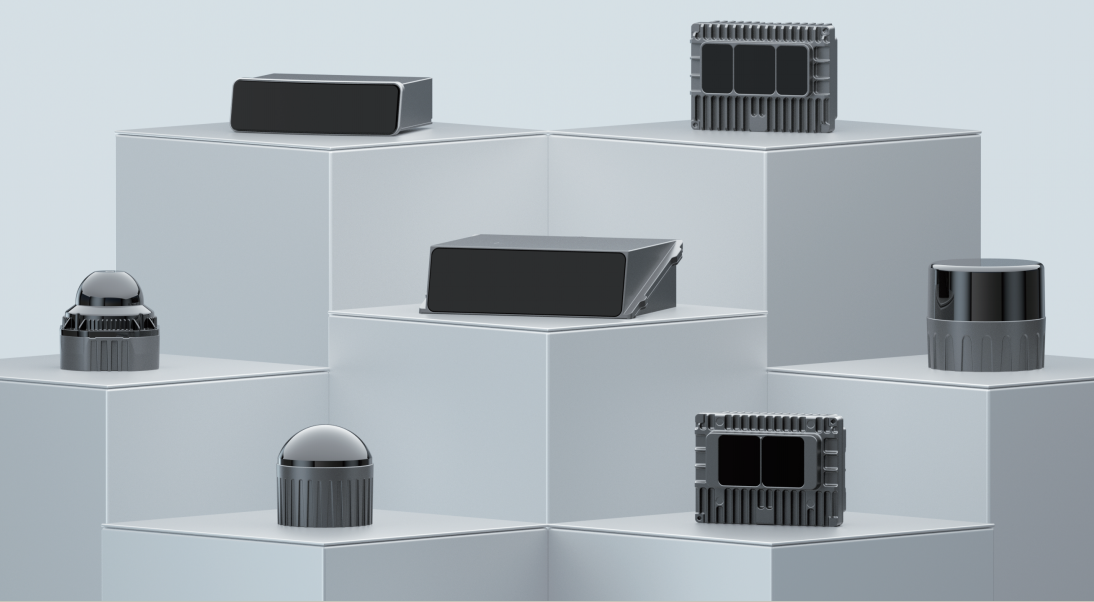
RoboSense has emerged as one of the world’s leading LiDAR manufacturers, offering a complete portfolio of digital LiDAR solutions designed specifically for robotics, autonomous systems, and intelligent machines. Its latest robotics-focused products include Airy, Fairy, E1R, AC1, Helios, and other digital LiDAR platforms optimized for different robotic applications. RoboSense has developed dedicated robotics LiDAR products such as Airy and E1R to address autonomous navigation and robot task execution requirements.
In this comprehensive buyer’s guide, we will help you understand:
- Which RoboSense LiDAR is best for your project
- Key technical specifications to evaluate
- Application-specific recommendations
- Cost-performance considerations
- Integration and SDK support factors
- Future-proofing your robotics platform
Why LiDAR Is Essential for Modern Autonomous Robots
Before selecting a LiDAR sensor, it is important to understand why LiDAR has become a critical component in autonomous robotics.
Compared with cameras, ultrasonic sensors, and radar systems, LiDAR provides:
Accurate 3D Environmental Perception
LiDAR directly measures distance using laser pulses, generating highly accurate point cloud data.
Reliable Performance in Complex Lighting
Unlike cameras, LiDAR performs effectively in:
- Daylight
- Darkness
- Low-light environments
- Indoor facilities
- Outdoor industrial sites
High-Precision Mapping
Robots can create detailed 3D maps using SLAM algorithms powered by LiDAR point clouds.
Superior Obstacle Detection
LiDAR enables robots to detect:
- Pedestrians
- Forklifts
- Pallets
- Shelves
- Machinery
- Dynamic obstacles
This capability is particularly important in warehouses, factories, logistics hubs, and public environments.
Key Factors When Choosing a Robotics LiDAR
Many engineers make the mistake of selecting a LiDAR solely based on range.
In reality, range is only one of many important factors.
1. Detection Range
The required range depends heavily on robot speed.
Short-Range Applications
Examples:
- Cleaning robots
- Service robots
- Indoor delivery robots
Recommended range:
10–30 meters
Medium-Range Applications
Examples:
- Warehouse AMRs
- AGVs
- Inspection robots
Recommended range:
30–80 meters
Long-Range Applications
Examples:
- Outdoor delivery robots
- Autonomous vehicles
- High-speed mobile platforms
Recommended range:
80–200 meters+
2. Field of View (FOV)
Field of View determines how much of the environment the sensor can see.
A wider FOV reduces blind spots and improves navigation safety.
For example, RoboSense E1R offers an ultra-wide 120° × 90° field of view, making it suitable for robotic navigation and obstacle avoidance.
3. Point Cloud Density
Higher point cloud density means:
- Better object recognition
- Improved SLAM performance
- Enhanced obstacle classification
Digital LiDAR products such as E1R provide high-quality point cloud outputs through RoboSense’s SPAD-SoC architecture.
4. Angular Resolution
Angular resolution affects the ability to detect small objects.
Critical applications include:
- Humanoid robots
- Industrial automation
- Autonomous forklifts
- Security robots
5. Environmental Protection Rating
Industrial robots often operate in:
- Dust
- Rain
- Mud
- Harsh weather
Look for:
- IP67
- IP69K
- Automotive-grade reliability
E1R is designed on an automotive-grade platform and meets IP67 and IP6K9K protection standards.
RoboSense Robotics LiDAR Product Portfolio
Let’s examine the most important RoboSense products for robotics applications.
RoboSense E1R
Best For
- Delivery robots
- Cleaning robots
- Service robots
- Humanoid robots
- Drones
E1R is RoboSense’s first fully solid-state digital LiDAR designed specifically for robots. It combines compact dimensions, automotive-grade reliability, and a wide field of view. RoboSense states that E1R supports obstacle avoidance, mapping, and navigation across diverse robotic applications.
Key Advantages
- 120° × 90° FOV
- Up to 75m detection range
- Compact form factor
- No moving parts
- Automotive-grade reliability
- High-quality point cloud generation
Why Choose E1R?
If you are developing:
- Delivery robots
- Indoor service robots
- Humanoid robots
- Security patrol robots
E1R offers one of the best balances between performance, reliability, and integration simplicity.
RoboSense Airy
Best For
- Humanoid robots
- Embodied AI
- Advanced navigation systems
- Research robots
Airy is RoboSense’s hemispherical digital LiDAR designed specifically for robotic perception. The product was introduced to support robot autonomous navigation and task execution.
Advantages
- Ultra-wide perception coverage
- Reduced blind zones
- Advanced digital architecture
- Compact deployment
Why Choose Airy?
Airy is ideal for robots that require near-human environmental awareness and broad situational perception.
For embodied AI and humanoid robotics, wide-area sensing is often more valuable than maximum range.
RoboSense Fairy
Best For
- High-precision mapping
- Autonomous navigation
- Industrial robotics
- Drone mapping
Fairy is a high-precision 48-beam digital LiDAR designed for robotics, autonomous navigation, drone mapping, and smart infrastructure applications. RoboSense highlights its fully digital architecture and high-precision point cloud generation.
Advantages
- High-density point clouds
- Excellent mapping capability
- High precision
- Long-term reliability
Why Choose Fairy?
When mapping quality is more important than cost, Fairy becomes a strong choice.
RoboSense AC1
Best For
- Robotic movement
- Intelligent perception systems
- Vision-LiDAR fusion
AC1 is part of RoboSense’s Active Camera family developed for robotic movement perception.
Advantages
- Enhanced visual perception
- Sensor fusion capability
- Advanced robotics integration
Why Choose AC1?
Ideal when combining visual understanding and 3D perception.
RoboSense Helios
Best For
- Warehouse robots
- AGVs
- Industrial automation
Helios has long been a popular solution in industrial automation environments due to its stable performance and mature ecosystem. RoboSense offers multiple Helios configurations for different field-of-view requirements.
Advantages
- Mature deployment history
- Reliable navigation
- Industrial-grade performance
Which RoboSense LiDAR Should You Choose?
| Application | Recommended Product |
|---|---|
| Cleaning Robot | E1R |
| Delivery Robot | E1R |
| Service Robot | E1R |
| Humanoid Robot | Airy + E1R |
| Warehouse AMR | Helios |
| AGV | Helios |
| Industrial Inspection Robot | Fairy |
| Drone Mapping | Fairy |
| Embodied AI Platform | Airy |
| Research Robot | Airy + Fairy |
Future Trends in Robotics LiDAR
The robotics industry is moving toward:
Fully Digital LiDAR
Digital architectures improve:
- Signal quality
- Reliability
- Cost efficiency
Solid-State Design
Removing moving parts significantly improves durability.
AI Integration
Future robots will combine:
- LiDAR
- Cameras
- AI Models
- Sensor Fusion
Humanoid Robotics
Humanoid robots are expected to become one of the fastest-growing LiDAR markets over the next decade.
Products such as Airy and E1R are already being positioned toward embodied intelligence and robotic perception applications.
Why Buy RoboSense LiDAR from LIDARSEEK?
LIDARSEEK helps global robotics companies source genuine RoboSense products with:
- Global shipping support
- Technical consultation
- Project-based sensor selection
- Fast quotation response
- Engineering integration support
- OEM and research institution assistance
Whether you are building a prototype, scaling production, or evaluating multiple LiDAR options, selecting the right sensor early can significantly reduce development time and deployment risks.
Frequently Asked Questions (FAQ)
What is the best RoboSense LiDAR for autonomous robots?
For most delivery, service, and cleaning robots, RoboSense E1R is one of the most balanced options due to its wide FOV, compact design, and automotive-grade reliability.
Is RoboSense LiDAR suitable for humanoid robots?
Yes. Airy and E1R are particularly suitable for humanoid robotics and embodied AI systems because of their wide perception coverage and digital architecture.
What LiDAR is best for warehouse AMRs?
Helios remains a popular option for warehouse automation, AGVs, and industrial logistics robots.
Is E1R a solid-state LiDAR?
Yes. E1R is a fully solid-state digital LiDAR with no moving parts.
Can RoboSense LiDAR support SLAM?
Yes. RoboSense LiDAR products provide high-quality point clouds suitable for 3D SLAM, mapping, localization, and navigation.
How do I choose between Airy and Fairy?
Choose Airy if you need broader environmental awareness and embodied AI perception. Choose Fairy if your priority is high-precision mapping and dense point cloud generation.
Does RoboSense provide SDK support?
Yes. RoboSense provides software resources, SDKs, user guides, and development tools for supported products.
Where can I buy genuine RoboSense LiDAR sensors?
You can source genuine RoboSense LiDAR products through LIDARSEEK, which provides technical consultation, project evaluation, international shipping, and after-sales support.









