
As the global robotics and autonomous driving industries continue to expand, LiDAR technology has become one of the most critical sensing solutions for intelligent machines.
Whether you are developing:
- Autonomous Mobile Robots (AMRs)
- Automated Guided Vehicles (AGVs)
- Humanoid Robots
- Autonomous Forklifts
- Robotaxis
- Delivery Robots
- Autonomous Trucks
- Smart Infrastructure Systems
Selecting the right LiDAR supplier can significantly impact system performance, development efficiency, safety, and total project cost.
Among dozens of LiDAR manufacturers worldwide, two Chinese companies have emerged as industry leaders:
- RoboSense
- Hesai Technology
Both companies are publicly listed, internationally recognized, and actively supplying LiDAR systems to robotics manufacturers, automotive OEMs, research institutions, and autonomous technology developers worldwide.
But which one is better?
The answer depends on your application, performance requirements, budget, and deployment environment.
This comprehensive comparison will help engineering teams, procurement managers, robotics startups, and autonomous vehicle developers determine whether RoboSense or Hesai is the better choice for their next-generation project.
The Rise of China’s LiDAR Industry
Over the past decade, China has become the global center of LiDAR innovation.
Several factors contributed to this growth:
- Strong autonomous driving investments
- Large robotics market demand
- Advanced semiconductor manufacturing
- Government support for intelligent transportation
- Rapid AI adoption
Today, RoboSense and Hesai are widely recognized as two of the world’s most influential LiDAR manufacturers.
Both companies have developed proprietary technologies, digital architectures, and automotive-grade production capabilities that compete directly with global LiDAR suppliers.
Company Overview
RoboSense
Founded in 2014, RoboSense focuses on:
- Digital LiDAR technology
- Robotics perception systems
- Autonomous driving solutions
- Smart transportation
- Embodied AI applications
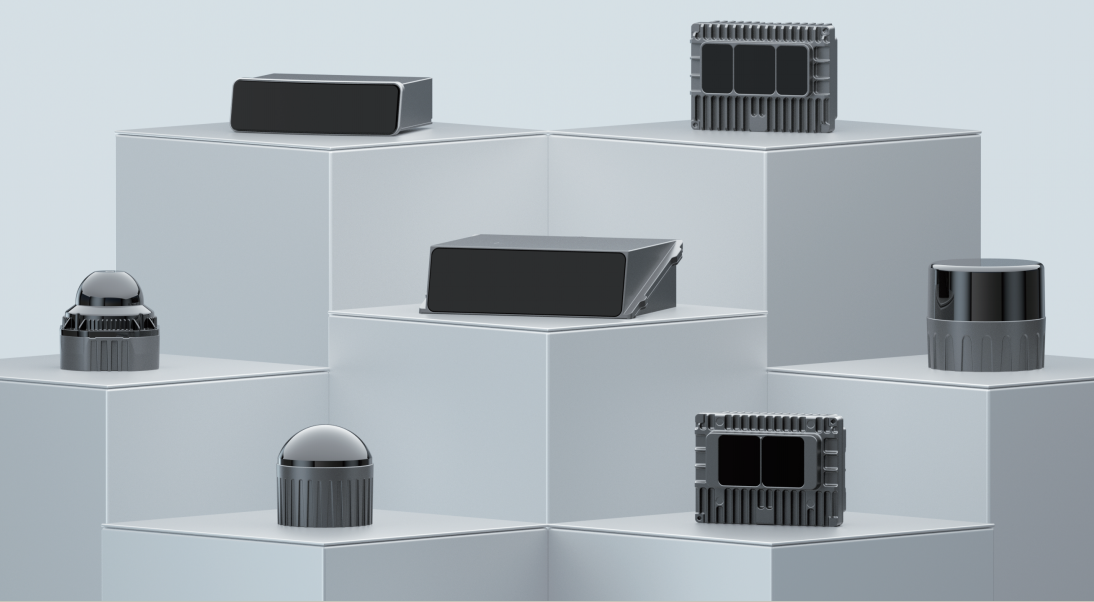
The company has invested heavily in digital LiDAR architecture and AI-driven perception systems.
Key product families include:
- Airy
- Fairy
- E1R
- AC1
- Helios
- M-Series
RoboSense has increasingly focused on robotics and embodied intelligence applications in recent years.
Hesai Technology
Founded in 2014, Hesai has become one of the largest LiDAR manufacturers globally.
The company specializes in:
- Automotive LiDAR
- Autonomous driving systems
- Industrial automation
- Robotics
- Intelligent transportation
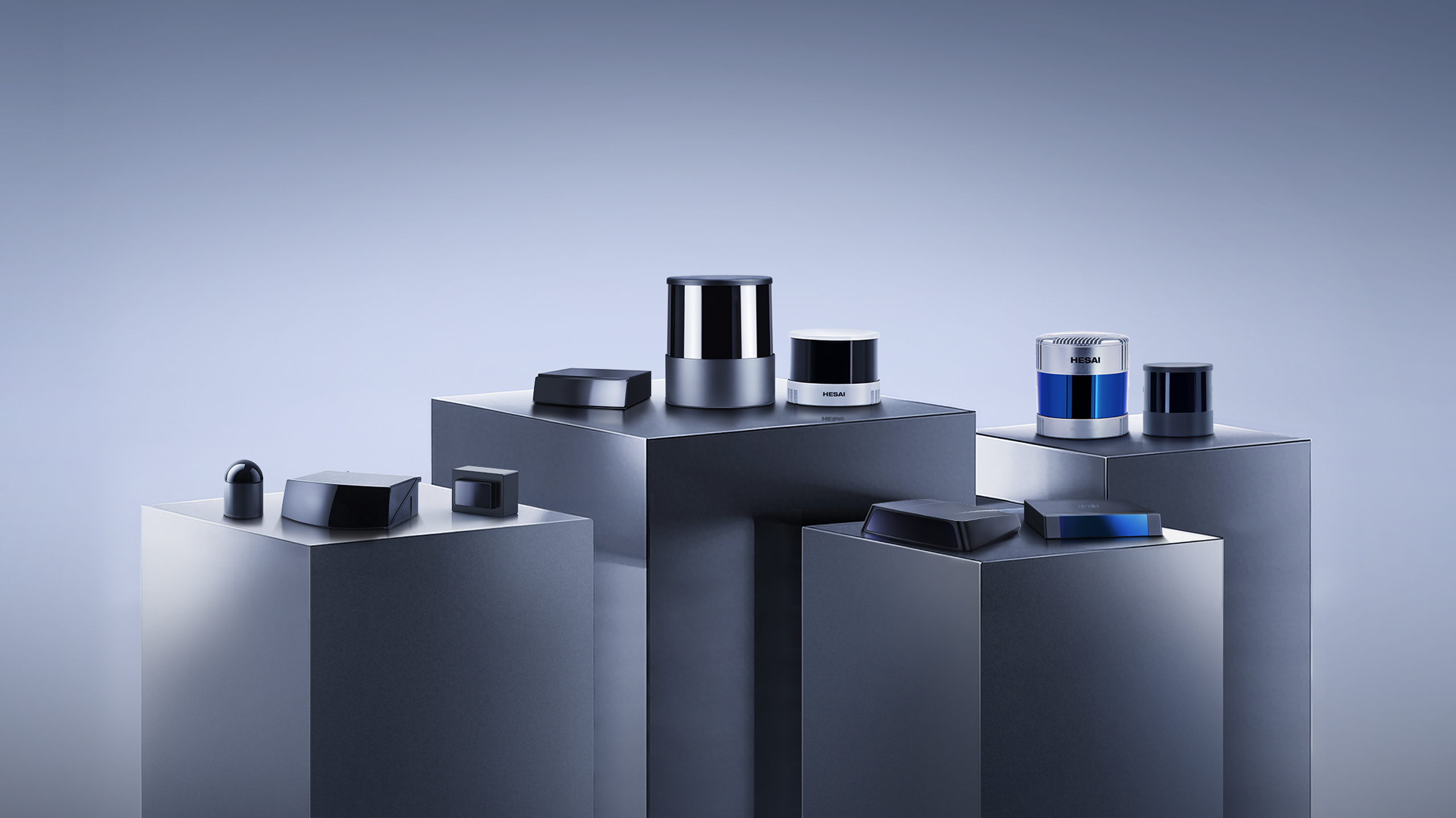
Popular products include:
- AT128
- ATX
- QT Series
- XT Series
- Pandar Series
Hesai is particularly strong in automotive-grade LiDAR production and high-volume manufacturing.
Core Technology Comparison
Digital LiDAR Architecture
RoboSense Advantage
RoboSense is recognized for its fully digital LiDAR architecture.
Benefits include:
- Improved signal processing
- Better scalability
- Enhanced reliability
- Reduced system complexity
- Higher integration capability
Digital architecture is particularly attractive for robotics developers seeking compact and energy-efficient solutions.
Hesai Advantage
Hesai focuses heavily on:
- High-performance automotive LiDAR
- Long-range detection
- High-volume production
The company has achieved significant success in autonomous vehicle deployments.
For large-scale automotive projects, Hesai offers mature manufacturing capabilities and proven reliability.
LiDAR for Autonomous Mobile Robots (AMRs)
RoboSense Recommendation
E1R
Advantages:
- Compact design
- Wide field of view
- Solid-state architecture
- Easy integration
- Excellent indoor performance
Ideal for:
- Warehouse robots
- Delivery robots
- Cleaning robots
- Service robots
Hesai Recommendation
XT Series
Advantages:
- Long detection range
- Robust industrial design
- High reliability
Ideal for:
- Outdoor robots
- Industrial inspection platforms
- Large autonomous systems
Winner for AMRs
RoboSense
Why?
Most AMRs prioritize:
- Compact size
- Wide FOV
- Low power consumption
- Indoor navigation
RoboSense products are often better optimized for these requirements.
LiDAR for AGVs and Warehouse Automation
Warehouse environments require:
- Reliable obstacle detection
- High refresh rates
- Accurate localization
- Long operational lifespan
RoboSense Helios
Strengths:
- Proven industrial deployment
- Reliable navigation
- Stable point cloud output
- Warehouse-focused performance
Hesai XT32M2X
Strengths:
- Long-range detection
- Industrial-grade protection
- Excellent outdoor capability
Winner for Indoor Warehouses
RoboSense Helios
Winner for Outdoor Logistics
Hesai XT Series
LiDAR for Humanoid Robots
Humanoid robotics has become one of the hottest technology sectors in 2026.
Humanoid robots require:
- Wide perception coverage
- Low weight
- Compact dimensions
- Human-level environmental awareness
RoboSense Airy
Airy was specifically designed for robotic perception.
Advantages:
- Wide sensing coverage
- Reduced blind spots
- Compact structure
- Optimized for embodied AI
Hesai Products
Hesai currently focuses more heavily on automotive and industrial markets.
While Hesai sensors can be used in humanoid robots, RoboSense currently provides more targeted solutions for this segment.
Winner for Humanoid Robotics
RoboSense Airy
LiDAR for Autonomous Driving
Autonomous vehicles require:
- Long-range detection
- High resolution
- Automotive-grade certification
- Functional safety
Hesai AT128
Advantages:
- Long-range performance
- High-resolution point clouds
- Automotive-grade production
- Strong OEM adoption
Suitable for:
- Passenger vehicles
- Robotaxis
- Autonomous trucks
RoboSense M-Series
Advantages:
- Digital architecture
- High-performance perception
- Advanced automotive integration
Suitable for:
- Intelligent vehicles
- Smart transportation
- ADAS systems
Winner for Automotive Deployment
Hesai
For large-scale automotive deployment, Hesai currently maintains a strong position due to extensive OEM partnerships and manufacturing scale.
LiDAR for Drones and Mapping
Mapping applications require:
- High point cloud density
- Accurate measurements
- Stable data collection
RoboSense Fairy
Advantages:
- Dense point cloud generation
- Precision mapping
- High-quality environmental reconstruction
Hesai Pandar Series
Advantages:
- Long-range detection
- Mapping-grade performance
- Proven UAV integration
Winner
Tie
Choice depends on project requirements.
Performance Comparison
| Feature | RoboSense | Hesai |
|---|---|---|
| Robotics Focus | Excellent | Good |
| Humanoid Robot Support | Excellent | Moderate |
| Automotive Applications | Excellent | Excellent |
| Digital Architecture | Excellent | Good |
| Industrial Automation | Excellent | Excellent |
| Long-Range Detection | Good | Excellent |
| Compact Solutions | Excellent | Good |
| Production Scale | Good | Excellent |
| Mapping Applications | Excellent | Excellent |
| Cost Efficiency | Excellent | Excellent |
Software and SDK Support
Both manufacturers provide:
- SDKs
- ROS compatibility
- Development tools
- Technical documentation
- Integration support
When evaluating software ecosystems, engineers should consider:
- ROS1 compatibility
- ROS2 compatibility
- Linux support
- Windows support
- API documentation
- Sample code quality
Both companies perform well in these areas.
Reliability and Environmental Protection
Industrial deployments require:
- IP67 protection
- Vibration resistance
- Shock resistance
- Temperature tolerance
Both RoboSense and Hesai provide automotive-grade products capable of operating in harsh environments.
Common deployment scenarios include:
- Ports
- Warehouses
- Mining operations
- Agricultural automation
- Construction sites
Cost Considerations
Many buyers focus exclusively on unit price.
This is a mistake.
The true cost of LiDAR ownership includes:
- Integration effort
- Software development
- Maintenance
- Downtime
- Technical support
- Product lifecycle
A lower-priced sensor may become more expensive if integration complexity increases engineering costs.
Always evaluate Total Cost of Ownership (TCO).
Which Brand Should You Choose?
Choose RoboSense if you need:
- Humanoid robotics
- Delivery robots
- Service robots
- Indoor AMRs
- Embodied AI projects
- Wide-FOV sensing
- Digital LiDAR architecture
Choose Hesai if you need:
- Autonomous vehicles
- Long-range detection
- Automotive production programs
- High-speed autonomous platforms
- Large-scale deployments
Why Many Integrators Work With Both Brands
Many advanced robotics companies use multiple LiDAR brands simultaneously.
Example:
Robot Platform:
- Front Sensor → Hesai AT128
- Side Sensors → RoboSense E1R
- Rear Sensor → RoboSense Airy
This hybrid approach maximizes perception performance while optimizing costs.
Future Outlook: RoboSense vs Hesai
By 2030, the global LiDAR market is expected to be driven by:
- Humanoid robots
- Autonomous vehicles
- Smart factories
- Intelligent logistics
- AI-powered machines
RoboSense appears particularly well-positioned for:
- Embodied AI
- Robotics
- Digital LiDAR
Hesai appears especially strong in:
- Automotive LiDAR
- High-volume manufacturing
- Long-range sensing
Rather than one company replacing the other, both are likely to continue dominating different segments of the LiDAR industry.
Why Source RoboSense and Hesai LiDAR Through LIDARSEEK?
LIDARSEEK supports global customers with:
- Genuine RoboSense products
- Genuine Hesai products
- Technical consultation
- Project-based sensor selection
- Fast international shipping
- Engineering support
- Prototype and volume supply
Whether you are developing an autonomous robot, a humanoid platform, an industrial automation system, or an autonomous vehicle, our team can help identify the most suitable LiDAR solution for your project.
Frequently Asked Questions (FAQ)
Which is better, RoboSense or Hesai?
Neither is universally better. RoboSense is often preferred for robotics and embodied AI applications, while Hesai has strong advantages in automotive-grade long-range LiDAR deployments.
Is RoboSense cheaper than Hesai?
Pricing depends on the model and project volume. Both manufacturers offer solutions ranging from development-stage sensors to automotive-grade production products.
What is the best LiDAR for AMRs?
For most indoor AMRs, RoboSense E1R and Helios are highly competitive choices due to their compact design and navigation-oriented capabilities.
What is the best LiDAR for autonomous vehicles?
Hesai AT128 and RoboSense M-Series are among the most widely discussed options for automotive applications.
Can RoboSense and Hesai sensors work with ROS?
Yes. Both manufacturers provide ROS integration support and SDK resources.
Which LiDAR is best for humanoid robots?
RoboSense Airy currently stands out as one of the most specialized solutions designed for robotic perception and embodied AI applications.
Should I use multiple LiDAR brands in one robot?
Many advanced robotic platforms combine different LiDAR sensors to optimize performance, coverage, and cost efficiency.
Where can I buy genuine RoboSense and Hesai LiDAR sensors?
LIDARSEEK provides global sourcing, technical support, engineering consultation, and international shipping for a wide range of RoboSense and Hesai LiDAR products.









