
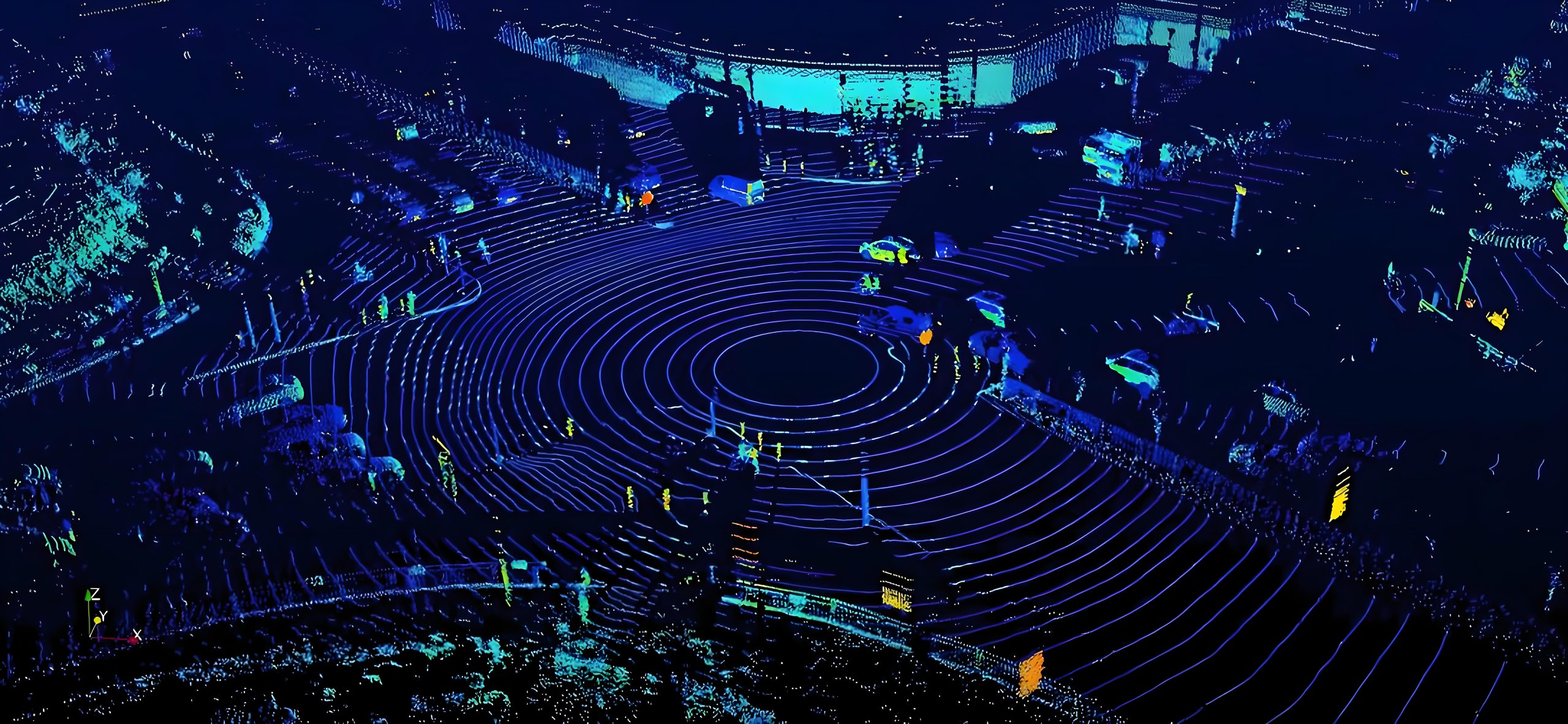
Selecting a 3D LiDAR sensor is rarely a simple specification comparison. For robotics engineers, autonomous vehicle developers, and industrial automation integrators, the decision directly affects system safety, perception reliability, and long-term project costs.
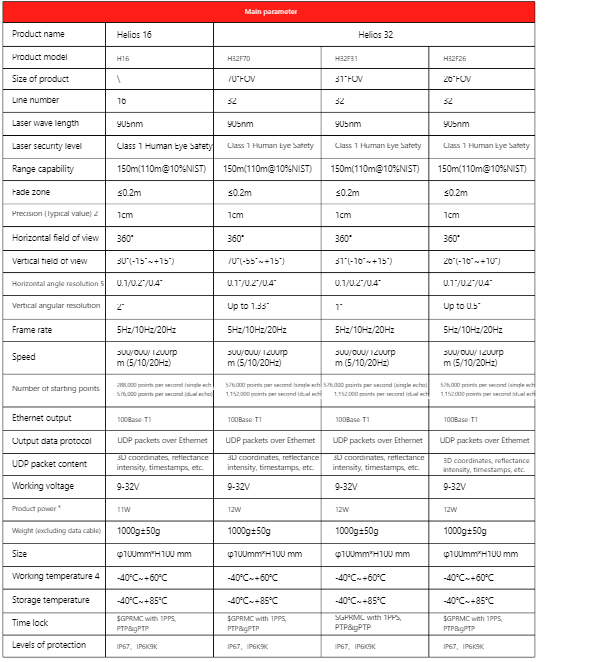
Among mid-to-high performance mechanical LiDAR solutions, the RoboSense RS-Helios-32 consistently enters the conversation. But how does it truly compare to other LiDAR sensors in the same category? Is it just another 32-beam unit, or does it deliver measurable advantages in real deployments?
This in-depth guide explores how RoboSense RS-Helios-32 LiDAR stacks up against competing 3D LiDAR sensors in terms of performance, integration, operational reliability, and total return on investment.
Understanding Where RS-Helios-32 Fits in the LiDAR Market
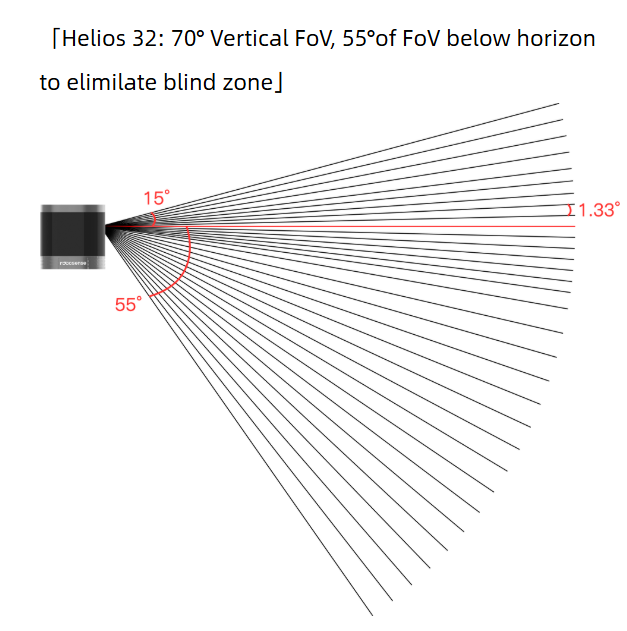
The RoboSense RS-Helios-32 belongs to the class of 32-channel mechanical spinning LiDAR sensors. These sensors are typically used when a project requires:
- True 3D environmental perception
- Mid-to-long range detection
- Dense point cloud output
- Reliable 360° coverage
Compared to entry-level 16-beam LiDAR and ultra-high-end 64+ beam systems, the RS-Helios-32 sits in a strategic middle ground — offering a strong balance between performance and cost efficiency.
1. Beam Count and Vertical Resolution: Why 32 Channels Matter
One of the most important differentiators in LiDAR comparison is vertical resolution, which is largely determined by beam count.
RS-Helios-32 Advantage
With 32 laser channels, the RoboSense RS-Helios-32 captures twice the vertical detail of 16-beam systems. This means:
- Better detection of low-profile obstacles (curbs, debris, pallets)
- Improved recognition of mid-height objects (vehicles, machinery)
- More accurate modeling of complex terrain
Compared to 16-Beam LiDAR
Lower-beam LiDAR sensors often struggle with:
- Sparse vertical data
- Missed obstacles between scan layers
- Reduced mapping detail
In real deployments such as autonomous mobile robots (AMRs) in warehouses, this can lead to navigation slowdowns or overly conservative path planning.
2. Field of View: Full 360° Awareness Without Blind Spots
A key strength of the RoboSense RS-Helios-32 LiDAR sensor is its 360-degree horizontal field of view, achieved through mechanical rotation.
Why This Matters
Compared to solid-state or limited-FOV LiDAR units, full 360° scanning:
- Reduces blind spots
- Improves object tracking continuity
- Supports dynamic obstacle avoidance
In mobile robotics and autonomous vehicle research, missing objects behind or beside the platform can create safety risks. The RS-Helios-32’s continuous scanning ensures environmental awareness in all directions.
3. Detection Range: Seeing Farther, Planning Earlier
Range capability directly affects system safety and operational smoothness.
RS-Helios-32 Performance
The RoboSense RS-Helios-32 provides strong mid-to-long range detection suitable for:
- Outdoor robotics
- Autonomous shuttles and test vehicles
- Large-area mapping
Longer detection range allows perception systems to identify obstacles earlier, which translates into:
- Smoother trajectory planning
- Fewer emergency stops
- Increased travel speeds in safe conditions
Compared to Short-Range LiDAR
Some lower-cost LiDAR sensors focus only on short-range indoor use. While acceptable for confined spaces, they struggle in outdoor or semi-open environments where longer visibility is required.
4. Point Cloud Density and Mapping Quality
Not all 32-beam LiDAR sensors produce the same usable data quality. Beyond beam count, point cloud consistency and stability matter.
RS-Helios-32 Strength in 3D Mapping
The RoboSense RS-Helios-32 is frequently chosen for:
- Mobile mapping platforms
- Infrastructure scanning
- Robotics SLAM systems
Dense and consistent point clouds help improve:
- Surface reconstruction accuracy
- Loop closure performance in SLAM
- Object classification reliability
Comparison With Lower-End 3D LiDAR
Lower-tier sensors may technically offer 3D data but with:
- Noisy returns
- Irregular point distribution
- Lower effective resolution
This forces software teams to compensate with heavier filtering, increasing computational load.
5. Reliability in Industrial and Outdoor Conditions
Environmental robustness is another major comparison point.
RS-Helios-32 in Real-World Use
The RoboSense RS-Helios-32 LiDAR is designed for deployment in environments such as:
- Logistics yards
- Construction sites
- Smart city infrastructure
- Industrial campuses
LiDAR’s active laser measurement makes it less dependent on ambient light, allowing stable performance in:
- Bright sunlight
- Low light
- Night operations
Versus Vision-Only Systems
Some projects attempt to rely mainly on cameras. However, vision systems are highly sensitive to lighting, glare, and shadows. A 3D LiDAR like RS-Helios-32 provides geometry-based perception that remains consistent regardless of lighting conditions.









