
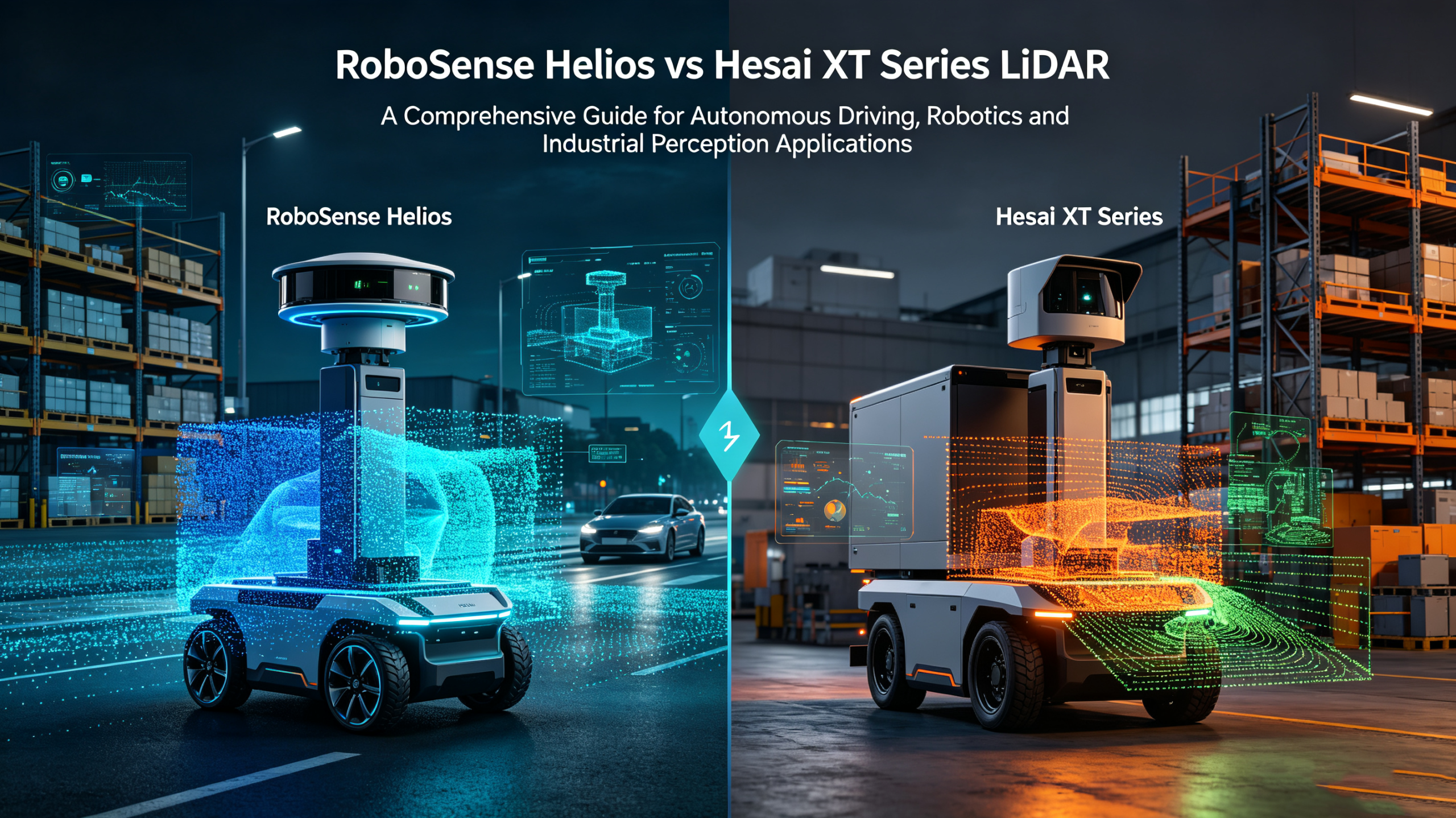
RoboSense Helios vs Hesai XT Series LiDAR: The Ultimate Comparison Guide for Robotics and Autonomous Systems
Introduction: The New Era of 3D Perception
The rapid development of autonomous driving, industrial robotics, smart logistics, and AI-powered machines has created an increasing demand for reliable 3D perception technologies. Traditional cameras provide rich visual information but struggle in challenging environments such as darkness, strong sunlight, fog, dust, or complex industrial scenes. LiDAR (Light Detection and Ranging) technology solves these limitations by generating accurate three-dimensional point clouds through laser-based distance measurement.
Modern autonomous systems increasingly rely on LiDAR as a core perception sensor because it provides:
- Accurate distance measurement
- Real-time 3D environment reconstruction
- 360-degree spatial awareness
- Robust performance under different lighting conditions
- Precise obstacle detection and localization
Among the many LiDAR manufacturers worldwide, RoboSense and Hesai Technology have become two of the most recognized Chinese LiDAR suppliers. Their products are widely used in autonomous vehicles, robotics, mapping systems, and industrial automation.
This article provides a detailed analysis of the RoboSense Helios series and Hesai XT series LiDAR products, including technical features, advantages, limitations, and suitable application scenarios.
1. Analysis of Lidarseek.com: A LiDAR Product Platform for Industrial Applications
1.1 Website Positioning
Lidarseek.com positions itself as a specialized LiDAR solution platform focusing on industrial customers, robotics developers, autonomous vehicle engineers, and system integrators.
Unlike general electronics marketplaces, LiDAR-focused platforms usually serve professional users who require:
- Engineering-grade sensors
- Industrial supply capability
- Technical documentation
- Integration support
- Application-based product selection
The core value proposition of such platforms is not only selling hardware but helping customers select suitable LiDAR sensors according to:
- Detection range requirements
- Field of view requirements
- Point cloud density
- Environmental conditions
- Computing platform compatibility
For robotics companies and autonomous system developers, selecting the correct LiDAR sensor is often more important than simply choosing the highest-performance model.
A warehouse robot operating indoors may prioritize:
- Wide vertical field of view
- Low power consumption
- Compact design
while an autonomous vehicle may require:
- Longer detection range
- Higher point density
- Automotive reliability
2. LiDAR Technology Overview
2.1 How LiDAR Works
LiDAR uses laser pulses to measure distance based on the Time-of-Flight (ToF) principle.
The basic process:
- The LiDAR emits laser pulses.
- The laser reaches an object surface.
- The reflected signal returns to the sensor.
- The system calculates distance based on the travel time.
- Millions of measurements generate a 3D point cloud.
A typical LiDAR point contains:
- X coordinate
- Y coordinate
- Z coordinate
- Reflectivity value
- Timestamp
These point clouds become the foundation for AI perception algorithms.
2.2 Why LiDAR Is Important for Autonomous Robots
For autonomous machines, perception is the first stage of intelligence.
A robot must answer:
- Where am I?
- What objects surround me?
- Are obstacles moving?
- What path is safe?
LiDAR supports these tasks through:
SLAM (Simultaneous Localization and Mapping)
Robots use LiDAR data to create maps and estimate their own position.
Applications include:
- Autonomous warehouse robots
- Delivery robots
- Cleaning robots
- Inspection robots
Obstacle Detection
LiDAR can accurately detect:
- Humans
- Vehicles
- Machines
- Walls
- Equipment
Navigation
The generated point cloud allows robots to plan collision-free paths.
3. RoboSense Helios Series Overview
3.1 Product Positioning
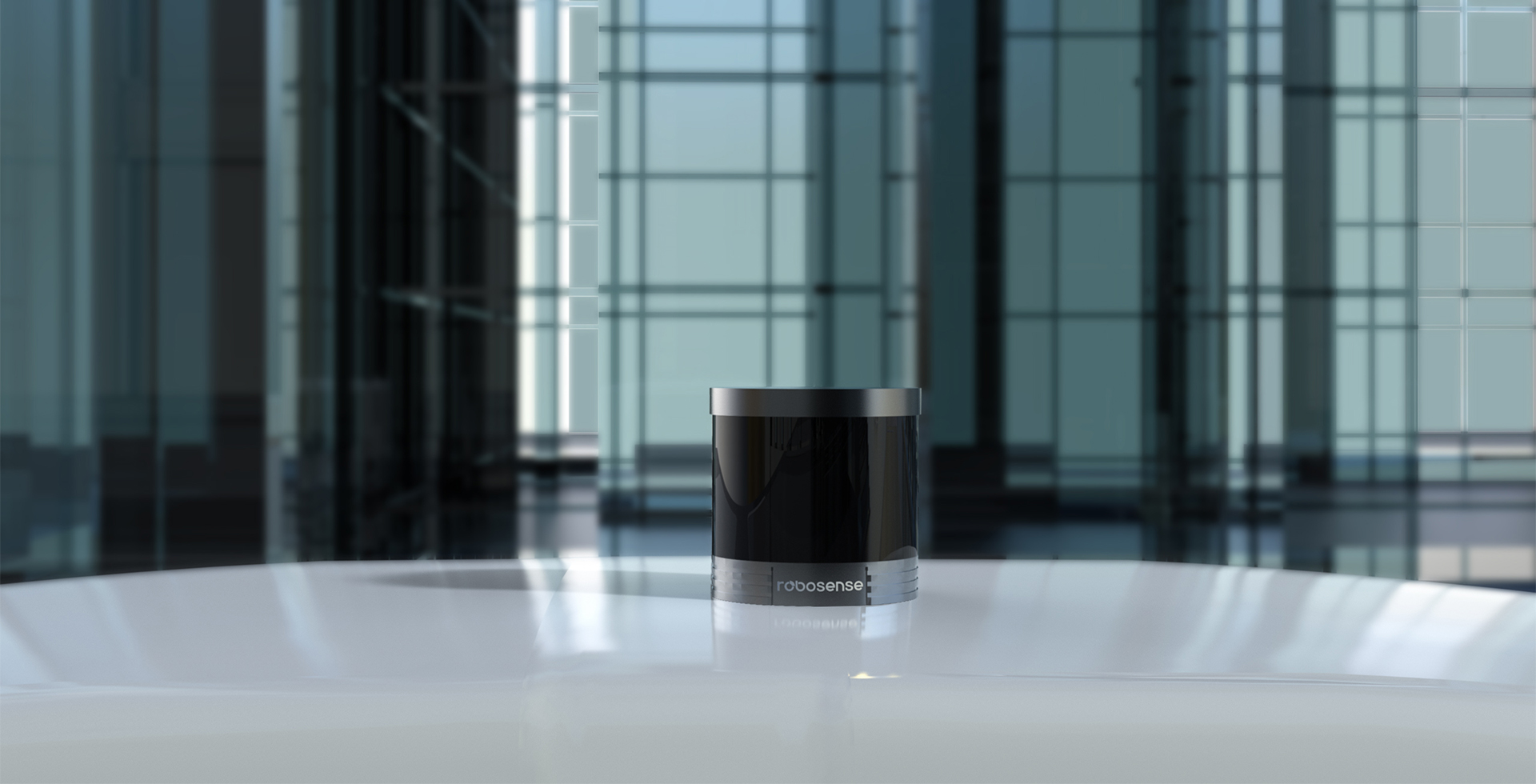
The RoboSense Helios series is designed as a multi-beam 3D LiDAR family targeting:
- Robotics
- Intelligent vehicles
- Industrial automation
- SLAM applications
- Smart infrastructure
Compared with previous-generation RoboSense products, Helios focuses on reducing size, cost, and integration complexity while maintaining professional-level perception capability.
RoboSense describes Helios as a customized multi-beam LiDAR platform supporting different vertical field-of-view configurations for different scenarios.
The major products include:
- Helios 16
- Helios 32 H32F70
- Helios 32 H32F26
4. RoboSense Helios 16 Analysis
4.1 Overview
Helios 16 is the entry-level model of the Helios family.
It uses:
- 16 laser channels
- 905nm wavelength
- 360° horizontal scanning
- 30° vertical field of view
It is designed for applications where cost efficiency and reliable perception are more important than maximum point density.
4.2 Key Specifications
| Parameter | Helios 16 |
|---|---|
| Laser Channels | 16 |
| Laser Wavelength | 905nm |
| Range | Up to 150m |
| Accuracy | Approximately 1cm precision |
| Horizontal FOV | 360° |
| Vertical FOV | 30° |
| Scan Frequency | 5Hz / 10Hz / 20Hz |
| Protection | IP67 / IP6K9K |
| Operating Temperature | -40°C to +60°C |
4.3 Advantages of Helios 16
Compact Integration
The Helios 16 uses a compact cylindrical design:
- Diameter approximately 100mm
- Height approximately 100mm
This makes it suitable for:
- Mobile robots
- Autonomous carts
- Industrial vehicles
Good Cost-to-Performance Ratio
Many robotics companies do not need automotive-level LiDAR.
For example:
A warehouse AMR moving at 2m/s does not require a 300-meter detection range.
Instead, it needs:
- Stable point cloud output
- Reliable obstacle detection
- Low integration cost
Helios 16 fits these requirements well.
Suitable for SLAM
The 360-degree scanning capability makes Helios 16 suitable for mapping and localization.
Typical applications:
- Indoor navigation robots
- Factory inspection robots
- Autonomous forklifts
5. RoboSense Helios 32 Series Analysis
The Helios 32 family improves perception density by doubling the laser channels.
It provides two major configurations:
- Helios 32 H32F70
- Helios 32 H32F26
The two versions target different application requirements.
5.1 Helios 32 H32F70
Wide Vertical Field-of-View Version
The H32F70 provides:
- 32 laser channels
- 70° vertical field of view
- Large downward detection capability
This design is especially useful for robots operating in complex environments.
Examples:
- Warehouse robots
- Delivery robots
- Outdoor mobile robots
A wide vertical field allows the system to detect:
- Low obstacles
- Ground-level objects
- Elevated structures
Key Advantages
Reduced Blind Areas
The wide vertical coverage improves perception around the robot.
For example:
A mobile robot moving through a warehouse may encounter:
- Pallets
- Boxes
- Human legs
- Forklift equipment
A narrow vertical field may miss certain obstacles.
The H32F70 improves coverage.
5.2 Helios 32 H32F26
High Resolution Long-Distance Version
The H32F26 focuses on higher vertical resolution.
Main characteristics:
- 32 channels
- 26° vertical field of view
- Higher angular resolution
This configuration is better for:
- Autonomous vehicles
- Outdoor robots
- Long-distance perception
6. RoboSense Helios Series Strengths and Limitations
Strengths
1. Flexible Product Family
Customers can choose:
- Helios 16 for cost-sensitive projects
- Helios 32 F70 for wide-angle perception
- Helios 32 F26 for higher-resolution applications
2. Strong Robotics Compatibility
Helios supports common robotics development environments:
- ROS
- SLAM frameworks
- AI perception pipelines
3. Industrial Reliability
The series supports:
- Wide temperature operation
- IP67 protection
- Ethernet communication
These characteristics make it suitable for industrial environments.
Limitations
Lower Range Compared With High-End Automotive LiDAR
Helios focuses mainly on robotics and industrial applications.
For highway autonomous driving, longer-range automotive LiDAR products may provide advantages.
Mechanical Rotating Structure
Although rotating LiDAR offers excellent 360-degree coverage, some applications requiring extremely compact solid-state sensors may prefer alternative architectures.
7. RoboSense Helios Application Scenarios
Autonomous Mobile Robots (AMR)
Warehouse robots require:
- Accurate localization
- Collision avoidance
- Dynamic obstacle detection
Helios provides the necessary 3D perception capability.
Industrial AGV
AGVs in factories need:
- Reliable navigation
- Human safety detection
- Industrial durability
Helios can support these requirements.
Robotics Research
Universities and AI companies often select Helios because:
- It provides high-quality point clouds
- It integrates easily with AI algorithms
- It supports SLAM research
8. Hesai XT Series LiDAR Overview
8.1 Product Positioning
Hesai Technology is one of the world’s leading LiDAR manufacturers, focusing on automotive, robotics, industrial perception, mapping, and autonomous mobility markets.
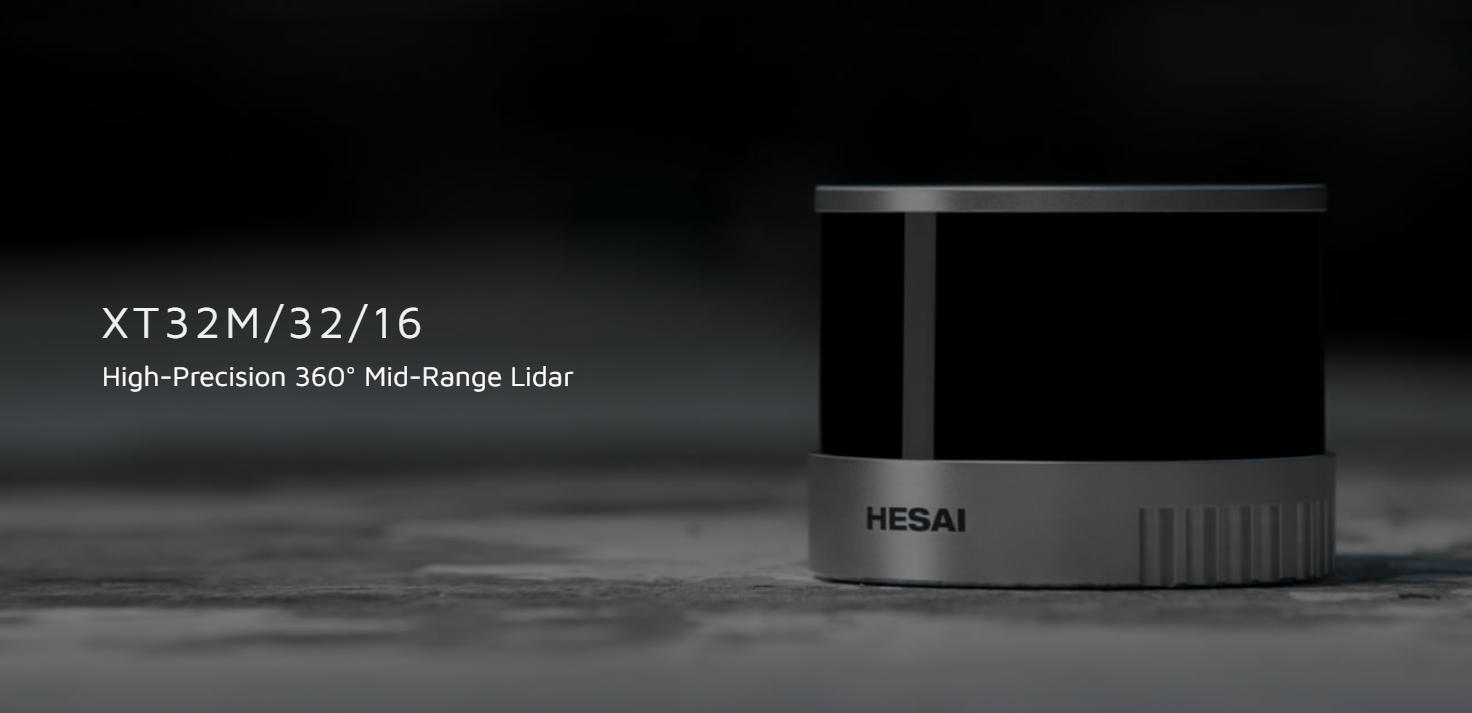
The Hesai XT series is positioned as a high-precision 360° mid-range mechanical LiDAR family, designed for applications requiring:
- High-quality point clouds
- Long-term stability
- Accurate SLAM performance
- Industrial-grade reliability
- Compact integration
The XT family includes:
- Hesai XT16
- Hesai XT32
- Hesai XT32M
These products are widely used in:
- Autonomous robots
- Mobile mapping systems
- Surveying equipment
- Warehouse automation
- Industrial inspection robots
- Autonomous vehicles
According to Hesai’s official specifications, XT series products provide 360° scanning, centimeter-level accuracy, and different channel configurations for different application requirements.
9. Hesai XT16 LiDAR Analysis
9.1 Product Overview
The Hesai XT16 is the entry-level model of the XT family.
It is designed for applications requiring:
- Reliable 3D perception
- Lower system cost
- Compact integration
- Moderate point cloud density
Compared with traditional 2D LiDAR sensors, XT16 provides complete 3D environmental information.
Typical applications:
- AMR robots
- Indoor logistics vehicles
- Autonomous forklifts
- Security robots
9.2 XT16 Main Specifications
| Parameter | Hesai XT16 |
|---|---|
| Laser Channels | 16 |
| Range | 0.05m – 120m |
| Accuracy | ±1cm |
| Range Precision | 0.5cm (1σ) |
| Horizontal FOV | 360° |
| Vertical FOV | 30° |
| Point Rate | 320,000 pts/s |
| Angular Resolution | 0.18° × 2° |
| Weight | Approx. 490g |
| Application | Robotics / Industrial |
9.3 Advantages of XT16
Lightweight Design
One important advantage of XT16 is its compact mechanical design.
Compared with many traditional multi-beam LiDAR sensors, XT16 reduces:
- Installation difficulty
- Robot payload requirements
- Power consumption
This makes it suitable for:
- Small AMRs
- Autonomous delivery robots
- Research platforms
High Precision Point Cloud
Although XT16 has fewer laser channels compared with XT32, it still provides:
- Accurate distance measurement
- Stable point cloud output
- Good repeatability
For indoor robots moving at relatively low speed, XT16 can provide sufficient perception capability.
10. Hesai XT32 LiDAR Analysis
10.1 Product Overview
HESAI XT32 is one of Hesai’s most recognized industrial LiDAR products.
It improves perception capability through:
- 32 laser channels
- Higher vertical resolution
- Increased point density
The XT32 is designed for customers requiring more detailed environmental reconstruction.
Applications include:
- Autonomous vehicles
- Mapping robots
- Outdoor inspection systems
- Large industrial vehicles
10.2 XT32 Main Specifications
| Parameter | Hesai XT32 |
|---|---|
| Laser Channels | 32 |
| Range | 0.05m – 120m |
| Accuracy | ±1cm |
| Range Precision | 0.5cm (1σ) |
| Horizontal FOV | 360° |
| Vertical FOV | 31° |
| Point Rate | 640,000 pts/s |
| Angular Resolution | 0.18° × 1° |
| Weight | Approx. 800g |
10.3 XT32 Advantages
Higher Point Density
Compared with XT16:
- Double laser channels
- Higher vertical resolution
- Better object recognition
This improves:
- SLAM accuracy
- Object classification
- Mapping quality
For example:
A warehouse robot equipped with XT32 can better distinguish:
- Human legs
- Pallets
- Small obstacles
- Equipment structures
Better Outdoor Capability
XT32 performs better in outdoor environments.
Suitable scenarios:
- Autonomous vehicles
- Campus delivery robots
- Industrial transportation vehicles
11. Hesai XT32M Analysis
11.1 Product Positioning
HESAI XT32M represents a more advanced version of the XT family.
It focuses on:
- Longer detection range
- Higher point quality
- Lightweight integration
It is particularly attractive for:
- Autonomous driving research
- UAV mapping
- Mobile surveying
- High-end robotics
11.2 XT32M Main Specifications
| Parameter | Hesai XT32M |
|---|---|
| Laser Channels | 32 |
| Range | 0.5m – 300m |
| Accuracy | ±1cm |
| Range Precision | 0.5cm (1σ) |
| Horizontal FOV | 360° |
| Vertical FOV | 40.3° |
| Point Rate | 640,000 pts/s |
| Angular Resolution | 0.18° × 1.3° |
| Weight | Approx. 490g |
11.3 XT32M Key Benefits
Long Distance Perception
The biggest advantage of XT32M is its extended range capability.
A 300m detection range enables:
- Faster autonomous decision making
- Higher-speed vehicle perception
- Larger outdoor scene reconstruction
Lightweight High Performance
The combination of:
- 32 channels
- 300m range
- Compact size
makes XT32M attractive for:
- UAV LiDAR mapping
- Autonomous inspection
- Mobile surveying
12. RoboSense Helios vs Hesai XT Technical Comparison
12.1 Specification Comparison
| Feature | RoboSense Helios 16 | RoboSense Helios 32 | Hesai XT16 | Hesai XT32 | Hesai XT32M |
|---|---|---|---|---|---|
| Channels | 16 | 32 | 16 | 32 | 32 |
| Range | 150m | 150m | 120m | 120m | 300m |
| Accuracy | 1cm | 1cm | ±1cm | ±1cm | ±1cm |
| Horizontal FOV | 360° | 360° | 360° | 360° | 360° |
| Vertical FOV | 30° | 26°/70° | 30° | 31° | 40.3° |
| Point Rate | 288K-576K | 576K-1.15M | 320K | 640K | 640K |
| Protection | IP67/IP6K9K | IP67/IP6K9K | Industrial | Industrial | Industrial |
13. RoboSense Helios vs Hesai XT: Performance Analysis
13.1 Range Capability
Winner:
Hesai XT32M
With up to approximately 300m range, XT32M clearly exceeds Helios and standard XT models.
Best applications:
- Autonomous vehicles
- Outdoor robots
- Long-distance mapping
13.2 Indoor Robotics Performance
Winner:
RoboSense Helios 32 H32F70
Reason:
The ultra-wide 70° vertical field of view provides excellent near-field coverage.
Advantages:
- Reduced blind zones
- Better obstacle detection
- Improved warehouse navigation
13.3 SLAM Performance
Both platforms perform well.
However:
RoboSense Helios Advantages
- Optimized for robot navigation
- Wide FOV option
- Easy AMR integration
Hesai XT Advantages
- High precision
- Dense point clouds
- Strong mapping capability
For:
Indoor AMR:
Helios 32 H32F70 is highly competitive.
For:
Outdoor mapping:
Hesai XT32 / XT32M provides stronger capability.
14. Application-Based Selection Guide
Scenario 1: Warehouse AMR Robot
Recommended:
RoboSense Helios 32 H32F70
Reasons:
- Wide vertical coverage
- Excellent obstacle detection
- Good cost efficiency
Scenario 2: Autonomous Forklift
Recommended:
RoboSense Helios 32 or Hesai XT32
Requirements:
- Human detection
- Precise localization
- Industrial reliability
Both are suitable.
Scenario 3: Outdoor Delivery Robot
Recommended:
Hesai XT32M
Reasons:
- Longer range
- Better outdoor perception
- Higher safety margin
Scenario 4: UAV Mapping
Recommended:
Hesai XT32M
Reasons:
- Lightweight design
- Long range
- Dense point cloud
Scenario 5: Robotics Research Platform
Recommended:
RoboSense Helios 16 / Hesai XT16
Reasons:
- Lower cost
- Easy integration
- Sufficient performance
15. Final Recommendation: Which LiDAR Should Engineers Choose?
Selecting a LiDAR sensor is not about choosing the product with the highest specification. The correct choice depends on:
- Application environment
- Robot speed
- Detection distance requirements
- Computing capability
- Budget
- Integration complexity
Both RoboSense Helios and Hesai XT are professional-grade LiDAR platforms, but they target slightly different market segments.
RoboSense Helios emphasizes:
- Robotics integration
- Wide field-of-view perception
- Industrial automation
- Cost-effective deployment
Hesai XT emphasizes:
- High-quality point clouds
- Mapping accuracy
- Long-range perception
- Professional surveying and autonomous applications
Official specifications show that the Helios family provides 16/32-channel configurations, 360° horizontal scanning, approximately 150m range capability, and multiple vertical FOV options including the wide 70° H32F70 version.
The Hesai XT family provides XT16, XT32, and XT32M configurations, with XT32M offering up to 300m ranging capability, 640,000 points/s output, and a 360° × 40.3° field of view.
16. Recommended LiDAR Selection Matrix
| Application | Recommended LiDAR | Reason |
|---|---|---|
| Indoor AMR Robot | RoboSense Helios 16 | Low cost, reliable 3D perception |
| Advanced Warehouse Robot | RoboSense Helios 32 H32F70 | Wide vertical FOV, fewer blind spots |
| Autonomous Forklift | Helios 32 / Hesai XT32 | Industrial reliability and accurate SLAM |
| Outdoor Delivery Robot | Hesai XT32 | Higher point density |
| Autonomous Vehicle Prototype | Hesai XT32M | Longer detection range |
| UAV Mapping | Hesai XT32M | Lightweight + long range |
| Research Platform | Helios 16 / XT16 | Easy integration and reasonable cost |
| High Accuracy Mapping | Hesai XT32M | Dense point cloud and precision |
17. LiDAR + AI Computing: The Future Autonomous Perception Architecture
Modern LiDAR is no longer an independent sensor.
The future intelligent system combines:
LiDAR + AI Processor + Deep Learning + Robotics Software
17.1 NVIDIA Jetson and LiDAR Integration
For robotics developers, NVIDIA Jetson platforms are becoming one of the most popular AI computing solutions.
A typical system includes:
Sensor Layer
Examples:
- RoboSense Helios
- Hesai XT Series
- Cameras
- IMU
- GNSS
Computing Layer
Examples:
- NVIDIA Jetson AGX Orin
- Jetson Orin NX
- Industrial AI computers
Software Layer
Including:
- ROS / ROS2
- SLAM algorithms
- Deep learning perception models
- Path planning algorithms
17.2 Why AI Computing Is Critical
A LiDAR sensor only produces raw spatial information.
The robot still needs AI algorithms to understand:
- Is this object a human?
- Is this obstacle static or moving?
- Is the path safe?
- Where should the robot move?
Deep learning models can transform point clouds into intelligent decisions.
Examples:
3D Object Detection
Identifies:
- Humans
- Vehicles
- Equipment
- Obstacles
Semantic Mapping
Creates intelligent maps containing:
- Roads
- Walls
- Restricted areas
- Work zones
Autonomous Navigation
Allows robots to:
- Avoid collisions
- Optimize routes
- Operate continuously
18. Future Trends of LiDAR Technology
18.1 Smaller and More Affordable LiDAR
The LiDAR market is moving toward:
- Smaller sensors
- Lower power consumption
- Lower cost
- Easier integration
Future industrial robots will increasingly use multiple LiDAR sensors.
18.2 Higher Resolution Perception
Future LiDAR development will focus on:
- More channels
- Higher point density
- Better angular resolution
- Improved AI compatibility
The transition will be:
16-channel → 32-channel → 64-channel → 128-channel systems
18.3 Fusion Between LiDAR and Vision AI
LiDAR and cameras have complementary advantages.
Camera advantages:
- Color recognition
- Object classification
- Texture information
LiDAR advantages:
- Accurate distance
- 3D geometry
- Environmental robustness
Future autonomous systems will combine:
Camera
 +
LiDAR
 +
Radar
 +
AI Model
 =
Complete Perception System
18.4 Growth of Industrial Robotics
The demand for LiDAR will continue increasing in:
- Smart factories
- Automated warehouses
- Agriculture robots
- Inspection robots
- Delivery robots
The reason is simple:
Robots need reliable perception before they can become truly autonomous.
Hesai specifically lists warehouse automation and service robotics as key application areas for XT16/XT32/XT32M products.
19. Frequently Asked Questions (FAQ)
Q1: What is the main difference between RoboSense Helios and Hesai XT?
The main difference is application focus.
RoboSense Helios is optimized for:
- Robotics
- AMR
- Industrial automation
- Wide-area perception
Hesai XT focuses more on:
- Mapping
- Outdoor perception
- High-quality point cloud applications
Q2: Which LiDAR is better for warehouse robots?
For most warehouse robots:
RoboSense Helios 32 H32F70 is a strong choice.
The reason is its wide vertical field of view, which helps detect nearby obstacles such as:
- Human legs
- Pallets
- Boxes
- Equipment structures
Q3: Is Hesai XT32M suitable for autonomous vehicles?
Yes.
XT32M provides longer detection capability and higher-quality point clouds, making it suitable for:
- Autonomous driving research
- Outdoor robots
- Mobile mapping
Q4: Which LiDAR is better for SLAM?
Both are suitable.
Recommended:
Indoor SLAM:
- RoboSense Helios 16
- Helios 32
Outdoor mapping:
- Hesai XT32
- Hesai XT32M
Q5: Can RoboSense Helios work with ROS?
Yes.
The Helios series is commonly integrated into robotics development environments including ROS-based systems.
Q6: Can Hesai XT LiDAR work with NVIDIA Jetson?
Yes.
Hesai XT sensors can output Ethernet-based point cloud data, which can be processed by embedded AI computers such as NVIDIA Jetson platforms.
Q7: Which LiDAR has a longer detection range?
Among these products:
Hesai XT32M provides the longest range.
It supports approximately:
- 300m ranging capability
- 640,000 points/s output
Q8: Is a 16-channel LiDAR enough for robots?
Yes, depending on the application.
16-channel LiDAR is sufficient for:
- Indoor AMR
- Simple navigation
- Factory robots
However, higher-channel LiDAR improves:
- Mapping accuracy
- Object recognition
- Outdoor performance
Q9: Why do robots need LiDAR instead of only cameras?
Cameras provide visual information but cannot directly measure accurate distance in all situations.
LiDAR provides:
- Precise 3D distance
- Better darkness performance
- Reliable geometry information
Q10: Is mechanical LiDAR outdated?
No.
Mechanical LiDAR remains widely used because it provides:
- 360° coverage
- High reliability
- Mature technology
- Good cost-performance ratio
For industrial robots, mechanical LiDAR continues to be an effective solution.
Q11: What factors should engineers consider before purchasing LiDAR?
Important factors include:
- Detection range
- Field of view
- Point density
- Size and weight
- Power consumption
- Software support
- Environmental protection rating
- Price
Q12: Which LiDAR is better for autonomous forklifts?
Recommended:
- RoboSense Helios 32
- Hesai XT32
Both provide:
- Accurate localization
- Obstacle detection
- Industrial reliability
Q13: Can LiDAR work in rain or fog?
Performance can decrease in:
- Heavy rain
- Dense fog
- Dust environments
However, industrial LiDAR systems are designed with environmental protection features and filtering algorithms.
Q14: How long does a LiDAR sensor usually last?
Industrial LiDAR products are designed for long-term operation.
Actual lifetime depends on:
- Operating temperature
- Mechanical vibration
- Installation environment
- Usage hours
Q15: What is the future of LiDAR in robotics?
LiDAR will become a fundamental perception sensor for:
- Autonomous factories
- Smart logistics
- Intelligent transportation
- Service robots
The future robot will combine:
- LiDAR perception
- AI computing
- Autonomous decision-making
20. Final Conclusion
The competition between RoboSense Helios and Hesai XT represents the rapid evolution of industrial and autonomous perception technology.
There is no universal winner.
The best choice depends on the mission:
- For warehouse robots and industrial AMRs, RoboSense Helios provides excellent value, especially the Helios 32 H32F70 with wide perception coverage.
- For outdoor autonomous systems, mapping, and long-range applications, Hesai XT32M provides stronger performance with higher range capability.
- For cost-sensitive robotics projects, Helios 16 and XT16 provide reliable entry-level 3D perception.
The future of intelligent machines will depend on the combination of:
Advanced LiDAR Sensors + AI Computing Platforms + Autonomous Software
As robotics continues moving from automation toward true autonomy, LiDAR will remain one of the most important technologies enabling machines to understand and interact with the physical world.









