
Introduction
For robotics manufacturers and system integrators, purchasing LiDAR sensors is not only about finding a suitable product.
When a project moves from prototype development to commercial deployment, companies need a reliable sourcing strategy that can support:
- Stable product availability
- Competitive project pricing
- Technical compatibility
- Delivery schedules
- Long-term supply requirements
Buying one LiDAR sensor for testing is very different from purchasing dozens or hundreds of units for production.
Bulk LiDAR procurement requires careful evaluation of suppliers, product specifications, logistics, and after-sales support.
This guide explains where to buy LiDAR sensors in bulk and how robotics companies can select the right sourcing partner for their projects.
1. Why Robotics Companies Need Bulk LiDAR Procurement Solutions
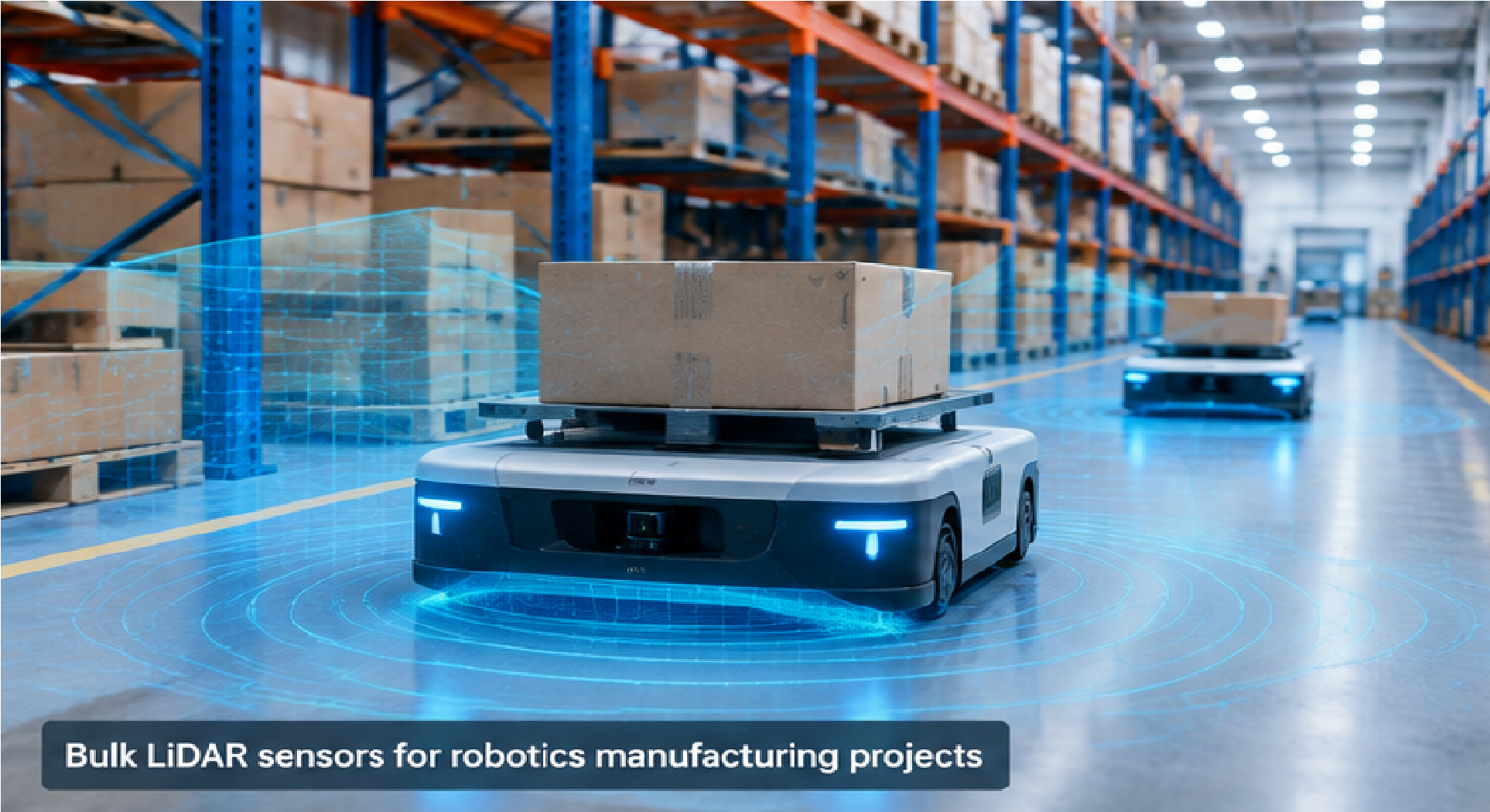
LiDAR sensors are widely used in modern autonomous systems, including:
- Autonomous Mobile Robots (AMRs)
- Automated Guided Vehicles (AGVs)
- Industrial robots
- Autonomous vehicles
- Delivery robots
- Robot dogs
- Inspection robots
- Mapping systems
During early development stages, companies may only require a few sensors for testing.
However, as projects progress, demand usually increases:
| Project Stage | Typical LiDAR Requirement |
|---|---|
| Research & Development | 1–5 units |
| Prototype Testing | 5–20 units |
| Pilot Deployment | 20–100 units |
| Mass Production | 100+ units |
At this stage, buying from random online channels or individual sellers may create risks.
Manufacturers need a professional supplier who understands engineering requirements and production schedules.
2. Where Can You Buy LiDAR Sensors in Bulk?
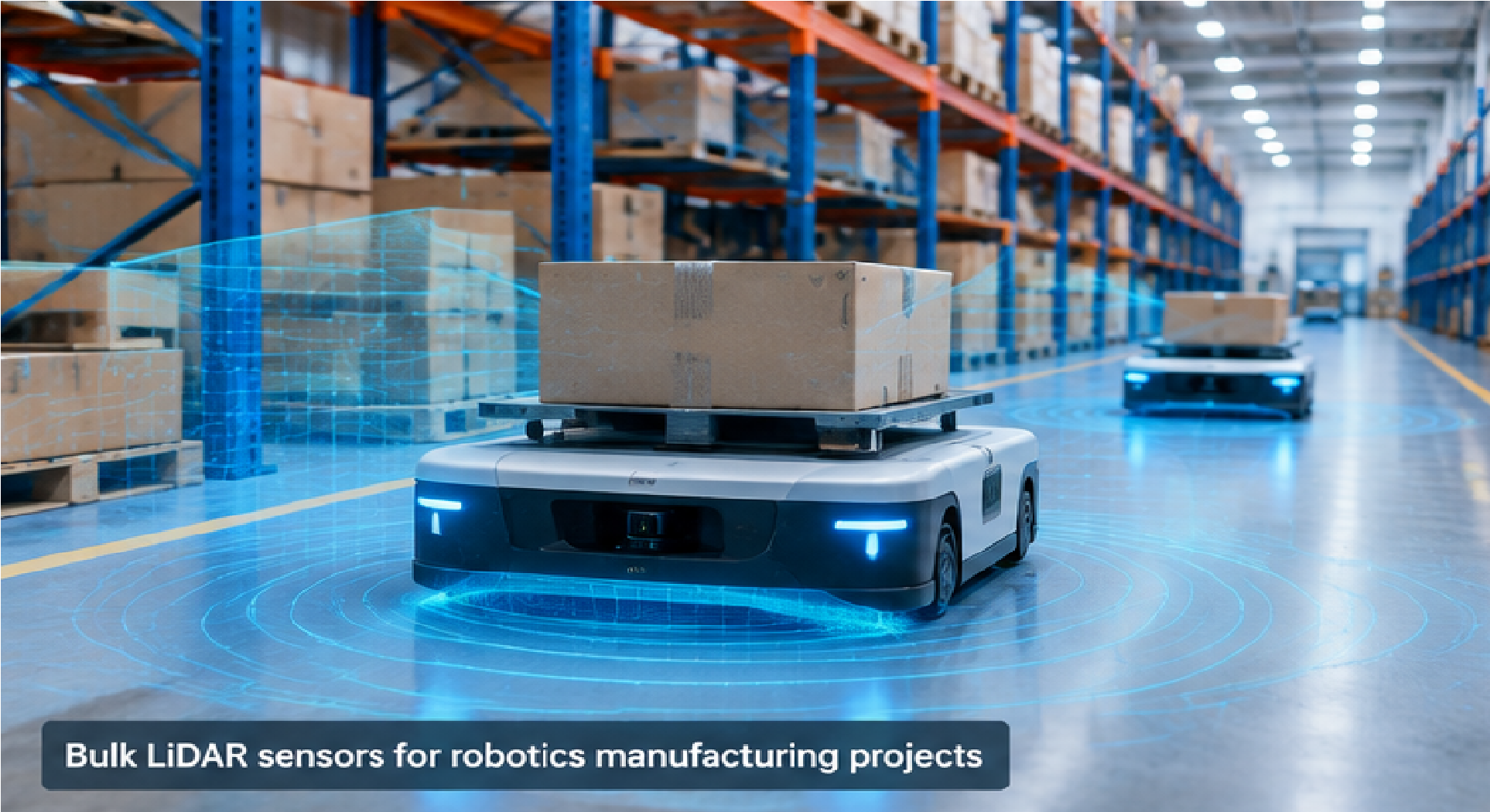
There are several common purchasing channels for LiDAR sensors.
Each option has different advantages and limitations.
Option 1: Buy Directly from LiDAR Manufacturers
Purchasing directly from manufacturers is one option for large-scale projects.
Advantages:
- Direct manufacturer communication
- Original product source
- Potential volume pricing
However, direct purchasing may also have challenges:
- Higher minimum order requirements
- Less flexibility for small and medium projects
- Longer communication process
- Limited support for multiple brands
For companies that need different LiDAR models during development, working with only one manufacturer may limit available choices.
Option 2: Work with Specialized LiDAR Suppliers and Distributors
A professional LiDAR supplier can provide products from multiple manufacturers.
Advantages include:
- Multiple product options
- Easier product comparison
- Technical consultation
- Flexible order quantities
- International shipping support
This approach is especially useful for:
- Robotics companies
- Engineering teams
- System integrators
- Research organizations
A specialized supplier can help customers select suitable sensors based on application requirements rather than simply selling a specific model.
Option 3: Online Marketplaces
Some companies purchase LiDAR sensors through online marketplaces.
While convenient, this method may have limitations:
- Unclear product source
- Limited technical support
- Difficult warranty communication
- Unstable supply availability
For commercial robotics projects, supplier reliability is often more important than the lowest initial price.
3. What Should You Consider Before Buying LiDAR Sensors in Bulk?
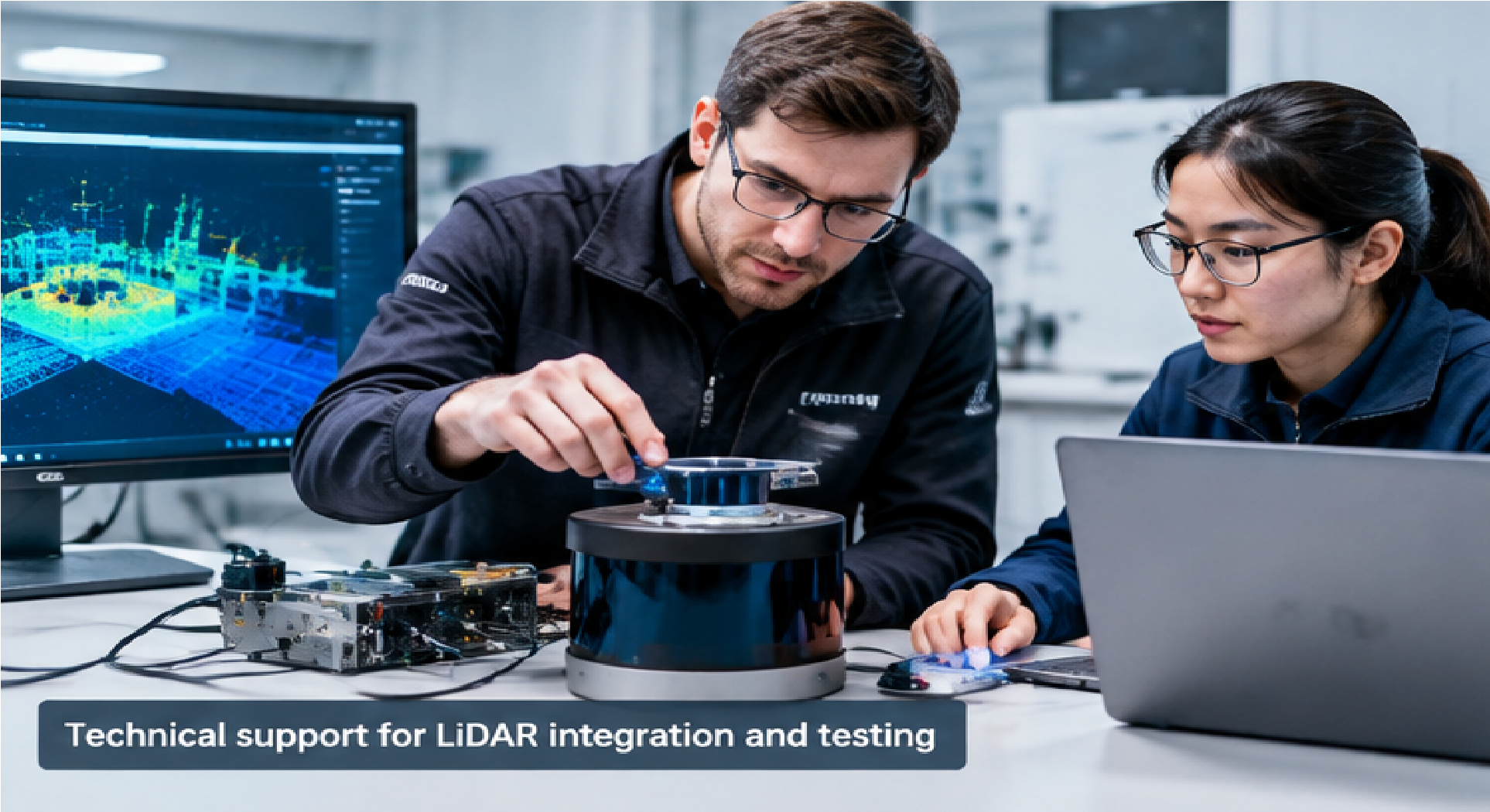
Bulk procurement requires more evaluation than individual purchases.
The following factors should be considered.
Product Availability and Supply Stability
For production projects, availability is critical.
Before placing a bulk order, confirm:
- Current inventory status
- Production lead time
- Expected delivery schedule
- Future supply availability
A supplier should provide realistic delivery information instead of only confirming product availability.
Product Compatibility
Before purchasing multiple LiDAR sensors, confirm technical compatibility.
Important factors include:
Hardware Requirements
Check:
- Power supply
- Communication interface
- Mounting dimensions
- Environmental requirements
- Operating temperature
Software Requirements
Check:
- ROS / ROS 2 support
- SDK availability
- Driver support
- Point cloud format
- Integration documentation
A sensor that cannot be integrated efficiently may increase development costs.
Quantity and Pricing Structure
Bulk pricing depends on:
- Product model
- Quantity
- Availability
- Shipping destination
- Project requirements
A professional supplier should provide project-based quotations rather than simple retail pricing.
For example:
A company purchasing:
- 5 units for prototype testing
and
- 200 units for production deployment
will usually require completely different pricing and supply arrangements.
4. How to Choose the Right LiDAR Sensor for Production Projects
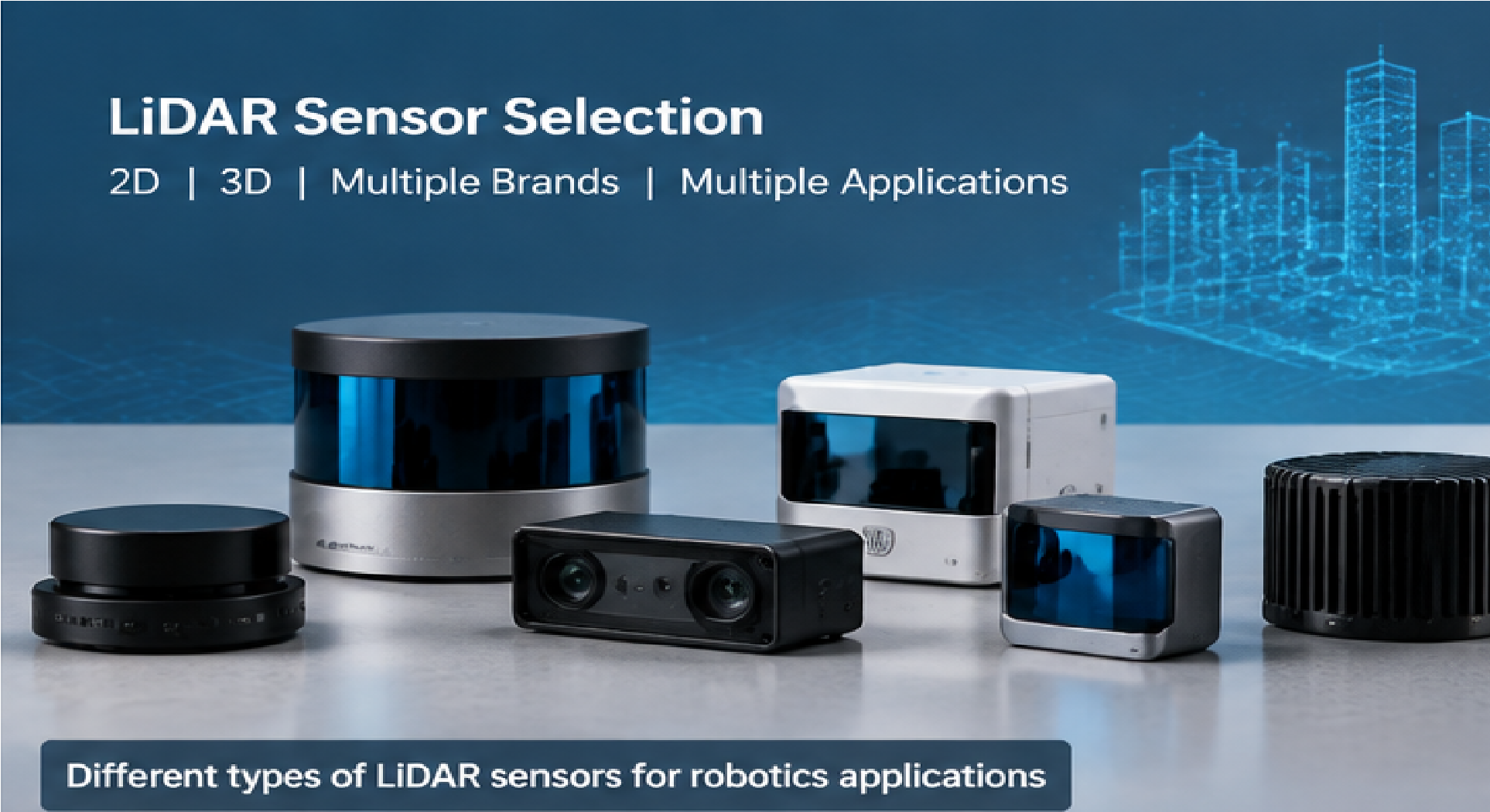
When buying LiDAR sensors in bulk, selecting the correct model is more important than simply choosing the cheapest option.
Consider the following.
2D LiDAR for Indoor Robotics
2D LiDAR is commonly used for:
- Warehouse robots
- AGV navigation
- Indoor automation
Advantages:
- Lower cost
- Easier integration
- Lower processing requirements
3D LiDAR for Advanced Robotics
3D LiDAR is widely used for:
- Autonomous vehicles
- Outdoor robots
- Robot dogs
- 3D mapping
Advantages:
- Rich environmental information
- Better obstacle recognition
- Advanced perception capability
Long-Term Product Availability
For production projects, companies should consider whether the selected LiDAR model will remain available.
Changing sensors after system validation can cause:
- Software modification
- Mechanical redesign
- Additional testing costs
A reliable supplier should help customers understand product lifecycle and availability.
5. Bulk LiDAR Procurement Checklist
Before requesting a quotation, prepare the following information.
| Information | Example |
|---|---|
| Application | AMR, AGV, Robot Dog, Autonomous Vehicle |
| LiDAR Model | Hesai JT128, RoboSense Airy, Livox MID360 |
| Quantity | 10 / 50 / 100 units |
| Required Specifications | Range, FOV, Resolution |
| Development Platform | ROS 2, NVIDIA Jetson |
| Destination | Country and City |
| Delivery Schedule | Required Date |
Providing complete information helps suppliers provide accurate recommendations and pricing.
6. International Shipping Considerations for Bulk LiDAR Orders
For international buyers, logistics planning is an important part of procurement.
Before ordering, confirm:
- Shipping method
- Delivery time
- Commercial invoice
- Packing list
- Export documents
- Import requirements
Common shipping methods include:
- DHL
- FedEx
- UPS
- Air freight
For larger shipments, air freight may provide better cost efficiency compared with express delivery.
Understanding Shipping Terms
Buyers should also understand international shipping terms.
For example:
DAP (Delivered At Place)
Under DAP:
The supplier arranges transportation to the agreed destination.
The buyer is generally responsible for:
- Import clearance
- Duties
- Taxes
- Local charges
Clear shipping communication helps avoid unexpected costs during delivery.
7. Why Work with LIDARSEEK for Bulk LiDAR Procurement?
LIDARSEEK supports global customers with LiDAR sourcing, robotics hardware, and AI perception solutions.
We work with:
- Robotics manufacturers
- System integrators
- Research institutions
- Industrial automation companies
- Autonomous technology developers
Multi-Brand LiDAR Sourcing
Instead of limiting customers to one manufacturer, LIDARSEEK helps customers evaluate different LiDAR solutions.
Available options include:
- Hesai LiDAR sensors
- RoboSense LiDAR sensors
- Seyond LiDAR sensors
- Livox LiDAR sensors
- Industrial LiDAR solutions
This allows customers to compare:
- Performance
- Price
- Availability
- Application suitability
Flexible Order Support
Whether you need:
- Small quantities for evaluation
- Multiple units for pilot projects
- Bulk quantities for production
LIDARSEEK can provide project-based quotations based on:
- Product model
- Quantity
- Destination
- Delivery requirements
Technical Support During Procurement
Our technical team can assist with:
- Product selection
- Datasheet information
- Compatibility evaluation
- Integration questions
- Documentation support
A successful LiDAR project requires more than product delivery.
International Supply Capability
LIDARSEEK supports international customers with:
- Product sourcing
- Quotation preparation
- Shipment coordination
- Technical communication
Our goal is to help engineering teams and procurement departments efficiently source suitable LiDAR solutions.
8. How to Request a Bulk LiDAR Quote
To receive an accurate quotation, provide:
Product Information
Example:
- Required model
- Brand preference
- Technical specifications
Project Information
Example:
- Application
- Development stage
- Estimated quantity
Delivery Information
Example:
- Destination country
- Required delivery date
If you have not selected a specific LiDAR model, you can share your project requirements.
Our team can help evaluate suitable options.
Frequently Asked Questions About Bulk LiDAR Procurement
1. Where can I buy LiDAR sensors in bulk?
Companies can purchase LiDAR sensors directly from manufacturers or specialized LiDAR suppliers.
For robotics projects, professional suppliers can provide product comparison, technical support, and procurement assistance.
2. Can I buy LiDAR sensors for OEM production?
Yes.
Many LiDAR suppliers support OEM manufacturers, robotics companies, and system integrators with production-level quantities.
3. What quantity is considered a bulk LiDAR order?
Bulk quantity depends on the project.
It may range from several units for pilot projects to hundreds of units for commercial production.
4. How can I get a better price for LiDAR sensors?
Bulk pricing usually depends on:
- Quantity
- Model
- Availability
- Project requirements
Contact suppliers with detailed requirements for accurate quotations.
5. Should I choose the cheapest LiDAR supplier?
The lowest price does not always provide the lowest total project cost.
Consider:
- Product reliability
- Technical support
- Delivery capability
- Long-term supply stability
Conclusion: Find the Right Partner for Your LiDAR Procurement
Bulk LiDAR purchasing requires careful planning and supplier evaluation.
The right sourcing partner can help robotics companies:
- Select suitable sensors
- Reduce procurement risks
- Improve project efficiency
- Maintain stable supply
Whether you are developing a prototype robot or preparing for large-scale production, choosing an experienced LiDAR supplier can make the procurement process easier and more reliable.
Need Bulk LiDAR Pricing for Your Robotics Project?
Tell us:
- Required LiDAR model
- Quantity
- Application
- Delivery destination
Our team will provide suitable LiDAR options and project-based quotation support.
Request a Bulk LiDAR Quote Today









