
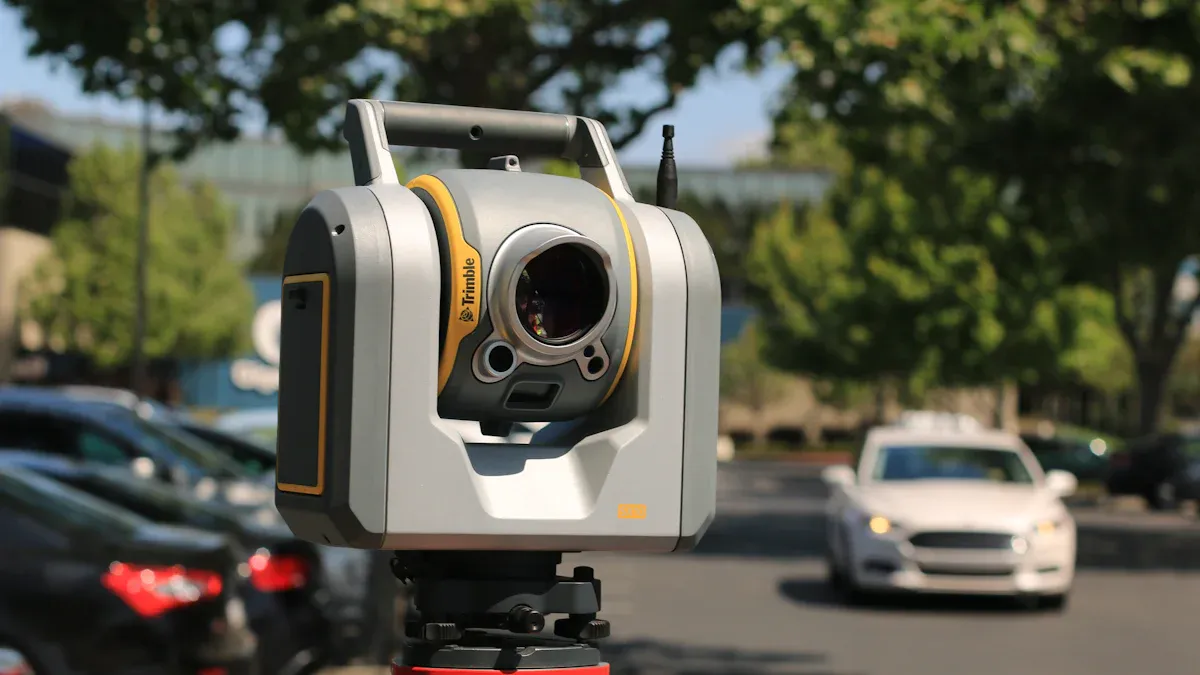
If you’re looking for a lidar system that excels at blind spot detection, it’s important to compare MID360, roboit lidar, and other 3Dlidar solutions based on their effectiveness in eliminating near-field blind zones and maximizing coverage. Advanced 3Dlidar models like MID360 and roboit lidar often offer a wide vertical field of view and minimal blind zones, enhancing environmental perception while helping to reduce hardware costs. As you evaluate MID360, roboit lidar, and similar 3Dlidar options, consider how each system addresses real-world detection challenges in both vehicle and industrial environments.
Key Takeaways
- Choose a lidar system with high resolution for better detection of closely spaced objects, especially in crowded environments.
- Select a lidar with a suitable detection range that balances long-distance identification and accuracy at close distances.
- A wide horizontal field of view minimizes blind spots, enhancing safety in both automotive and industrial applications.
- Ensure the lidar has a vertical field of view of at least 70° to detect obstacles of varying heights effectively.
- Consider the reliability of the lidar system in different weather conditions to maintain consistent performance.
- Evaluate the total cost of ownership, including installation and maintenance, not just the initial purchase price.
- Look for flexible integration options to ensure the lidar system works well with your existing technology and workflows.
- Request detailed cost breakdowns from suppliers to understand all expenses associated with the lidar system over its lifecycle.
3Dlidar Criteria for Blind Spot Detection
Accuracy Factors
Resolution
You need to pay close attention to resolution when evaluating 3Dlidar for blind spot detection. High point cloud density allows the system to distinguish between closely spaced objects, which is essential in environments with pedestrians or small obstacles. If you choose a lidar with low vertical angular resolution, you may encounter mixed point clouds that make it difficult to detect nearby targets. In crowded or complex settings, sparse point clouds can reduce recall and detection accuracy. Advanced 3Dlidar models address these challenges by using attention-based point sampling and object alignment, which help you achieve better detection performance, especially when objects are partially hidden.
Range
The detection range determines how far your 3Dlidar can identify objects in blind spots. For effective blind spot detection, you should select a system that balances long-range detection with high accuracy at close distances. If you operate in environments where vehicles or pedestrians can appear suddenly, a longer range gives you more time to react. However, you must also ensure that the lidar maintains high resolution at short distances to avoid missing small or fast-moving objects. Both MID360 and roboit lidar typically offer a range suitable for automotive and industrial applications, but you should always match the range to your specific deployment scenario.
Field of View
Horizontal
A wide horizontal field of view (FOV) is crucial for comprehensive blind spot coverage. You want your 3Dlidar to minimize blind zones on the sides and corners of vehicles or machinery. For example, a dual lidar setup with 120-degree and 180-degree FOVs can address different corner cases, improving safety and detection capabilities. Overlapping coverage in the front zone increases recognition accuracy due to denser point cloud data. Some 3Dlidar units offer up to 270° FOV, but this can leave a 90° blind spot, especially for top-mounted sensors. In such cases, you may need to add extra sensors or adjust placement to achieve full coverage. MID360 and roboit lidar often provide flexible mounting options to help you optimize horizontal FOV for your needs.
Vertical
Vertical FOV is equally important, especially in environments with varying object heights. You should look for a vertical FOV of at least 70º to 90º to ensure comprehensive blind spot detection. This range allows your 3Dlidar to detect low-lying obstacles and taller objects, reducing the risk of missed detections. In industrial settings, a vertical FOV of 90º can help you achieve zero blind spots, even in areas with complex layouts or mixed traffic.
Reliability
Reliability ensures your blind spot detection system performs consistently in real-world conditions. Environmental factors such as rain, fog, or snow can affect lidar performance. The table below summarizes how different weather conditions impact 3Dlidar reliability:
| Weather Condition | Impact on 3Dlidar Reliability |
|---|---|
| Heavy Rain | May reduce detection accuracy |
| Fog | Can cause signal scattering |
| Snow | May obscure or reflect lidar signals |
You should consider these factors when choosing between MID360, roboit lidar, or other 3Dlidar solutions. Reliable systems often include redundancy or advanced signal processing to maintain performance in adverse conditions.
Cost
When you evaluate 3Dlidar solutions for blind spot detection, cost becomes a critical factor in your decision-making process. You must consider both the initial investment and the long-term operational expenses. The price of a lidar system often reflects its technical capabilities, such as resolution, range, and field of view. Higher-end models may offer advanced features, but you should weigh these benefits against your budget constraints.
You can break down cost considerations into several categories:
- Hardware Acquisition: The upfront cost of purchasing MID360, roboit lidar, or other 3Dlidar units varies based on sensor specifications and included features.
- Installation and Setup: You need to account for mounting hardware, wiring, and calibration. Some systems require specialized installation, which can increase expenses.
- Maintenance and Upgrades: Regular maintenance ensures reliable performance. You may also need to budget for software updates or hardware replacements over time.
- Scalability: If you plan to deploy multiple sensors across a fleet or facility, bulk purchasing and integration costs can impact your overall expenditure.
Tip: Always request a total cost of ownership analysis from your supplier. This helps you understand not only the purchase price but also ongoing costs associated with support, maintenance, and future upgrades.
A cost-effective solution does not always mean choosing the cheapest option. You should prioritize systems that deliver reliable blind spot detection and minimize downtime, even if the initial investment is higher. In many cases, advanced 3Dlidar models like MID360 and roboit lidar offer better value over time due to their durability and performance.
Integration
Successful blind spot detection depends on how well you integrate your 3Dlidar system into existing workflows and platforms. You must assess compatibility with your vehicle or machinery, as well as the ease of connecting the lidar to your software ecosystem.
Key integration factors include:
- Physical Mounting: You need to ensure the sensor fits securely and covers all critical blind spots. Flexible mounting options allow you to adapt to different vehicle shapes or industrial layouts.
- Data Connectivity: The lidar should support standard communication protocols, enabling seamless data transfer to your processing units or cloud platforms.
- Software Compatibility: You want your 3Dlidar to work with your preferred detection algorithms and visualization tools. Some systems offer open APIs or SDKs, making integration easier.
- System Scalability: If you plan to expand your deployment, choose solutions that allow you to add more sensors without major reconfiguration.
Note: Early planning for integration can save you time and resources. Collaborate with your technical team to identify potential challenges and streamline the setup process.
MID360 and roboit lidar typically provide robust integration options, supporting a wide range of applications in automotive and industrial environments. You should prioritize systems that offer flexible connectivity and straightforward software integration, ensuring your blind spot detection operates efficiently and reliably.
MID360 Performance
MID360 Accuracy
Sensor Resolution
When you evaluate MID360 for blind spot detection, sensor resolution stands out as a key factor. High-resolution sensors allow you to detect small objects and distinguish between closely spaced obstacles. In environments with heavy pedestrian traffic or complex machinery, you need a lidar system that delivers dense point clouds. This density ensures that you can identify potential hazards quickly and accurately. If you operate in areas where safety is critical, such as factory floors or busy intersections, high sensor resolution reduces the risk of missed detections. Compared to other 3Dlidar options, MID360 often provides the clarity you need for reliable object recognition.
Detection Range
Detection range determines how far your MID360 sensor can identify objects in blind spots. You want a system that balances long-range detection with high accuracy at close distances. In automotive applications, early detection of vehicles or pedestrians gives you more time to react. In industrial settings, a wide detection range helps you monitor large areas and prevent accidents. MID360 typically offers a range suitable for both scenarios, allowing you to adapt to different deployment needs. You should always match the detection range to your specific environment for optimal performance.
MID360 Field of View
Horizontal Coverage
Horizontal coverage plays a crucial role in eliminating blind spots. MID360 features a complete 360-degree horizontal field of view. This capability provides comprehensive coverage, which is essential for applications like robot navigation and obstacle detection. You can monitor your surroundings without significant gaps, reducing the risk of undetected hazards. Although there are no established industry benchmarks for blind spot coverage, a full 360-degree view positions MID360 as a strong choice for environments where safety and awareness matter most.
Vertical Coverage
Vertical coverage ensures that your MID360 sensor detects objects at different heights. You need a wide vertical field of view to capture both low-lying obstacles and taller objects. This feature becomes especially important in areas with mixed traffic, such as warehouses or urban streets. A broad vertical range helps you achieve zero blind spots, even in complex layouts. You should consider your specific application to determine the ideal vertical coverage for your needs.
MID360 Reliability
Reliability remains a top priority when you deploy MID360 for blind spot detection. You want a system that performs consistently in various weather and lighting conditions. Advanced 3Dlidar models, including MID360 and roboit lidar, often incorporate robust signal processing to maintain accuracy during rain, fog, or snow. You can trust these systems to deliver dependable results, minimizing downtime and enhancing safety. Regular maintenance and software updates further support long-term reliability, ensuring your investment continues to provide value.
MID360 Cost
When you evaluate MID360 for blind spot detection, you must consider the total cost of ownership. The initial investment often reflects the sensor’s technical capabilities, durability, and integration flexibility. To help you make an informed decision, compare the price of MID360 with other 3Dlidar options using the table below:
| Product | Price |
|---|---|
| Livox Mid-360 | $6,800.00 |
| Hesai XT16 3D LiDAR | $4,499.00 |
| Unitree 4D LiDAR L2 | $419.00 |
MID360 sits at a higher price point compared to some alternatives. This cost often aligns with advanced features, such as a full 360-degree field of view and robust detection capabilities. You should weigh the benefits of enhanced accuracy and reliability against your budget constraints. In many cases, investing in a premium sensor reduces long-term expenses by minimizing downtime and maintenance needs.
Tip: Request a detailed cost breakdown from your supplier. This approach helps you understand not only the purchase price but also installation, maintenance, and upgrade expenses over the sensor’s lifecycle.
If you plan to deploy multiple units across a fleet or facility, consider how bulk purchasing and integration costs may impact your overall budget. A higher upfront investment in MID360 can deliver greater value over time, especially in safety-critical environments.
MID360 Integration
You need seamless integration when deploying MID360 in automotive or industrial systems. The sensor supports a range of connectivity options, making it compatible with various platforms and control systems. The table below outlines key integration features:
| Integration Feature | Description |
|---|---|
| CAN bus | Compatibility with existing control systems |
| Ethernet | Compatibility with existing control systems |
| USB 3.0 | Compatibility with existing control systems |
| Open APIs | Allows for custom software integration |
| Plug-and-play | Functionality with platforms like NVIDIA Jetson and Raspberry Pi |
These features enable you to connect MID360 quickly and efficiently. CAN bus, Ethernet, and USB 3.0 interfaces ensure that you can link the sensor to most modern vehicles or machinery. Open APIs allow you to develop custom software solutions, adapting the sensor to your unique workflow. Plug-and-play support with popular platforms simplifies deployment, reducing setup time and technical barriers.
Note: Early planning for integration streamlines your project and minimizes unexpected challenges. Work closely with your technical team to ensure compatibility with your existing infrastructure.
When you compare MID360, roboit lidar, and other 3Dlidar solutions, focus on integration flexibility. A sensor that adapts easily to your systems will save you time and resources, supporting reliable blind spot detection across diverse applications.
roboit lidar Comparison
roboit lidar Accuracy
You want a blind spot detection system that delivers precise results in dynamic environments. roboit lidar stands out for its ability to detect small and moving obstacles with high accuracy. The sensor’s advanced point cloud processing enables you to distinguish between pedestrians, vehicles, and static objects, even in crowded areas. This accuracy helps you reduce false alarms and improve safety outcomes. When you deploy roboit lidar in parking lots or busy intersections, you notice fewer missed detections and more reliable identification of potential hazards. The system’s performance in real-world scenarios demonstrates its effectiveness in minimizing blind spots and enhancing situational awareness.
roboit lidar Field of View
You need comprehensive coverage to eliminate blind spots around vehicles or machinery. roboit lidar offers a circular field of view of up to 70.4° in both horizontal and vertical directions. This wide scanning angle allows you to monitor your surroundings with greater confidence. The near blind spot is reduced to approximately 21 cm, which means you can detect obstacles that are very close to the sensor. The following points highlight how field of view impacts blind spot detection:
- The larger field of view provides comprehensive environmental awareness, helping you spot hazards from multiple directions.
- The smaller blind spot improves safety during navigation, especially in complex settings like orchards or industrial sites.
- A scanning field of at least 270° is ideal for obstacle detection, ensuring that critical areas remain monitored.
- Insufficient field of view can leave important zones unprotected, which may compromise safety.
You should evaluate your deployment scenario to determine if roboit lidar’s field of view meets your coverage requirements. In many cases, the sensor’s design supports robust blind spot detection for both automotive and industrial applications.
roboit lidar Reliability
Reliability plays a key role in your decision to adopt roboit lidar for blind spot detection. You want a system that performs consistently across different environments and weather conditions. Real-world data shows that roboit lidar enhances safety and reduces incidents in various applications. The table below summarizes reliability outcomes:
| Application | Outcome Description | Metric/Result |
|---|---|---|
| Parking Assistance | Reduces parking accidents and scrapes | 30% reduction in parking-related incidents |
| Pedestrian Detection | Helps prevent accidents at intersections and crosswalks | 25% reduction in pedestrian accidents |
| Near-Miss Incidents | Provides immediate awareness of nearby vehicles | 20-40% decrease in near-miss incidents |
You benefit from fewer accidents and improved awareness when you integrate roboit lidar into your workflow. The sensor’s robust performance supports safer navigation and more effective blind spot monitoring.
By comparing MID360, roboit lidar, and other 3Dlidar solutions, you gain insights into which system best fits your operational needs. You should consider accuracy, field of view, and reliability as core criteria when selecting a lidar for blind spot detection.
roboit lidar Cost
You need to consider cost when selecting a lidar solution for blind spot detection. roboit lidar offers competitive pricing compared to other leading 3D lidar models. The following table helps you compare the cost and performance of roboit lidar with MID360 and other popular options:
| LiDAR Model | Price | Point Density (pts/sec) | Performance in Sub-Zero Conditions |
|---|---|---|---|
| Livox Mid360 | $729 | 240,000 | Comparable |
| Velodyne VLP-16 | Higher | 120,000 | Marginally better |
You see that roboit lidar positions itself as a cost-effective choice, especially when you prioritize high point density and reliable operation in challenging environments. Lower upfront costs can help you deploy more sensors across your fleet or facility. You also benefit from robust performance in sub-zero conditions, which supports year-round operation in colder climates.
When you evaluate total cost, remember to factor in installation, maintenance, and scalability. You may find that investing in a solution with higher point density and proven reliability reduces long-term expenses. If you operate in environments where safety and uptime matter, a slightly higher initial investment often pays off through fewer incidents and lower maintenance needs.
Tip: Request a detailed cost breakdown from your supplier. This approach helps you understand not only the purchase price but also installation, maintenance, and upgrade expenses over the sensor’s lifecycle.
roboit lidar Integration
You want seamless integration when deploying roboit lidar in automotive or industrial platforms. The sensor supports a wide range of connectivity options, making it compatible with advanced driver-assistance systems and autonomous vehicles. roboit lidar integrates with platforms such as NVIDIA DRIVE AGX, which enhances your ability to process high-definition 3D perception data. This capability is crucial for developing and deploying smart vehicle solutions.
You benefit from mass-produced models designed for automotive applications. These sensors deliver high performance and reliability, supporting large-scale deployments in both commercial fleets and industrial automation. roboit lidar offers solid-state blind-spot detection, which is pivotal for robotaxi and smart logistics scenarios.
You also see live demonstrations of roboit lidar technology in real-world autonomous logistics and delivery applications. These demonstrations highlight the sensor’s enhanced range and performance, making it a strong choice for environments that demand precise and reliable blind spot detection.
When you plan your integration, focus on compatibility with your existing hardware and software. roboit lidar provides flexible connectivity, open APIs, and plug-and-play support for popular platforms. You can streamline deployment and minimize technical barriers, ensuring your blind spot detection system operates efficiently.
Note: Early planning for integration saves you time and resources. Collaborate with your technical team to identify potential challenges and optimize your setup.
Head-to-Head Comparison
Key Metrics Table
You need a clear overview when comparing blind spot detection solutions. The table below summarizes key metrics for MID360 and roboit lidar. This comparison helps you evaluate which system aligns best with your operational needs.
| Metric | MID360 | roboit lidar |
|---|---|---|
| Horizontal FOV | 360° | Up to 270° |
| Vertical FOV | Wide (application-dependent) | Up to 70.4° |
| Detection Range | Long, with close accuracy | Long, with near blind spot ~21cm |
| Resolution | High point cloud density | High point cloud density |
| Reliability | Consistent in varied weather | Proven in real-world scenarios |
| Cost | Moderate to high | Competitive |
| Integration | Flexible, open APIs | Flexible, plug-and-play |
| Size | Compact | Compact |
Tip: Use this table as a quick reference when you discuss options with your technical team or stakeholders.
Strengths & Weaknesses
You want to understand the practical advantages and limitations of each system before making a decision. Published studies and industry feedback highlight the following points:
- MID360 strengths:
- Low cost compared to many alternatives
- Compact size, making it suitable for portable mapping and UAV applications
- Reliable performance in diverse environments
- MID360 weaknesses:
- Limited datasets available for direct comparison with other lidars, especially dome-shaped models
- General weaknesses in the field:
- Insufficient examination of performance differences between low-cost solid-state and high-end spinning lidars without an IMU
roboit lidar also demonstrates strong reliability and high point density, which supports accurate detection in complex environments. However, you may find that the field of view is slightly narrower than MID360, depending on your application.
Note: Always consider the specific requirements of your deployment scenario. A system’s strength in one area may not translate to another use case.
Use Case Fit
You need to match the right 3Dlidar solution to your operational context. Here are some typical scenarios:
- Automotive Blind Spot Detection:
If you operate a fleet of vehicles, you benefit from MID360’s full 360-degree coverage. This feature ensures that no side or rear blind spots go unmonitored. roboit lidar, with its high point density and proven reliability, excels in environments where precise detection of nearby obstacles is critical, such as urban intersections or parking lots. - Industrial Automation:
In warehouse or factory settings, you require sensors that integrate easily with existing control systems. Both MID360 and roboit lidar offer flexible integration, but MID360’s compact size and cost-effectiveness make it attractive for portable mapping or UAV-based inspections. roboit lidar’s robust performance in sub-zero conditions supports year-round operation in cold storage or outdoor logistics. - Portable and UAV Applications:
When you need lightweight and reliable sensors for mapping or inspection, MID360’s compact design stands out. You can deploy it on drones or mobile robots without significant weight penalties.
You should always assess your environment, required coverage, and integration needs before selecting a lidar system. Consult with your technical team and review real-world case studies to ensure the best fit for your application.
Practical Deployment
Application Scenarios
Automotive
You encounter 3D lidar-based blind spot detection most often in automotive safety systems. These sensors help you identify vehicles, pedestrians, and obstacles that traditional mirrors or cameras might miss. You benefit from enhanced safety features, such as:
| Application Scenario | Description |
|---|---|
| Blind Spot Detection | Detects vehicles or objects in blind spots, reducing the risk of accidents. |
| Parking Assistance | Enhances safety by accurately identifying vehicles, curbs, and obstacles in blind spots. |
| Continuous Monitoring | LiDAR sensors in headlights help mitigate blind spots by monitoring surroundings continuously. |
| Lane Departure Warnings | Provides alerts to prevent unintentional lane changes, enhancing driver safety. |
| Adaptive Cruise Control | Adjusts vehicle speed based on surrounding traffic, improving driving comfort and safety. |
You rely on these systems to improve situational awareness and reduce the likelihood of collisions. When you deploy MID360 or roboit lidar, you gain access to real-time data that supports advanced driver-assistance features. You notice smoother lane changes, safer parking maneuvers, and more confident navigation in dense traffic.
Industrial
You see 3D lidar technology transforming industrial environments as well. In warehouses, factories, and logistics centers, blind spot detection plays a vital role in protecting workers and equipment. You use lidar sensors to monitor the movement of forklifts, automated guided vehicles, and personnel. Key scenarios include:
- Collision avoidance for mobile robots and machinery
- Perimeter monitoring to secure restricted zones
- Object detection in complex layouts with mixed traffic
You achieve higher operational safety and efficiency by integrating MID360 or roboit lidar into your industrial workflow. These sensors help you minimize downtime and prevent costly accidents, especially in busy or cluttered environments.
User Feedback
You find that users consistently praise the performance of advanced lidar systems for blind spot detection. Feedback highlights several strengths:
- You appreciate the ultra-wide field of view and high-line-count coverage, which deliver comprehensive perception in near-field environments.
- You value how these sensors effectively address blind spot detection challenges, especially in autonomous vehicles where safety is paramount.
- You benefit from seamless integration of multiple units, which enables robust coverage around RoboTaxis and other smart mobility platforms.
You notice that clients report improved safety outcomes and smoother deployment experiences. The ability to combine multiple sensors for full coverage stands out as a key advantage in both automotive and industrial applications.
You should evaluate MID360, roboit lidar, and other 3Dlidar solutions by comparing effective range, field of view, and integration capabilities. The table below highlights key features to consider:
| Feature | MID360 | Other 3Dlidar Options |
|---|---|---|
| Effective Range | 40 meters | Varies |
| Field of View | 360° horizontal | Varies |
| Integration | AI-driven perception | Varies |
For advanced mapping or SLAM, you benefit from combining LiDAR scans with GNSS/RTK data and deep learning methods. Select the system that best matches your deployment scenario and operational needs.
FAQ
What makes 3D lidar effective for blind spot detection?
You gain precise object recognition with 3D lidar. The technology delivers high-resolution point clouds, allowing you to detect obstacles in areas that cameras or radar may miss. You improve safety by covering near-field zones and minimizing undetected hazards.
How do MID360 and roboit lidar differ in field of view?
You notice MID360 offers a full 360-degree horizontal field of view, which covers all directions. roboit lidar provides up to 270 degrees, focusing on critical blind spot zones. Your choice depends on your coverage needs and deployment scenario.
Can weather conditions affect lidar performance?
You may experience reduced accuracy during heavy rain, fog, or snow. Advanced lidar models use signal processing to maintain reliability. You should consider environmental factors when selecting a system for outdoor or all-weather applications.
Is integration with existing systems straightforward?
You benefit from flexible connectivity options like CAN bus, Ethernet, and open APIs. Both MID360 and roboit lidar support plug-and-play integration with popular platforms. You streamline deployment by planning compatibility with your hardware and software.
What is the typical detection range for blind spot lidar?
You usually see detection ranges from 20 to 40 meters for blind spot applications. MID360 and roboit lidar offer ranges suitable for automotive and industrial environments. You should match the range to your specific operational needs.
How does cost impact your choice of lidar?
You balance initial investment with long-term value. Higher-priced models often deliver better accuracy and reliability. You reduce maintenance costs and downtime by choosing durable sensors. Request a total cost breakdown before making your decision.
Can you use multiple lidar sensors for full coverage?
You enhance blind spot detection by combining several sensors. This approach eliminates gaps and improves perception around vehicles or machinery. You achieve robust coverage in complex environments by integrating multiple units.
What maintenance does a lidar system require?
You perform regular cleaning and software updates to maintain optimal performance. Inspect mounting hardware and cables periodically. You extend sensor lifespan and ensure reliable blind spot detection with routine maintenance.









