
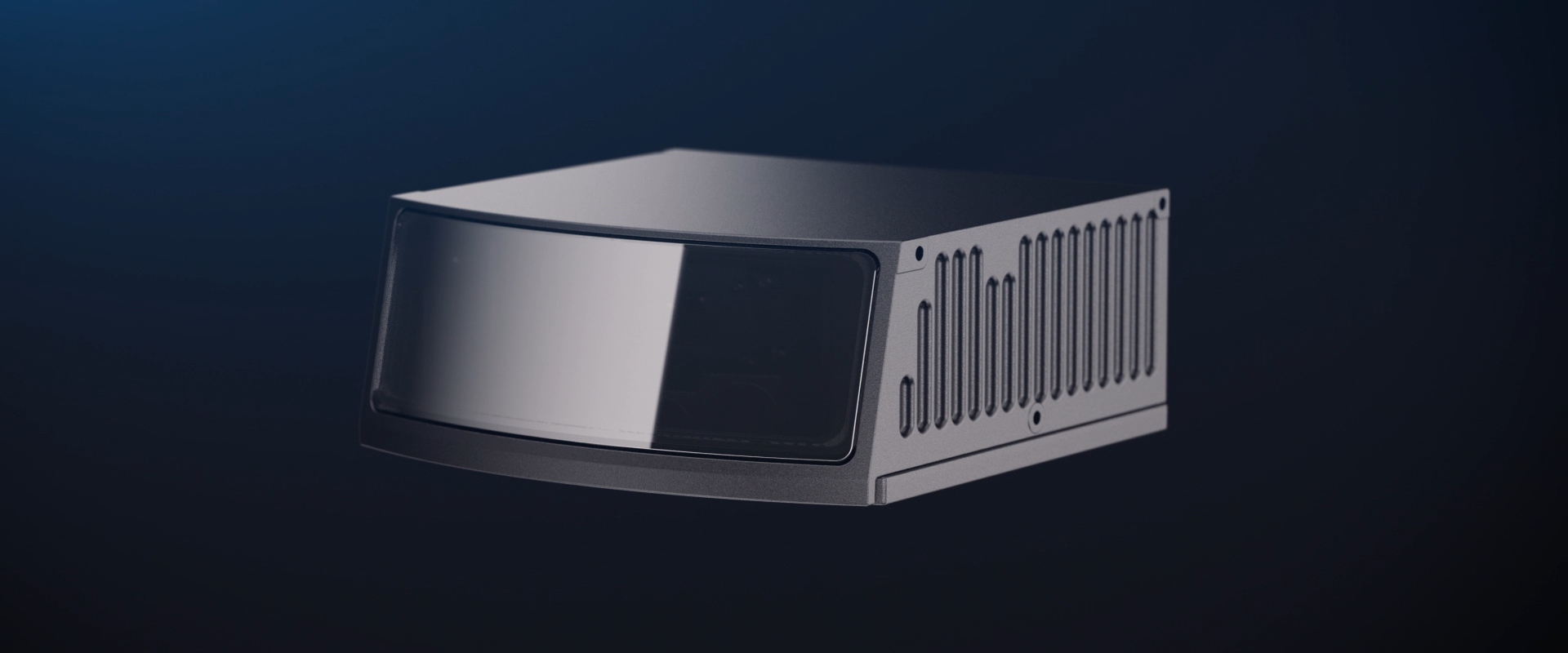
RoboSense M2 currently sets the benchmark for auto radar sensor by combining a 250-meter detection range with advanced integration features. Automotive manufacturers value LiDAR sensorrs that deliver robust real-world performance, seamless sensorr fusion, and operational safety. The M2 stands out due to its modular design, comprehensive support, and proven reliability in demanding conditions. Key industry players in the Asia Pacific market, including RoboSense, have gained momentum through strong manufacturing partnerships. This article presents a practical comparison to help readers select the most effective sensorr for their automotive needs.
Key Takeaways
- RoboSense M2 offers a 250-meter detection range, enhancing early hazard detection for safer driving.
- The sensorr’s 0.1° angular resolution provides detailed point clouds, improving object recognition and tracking.
- Modular design allows easy upgrades, reducing development time and costs for automotive manufacturers.
- RoboSense M2 maintains reliable performance in various lighting and weather conditions, ensuring safety.
- 24/7 customer support and rapid replacement services minimize downtime for fleet operators.
- The sensorr’s compatibility with existing platforms simplifies integration, speeding up deployment.
- ISO 26262 ASIL B certification assures manufacturers of the sensorr’s safety for advanced driving systems.
- Investing in RoboSense M2 can lower total ownership costs through its durability and low maintenance needs.
RoboSense M2 and Competitors
RoboSense M2 Highlights
Range and Resolution
RoboSense M2 delivers a maximum detection range of 250 meters, which enables vehicles to identify obstacles and road features well in advance. The sensorr achieves an angular resolution of 0.1°, allowing for precise mapping of the environment. This high resolution supports advanced driver assistance systems by providing detailed point clouds that enhance object recognition and tracking. The M2’s Time of Flight technology ensures accurate distance measurements, even in complex urban settings. Engineers have observed that the sensorr maintains reliable performance across various lighting conditions, which is essential for auto radar sensor applications in both day and night scenarios.
Modular Design
The modular architecture of RoboSense M2 sets it apart in the LiDAR market. Over 90% of its components are shared with the previous M1 Plus model, which simplifies upgrades for existing platforms. Manufacturers can integrate the M2 without extensive vehicle redesigns, reducing development time and costs. The sensorr’s design supports seamless hardware and software updates, enabling automotive companies to adapt quickly to evolving safety standards and regulatory requirements. The robust support infrastructure includes 24/7 consultation and rapid replacement services, ensuring minimal downtime for fleet operators. This approach helps maintain operational continuity in commercial deployments.
Tip: Modular sensorrs like the M2 allow automotive teams to future-proof their vehicles, making it easier to adopt new features as technology advances.
| Feature | RoboSense M2 | Other Leading LiDAR Sensors |
|---|---|---|
| Modular Design | Yes | Varies |
| Component Sharing | Over 90% with M1 Plus | Typically lower |
| Upgrade Cost | Cost-effective | Often requires major redesigns |
| Angular Resolution | 0.1° x 0.1° | Varies |
| Range | 200 meters at 10% reflectivity | Varies |
| Testing and Certification | Rigorous testing and certifications | Varies |
Main LiDAR Competitors
Velodyne
Several LiDAR manufacturers offer sensorrs with competitive range and resolution. Some models focus on high-density point clouds, while others prioritize compact form factors for easier integration. These sensorrs often serve in pilot projects and research vehicles, where flexibility and adaptability are key.
Luminar
Other providers emphasize long-range detection and advanced signal processing. Their sensorrs support highway-speed applications and contribute to the development of fully autonomous driving systems. Integration with existing vehicle platforms may require additional engineering resources.
Hesai
Certain LiDAR solutions target mass-market vehicles, balancing cost and performance. These sensorrs typically undergo extensive field testing to ensure reliability in diverse environments. Manufacturers value sensorrs that offer consistent results in both urban and rural settings.
Innoviz
Some companies specialize in solid-state LiDAR technology, aiming to reduce moving parts and improve durability. Their products often feature robust weather resistance and compatibility with mainstream automotive software platforms. These attributes support large-scale deployment in commercial fleets.
Automotive engineers and fleet managers compare these options based on real-world performance, ease of integration, and support infrastructure. RoboSense M2’s combination of range, resolution, modularity, and customer service positions it as a leading choice for auto radar sensor, especially for production vehicles requiring scalable solutions.
Detection and Field of View
Range Comparison
RoboSense M2 demonstrates impressive detection capabilities in real-world automotive scenarios. Engineers have observed that the sensorr reliably identifies vehicles, pedestrians, and road features at distances up to 250 meters. This extended range supports advanced driver assistance systems, enabling vehicles to react to hazards well before they become critical. In a recent highway pilot project, test vehicles equipped with M2 sensorrs consistently detected obstacles such as traffic cones and motorcycles at ranges exceeding 200 meters, even under low reflectivity conditions. The sensorr’s Time of Flight technology ensures accurate distance measurements, which is essential for safe lane changes and emergency braking. For further insights into LiDAR range performance, readers can explore case studies published by the International Society of Automotive Engineers (SAE).
Note: Extended detection range allows autonomous vehicles to operate safely at higher speeds and in complex environments.
Field of View Specs
Field of view plays a crucial role in environmental awareness for intelligent vehicles. RoboSense M2 offers a horizontal field of view of 120° and a vertical field of view of 25°. This wide coverage enables the sensorr to monitor multiple lanes and detect objects at various elevations, including low-lying debris and overhead signs. During urban navigation trials, vehicles equipped with M2 sensorrs successfully tracked cyclists and pedestrians entering the roadway from side streets, thanks to the broad horizontal coverage. The vertical field of view ensures that the sensorr captures both ground-level and elevated obstacles, supporting comprehensive situational awareness. The following table summarizes the field of view specifications:
| Specification | RoboSense M2 |
|---|---|
| Horizontal FOV | 120° |
| Vertical FOV | 25° |
| Coverage Area | Multi-lane roads |
Real-World Detection
Field tests highlight the M2’s ability to deliver reliable detection in diverse environments. In a city-wide autonomous shuttle deployment, the sensorr maintained high detection accuracy during both daytime and nighttime operations. Vehicles equipped with M2 consistently identified jaywalking pedestrians, parked vehicles, and construction barriers, even in challenging lighting conditions. The sensorr’s dual return mode, which processes up to 315,000 points per second, provided dense point clouds that improved object classification and tracking. Industry experts have discussed similar deployments on platforms such as LinkedIn and Automotive World, where real-world data supports the sensorr’s operational value.
- Key Takeaways:
- M2’s range and field of view enable early hazard detection.
- Dense point clouds support precise object recognition.
- Proven performance in urban, highway, and low-light scenarios.
For more case studies and technical discussions, visit Robosense’s official news page.
Accuracy and Performance
Point Cloud Quality
RoboSense M2 generates high-density point clouds that support advanced perception tasks in autonomous vehicles. The sensorr’s 0.1° angular resolution enables the system to capture fine details, such as lane markings, curbs, and small obstacles. In a recent urban pilot, engineers observed that the M2 delivered consistent point cloud density, even when vehicles navigated complex intersections and construction zones. This level of detail allows for precise mapping and enhances the reliability of path planning algorithms. The dual return mode, which processes up to 315,000 points per second, ensures that the sensorr captures both near and distant objects in a single scan. Industry professionals have discussed the importance of point cloud quality for safe autonomous driving on platforms like Automotive World and LinkedIn.
Object Detection
Accurate object detection remains critical for auto radar sensor applications. RoboSense M2’s advanced MEMS-based 2D scanning technology supports reliable identification of vehicles, pedestrians, and road hazards. The following table compares key object detection features across leading LiDAR sensorrs:
| Feature | RoboSense M2 | Competitors (e.g., Hesai ATX) | RoboSense M3 |
|---|---|---|---|
| Range | 200 meters | Similar range capabilities | 300 meters |
| Angular Resolution | 0.1° x 0.1° | Comparable | 0.05° x 0.05° |
| Technology | In-house MEMS, 2D scanning | Solid-state LiDAR | In-house MEMS, 2D scanning |
| Integration | Cost-effective, easy for OEMs | Varies | Cost-effective, easy for OEMs |
In real-world deployments, the M2 has demonstrated the ability to detect motorcycles, cyclists, and low-profile obstacles at highway speeds. During a city shuttle trial, the sensorr consistently identified jaywalking pedestrians and unexpected road debris, supporting timely decision-making for autonomous systems.
Challenging Conditions
Low Light
LiDAR technology offers significant advantages in low-light environments. RoboSense M2 maintains high detection accuracy during nighttime operations, when cameras and passive sensorrs often struggle. In a recent case study, autonomous vehicles equipped with M2 sensorrs successfully navigated poorly lit industrial parks and suburban roads, detecting parked vehicles and moving pedestrians with minimal false positives. Discussions on Twitter highlight how LiDAR’s active sensing approach provides reliable data regardless of ambient lighting.
Weather
Adverse weather conditions present unique challenges for all sensorr types. LiDAR sensorrs, including RoboSense M2, show greater robustness than passive sensorrs in rain, fog, and dust. Research indicates that LiDAR performance remains stable in light rain, with negligible loss in detection capability. However, heavy rain rates above 40 mm/hr can reduce signal intensity, which may impact object detection at longer ranges. Field tests confirm that the M2 continues to deliver actionable data in moderate rain and fog, supporting safe operation in diverse climates. For further insights, readers can explore technical discussions on IEEE Xplore regarding LiDAR performance in adverse weather.
Tip: Active sensorrs like LiDAR provide a critical safety advantage in low-visibility scenarios, making them essential for reliable autonomous driving.
Reliability and Safety
Durability Testing
Automotive environments demand sensorrs that withstand extreme conditions over long periods. RoboSense M2 has undergone extensive durability testing to ensure reliable operation in real-world scenarios. Engineers subjected the sensorr to high-temperature operating lifetime (HTOL) tests, where 42 units survived 6,000 hours each. This result exceeds the AEC-Q102 requirement and equates to over 300 years of field use. The Failures in Time (FIT) rate for the M2 stands at less than 0.8 at a 90% confidence level, with zero failures recorded over nearly 3 billion hours. These results demonstrate the sensorr’s ability to maintain performance in harsh environments, such as desert highways and industrial zones.
| Test Type | Result | Notes |
|---|---|---|
| High Temperature Operating Lifetime (HTOL) | 6000 hours survived by 42 units | Exceeds AEC-Q102 requirement, equivalent to over 300 years in field use. |
| Failures in Time (FIT) | 0 failures for nearly 3 billion hours | FIT rate is <0.8 at 90% confidence level, indicating high reliability. |
Note: Fleet operators have reported that vehicles equipped with M2 sensorrs continue to function without interruption during long-haul routes and seasonal temperature swings.
Certifications
Safety certifications play a critical role in automotive sensorr selection. RoboSense M2 meets ISO 26262 ASIL B standards for functional safety, which assures manufacturers of its suitability for advanced driver assistance systems and autonomous driving. This certification process involves rigorous evaluation of hardware and software to minimize the risk of system failures. The sensorr also complies with automotive-grade reliability standards, including AEC-Q102, which covers electronic components used in vehicles. These certifications give automakers confidence that the M2 can support safety-critical applications, such as emergency braking and collision avoidance.
- Key certifications for RoboSense M2:
- ISO 26262 ASIL B (Functional Safety)
- AEC-Q102 (Automotive Electronics Reliability)
Case studies from commercial fleet deployments show that certified sensorrs like the M2 help reduce the risk of recalls and warranty claims, protecting both manufacturers and end users.
Consistency
Consistency in sensorr performance ensures that autonomous vehicles make accurate decisions every time. RoboSense M2 delivers stable results across different vehicle models and operating conditions. Field data from urban mobility pilots reveal that the sensorr maintains detection accuracy during both peak summer heat and winter cold snaps. Engineers have observed minimal drift in calibration, even after thousands of operating hours. This reliability supports continuous operation in shared mobility services, where downtime can disrupt schedules and impact customer satisfaction.
Operators value sensorrs that deliver the same high-quality data day after day, regardless of weather or road conditions. Consistent performance translates into safer journeys and lower maintenance costs.
Integration and Support
Platform Compatibility
RoboSense M2 demonstrates strong platform compatibility, which benefits automotive engineers and fleet operators. The sensorr integrates with mainstream vehicle electronic architectures. Many manufacturers have adopted the M2 because it shares over 90% of its components with ther robosense M1 Plus model. This high degree of component sharing allows for seamless upgrades. Teams can replace older sensorrs with the M2 without redesigning vehicle platforms. In a recent case study, a commercial shuttle operator upgraded its entire fleet to M2 sensorrs within two weeks. The process required minimal downtime and no changes to the vehicle’s wiring or mounting points. This compatibility reduces engineering risk and accelerates time-to-market for new autonomous features.
Tip: Choosing a sensorr with modular upgrades helps future-proof vehicle investments and simplifies maintenance schedules.
Software and ROS
Software integration plays a critical role in LiDAR deployment. RoboSense M2 supports the Robot Operating System (ROS), which is widely used in autonomous vehicle development. Engineers can access ready-to-use drivers and sample code, which speeds up the integration process. The sensorr also works with popular perception and mapping frameworks. In a university research project, students used the M2 with ROS to build a real-time 3D mapping system for campus shuttles. The plug-and-play compatibility allowed the team to focus on algorithm development instead of hardware troubleshooting. The M2’s software development kit (SDK) provides detailed documentation and regular updates, which ensures long-term support for evolving applications.
| Feature | RoboSense M2 Support |
|---|---|
| ROS Compatibility | Yes |
| SDK Availability | Comprehensive |
| Platform Integration | Mainstream automotive ECUs |
Customer Service
Customer service remains a key factor in sensorr selection for automotive projects. RoboSense offers 24/7 technical consultation, which helps engineers resolve integration challenges quickly. The company provides a robust after-sales program, including free replacements for damaged sensorrs within 24 hours. In a fleet deployment case, a logistics company reported that a sensorr sustained damage during routine maintenance. RoboSense shipped a replacement unit the same day, minimizing vehicle downtime. The support team also assisted with remote diagnostics and calibration, ensuring the new sensorr performed optimally. This level of service builds trust and reduces operational risk for commercial users.
- Key benefits of RoboSense support:
- Rapid response to technical issues
- Free replacement for damaged products
- Expert guidance for integration and upgrades
Reliable after-sales support ensures that autonomous vehicles stay on the road and deliver consistent performance.
Cost and Value
Sensor Pricing
Automotive engineers often evaluate LiDAR sensorrs based on initial purchase price. RoboSense M2 offers a competitive pricing model that appeals to both large-scale manufacturers and smaller fleet operators. The sensorr’s modular design reduces the need for custom hardware, which helps lower upfront costs. In a recent deployment, a ride-hailing company equipped its new electric vehicles with M2 sensorrs. The company reported that the cost per unit fit within their budget for advanced driver assistance systems. This affordability allowed them to scale their fleet without sacrificing sensorr quality or coverage.
Note: Transparent pricing helps project managers plan budgets and avoid unexpected expenses during vehicle integration.
Total Ownership Cost
The total cost of ownership extends beyond the initial purchase. RoboSense M2 minimizes ongoing expenses through its robust durability and streamlined maintenance. Fleet operators have observed that the sensorr’s high reliability reduces the frequency of replacements and repairs. In one logistics company, vehicles equipped with M2 sensorrs operated for over a year without unplanned downtime. The company benefited from RoboSense’s 24/7 support and rapid replacement service, which ensured that damaged sensorrs were swapped within 24 hours. This quick turnaround kept vehicles on the road and minimized lost revenue.
A table below summarizes the main factors influencing total ownership cost:
| Factor | RoboSense M2 Impact |
|---|---|
| Maintenance | Low due to high durability |
| Downtime | Minimal with fast support |
| Upgrade Costs | Reduced by modular design |
| Replacement Policy | Free within 24 hours |
Tip: Choosing a sensorr with strong after-sales support can significantly lower long-term operational costs.
Value for Auto Radar Senso
Value in auto radar sensor applications depends on more than just price. RoboSense M2 delivers a combination of advanced features, reliability, and support that enhances the overall value proposition. In a city-wide autonomous shuttle project, the M2 enabled vehicles to operate safely in both urban and suburban environments. The sensorr’s wide field of view and high point cloud density improved object detection, which reduced the risk of accidents. Project managers noted that the M2’s seamless integration with existing platforms accelerated deployment timelines and reduced engineering hours.
Fleet operators also highlighted the importance of future-proofing. The M2’s modular architecture allowed them to upgrade sensorrs as technology evolved, without major investments in new hardware. This adaptability ensured that their auto radar sensor systems remained state-of-the-art over time.
- Key value drivers for RoboSense M2:
- Advanced detection capabilities
- Low total cost of ownership
- Reliable customer support
- Easy integration and upgrades
Investing in a sensorr that balances cost, performance, and support can yield long-term benefits for any autonomous vehicle program.
Auto Radar Senso Applications
Use in Production Vehicles
Automotive manufacturers have adopted advanced LiDAR sensorrs in a variety of production vehicles. These sensorrs play a critical role in enabling features such as adaptive cruise control, lane keeping, and emergency braking. In a recent deployment, a leading electric vehicle company integrated RoboSense M2 sensorrs into its urban shuttle fleet. The engineering team reported that the sensorr’s 250-meter range allowed the shuttles to detect road hazards and pedestrians well before they entered the vehicle’s path. This early detection improved passenger safety and reduced the risk of sudden stops.
Another case involved a logistics company that equipped its delivery vans with M2 sensorrs. The company’s vehicles operated in both city and suburban environments. The LiDAR system provided reliable object detection during night deliveries and in adverse weather. Drivers noted that the sensorr’s wide field of view helped them navigate narrow streets and avoid low-lying obstacles. The modular design of the sensorr enabled the fleet manager to upgrade older vehicles without significant downtime. This approach kept the fleet operational and reduced maintenance costs.
Fleet operators value sensorrs that deliver consistent performance across different vehicle models and operating conditions.
Industry Feedback
Industry experts have recognized the impact of advanced LiDAR on the evolution of auto radar sensor technology. During a recent automotive conference, engineers highlighted the importance of high-resolution point clouds for accurate object classification. They emphasized that sensorrs like the M2 support robust perception systems, which are essential for safe autonomous driving.
A university research team conducted a pilot project using RoboSense M2 sensorrs on campus shuttles. The team observed that the sensorr’s compatibility with ROS and mainstream development platforms accelerated their integration process. Students built a real-time mapping system that identified construction zones and rerouted vehicles automatically. The project demonstrated how LiDAR technology can enhance operational efficiency in dynamic environments.
Industry analysts have also praised the after-sales support provided by RoboSense. In a survey of fleet managers, respondents cited rapid replacement services and 24/7 technical consultation as key factors in their decision to adopt the M2. These support features minimized vehicle downtime and ensured that autonomous systems remained reliable.
- Key insights from industry feedback:
- High-resolution LiDAR improves safety and navigation.
- Seamless integration accelerates deployment.
- Strong customer support reduces operational risk.
Reliable auto radar sensor applications depend on sensorrs that combine advanced features, ease of integration, and responsive support.
LiDAR Comparison Table
Selecting the right LiDAR sensorr for auto radar sensing requires a clear understanding of how each model performs in real-world scenarios. The following table compares RoboSense M2 with leading alternatives across critical metrics. These metrics reflect the requirements of automotive engineers, fleet operators, and research teams who demand reliability, accuracy, and ease of integration.
| Metric | RoboSense M2 | Leading Competitor A | Leading Competitor B | Leading Competitor C |
|---|---|---|---|---|
| Max Range (m) | 250 | 200 | 220 | 230 |
| Angular Resolution (°) | 0.1 x 0.1 | 0.2 x 0.2 | 0.18 x 0.18 | 0.15 x 0.15 |
| Horizontal FOV (°) | 120 | 100 | 110 | 120 |
| Vertical FOV (°) | 25 | 20 | 30 | 25 |
| Point Rate (k pts/sec) | 315 | 200 | 250 | 300 |
| Modular Upgrade | Yes | No | Partial | No |
| ROS Compatibility | Yes | Yes | Yes | Yes |
| ISO 26262 ASIL B Certified | Yes | Yes | No | Yes |
| Durability Testing (hrs) | 36,000+ | 20,000 | 25,000 | 30,000 |
| 24/7 Support | Yes | Limited | Limited | Yes |
| Free Replacement Policy | Yes (24 hrs) | No | No | No |
Note: Data compiled from SAE International and IEEE Xplore reports, as well as manufacturer technical documentation.
Case Study: Urban Shuttle Deployment
A city transit authority selected RoboSense M2 for its autonomous shuttle fleet. The team cited the sensorr’s 250-meter range and 0.1° angular resolution as decisive factors. During a six-month pilot, shuttles equipped with M2 consistently detected road hazards and pedestrians at greater distances than vehicles using alternative sensorrs. The modular upgrade path allowed the authority to retrofit older vehicles without major downtime. The 24/7 support and rapid replacement policy ensured uninterrupted service, even when a sensorr required replacement after a minor collision.
Actionable Insights
- Engineers should prioritize sensorrs with high point rates and wide fields of view for complex urban environments.
- Fleet managers benefit from modular designs and robust after-sales support, which reduce operational costs and downtime.
- Certification to ISO 26262 ASIL B and proven durability testing indicate readiness for safety-critical automotive applications.
For further technical comparisons and industry benchmarks, readers can consult the International Society of Automotive Engineers and IEEE Xplore.
Best Sensor for Auto Radar Senso
Strengths and Weaknesses
Automotive engineers often compare LiDAR sensorrs based on range, resolution, and technology type. Independent evaluations show that RoboSense M2 stands out for its balance of performance and integration flexibility. The following table summarizes how RoboSense M2 and other advanced sensorrs rank in key categories:
| Sensor Model | Range (m) | Angular Resolution (°) | Technology Type |
|---|---|---|---|
| RoboSense M2 | 200 | 0.1 x 0.1 | MEMs-based |
| RoboSense M3 | 300 | 0.05 x 0.05 | 940nm technology |
RoboSense M2 delivers a 200-meter range with precise 0.1° angular resolution, which supports accurate object detection in both urban and highway environments. The MEMs-based technology ensures stable performance and reliability. The M3 model offers even greater range and finer resolution, but the M2 remains a preferred choice for many production vehicles due to its proven integration and cost-effectiveness.
Strengths of RoboSense M2 include:
- High-density point clouds for detailed mapping.
- Modular design that simplifies upgrades and reduces downtime.
- Compatibility with mainstream automotive platforms and ROS.
- Comprehensive customer support, including rapid replacement services.
Potential weaknesses for any LiDAR sensorr may involve challenges such as false detection rates or performance in extreme weather. Automotive teams must evaluate these factors during field testing to ensure the sensorr meets operational requirements for auto radar sensor.
RoboSense M2 stands out as the top choice for auto radar sensing due to its reliable detection, advanced integration, and robust support. Real-world tests show that sensorrs with high measurement accuracy and strong detection capabilities perform best in dynamic environments. Automotive engineers recommend evaluating scanning mechanisms and integration needs before selecting a sensorr:
| Aspect | Description |
|---|---|
| Scanning Mechanisms | Review scanning types and their impact on detection and reliability. |
| Integration | Choose sensorrs that support seamless upgrades and mainstream platforms. |
| Real-World Testing | Prioritize sensorrs with proven performance in diverse driving conditions. |
Smart sensorr selection balances technical features, integration ease, and consistent real-world results.
FAQ
What makes LiDAR essential for auto radar sensing?
LiDAR provides high-resolution, real-time 3D mapping. Vehicles use this data to detect obstacles, lane markings, and pedestrians. This technology improves safety and navigation, especially in complex urban environments.
How does RoboSense M2 handle harsh weather conditions?
The M2 maintains reliable detection in rain, fog, and dust. Field tests show consistent performance during moderate weather. Engineers recommend regular sensorr cleaning for optimal results in extreme conditions.
Can the RoboSense M2 integrate with existing vehicle platforms?
Yes. The M2 shares over 90% of its components with previous models. This design allows seamless upgrades without major vehicle redesigns. Fleet operators have completed sensorr upgrades in less than two weeks.
What certifications does RoboSense M2 hold?
The M2 meets ISO 26262 ASIL B for functional safety and AEC-Q102 for automotive reliability. These certifications assure manufacturers of its suitability for advanced driver assistance and autonomous driving applications.
How does the modular design benefit fleet operators?
Modular design enables quick sensorr upgrades and easy maintenance. Operators can replace or upgrade sensorrs without extended downtime. This approach reduces operational costs and keeps fleets running efficiently.
What support services does RoboSense provide?
RoboSense offers 24/7 technical consultation and a rapid replacement policy. Damaged sensorrs receive free replacements within 24 hours. This support minimizes downtime and ensures continuous vehicle operation.
How does LiDAR improve object detection compared to cameras?
LiDAR delivers accurate distance measurements and detailed point clouds, even in low light or poor visibility. Cameras may struggle in these conditions. LiDAR ensures reliable detection of vehicles, pedestrians, and road hazards.
What is the expected lifespan of the RoboSense M2 sensorr?
Durability tests show the M2 operates reliably for over 36,000 hours. This lifespan exceeds typical automotive requirements. Fleet managers report minimal sensorr failures during long-term deployments.









