
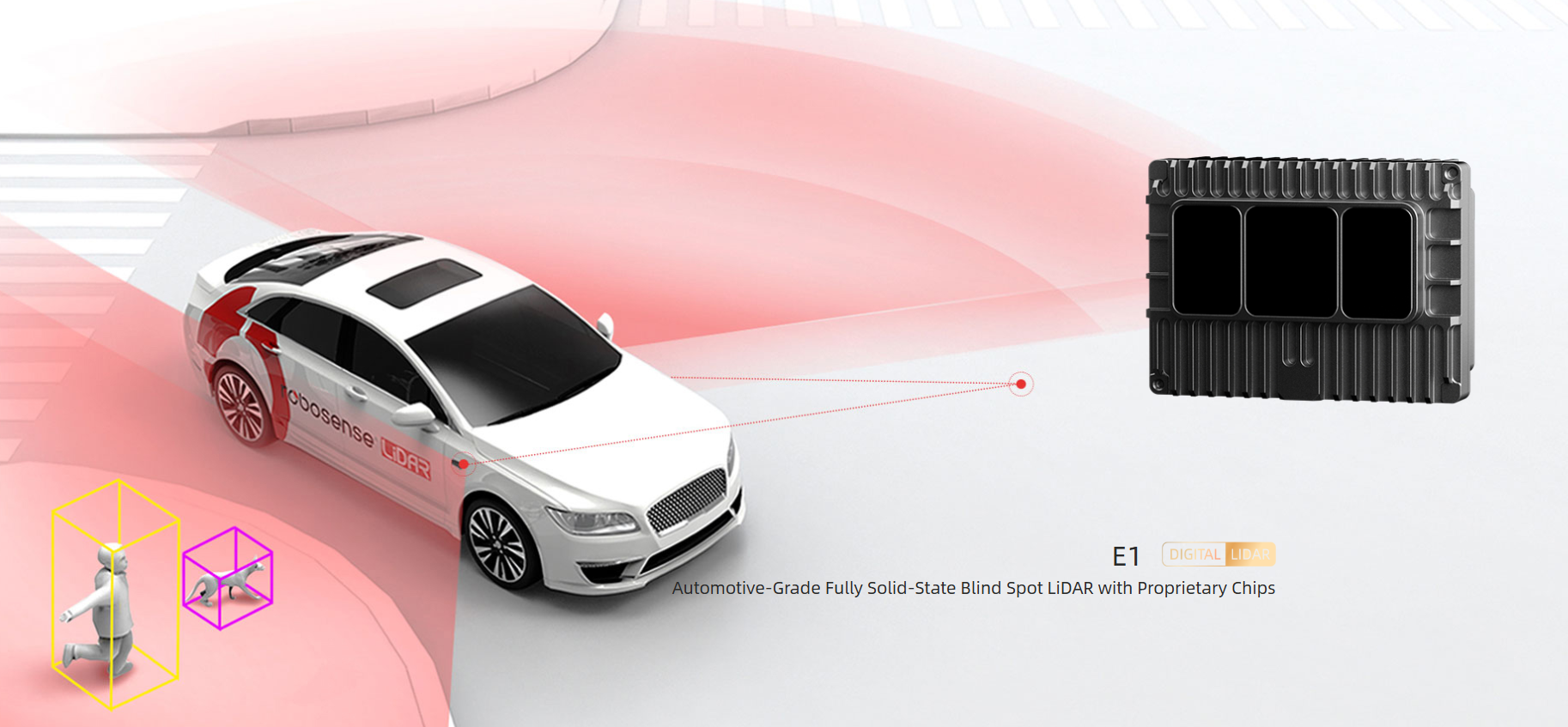
Autonomous driving is moving from a research ambition to a commercial reality — and the automotive lidar sensor sitting at the heart of that shift is evolving just as fast as the vehicles it guides.
The global automotive LiDAR market is projected to surge from $538 million in 2023 to over $3.6 billion by 2029, according to the Yole Group’s Automotive LiDAR 2024 Report. That staggering growth isn’t driven by curiosity — it reflects genuine, mounting pressure from automakers and regulators pushing ADAS systems toward real-world deployment at scale.
Early mechanical scanning LiDAR got the industry to the starting line. Its rotating mirror assemblies offered wide fields of view and respectable range, but the technology carried a fundamental liability: too many moving parts to survive the vibration, temperature swings, and production volumes that mass-market vehicles demand. A sensor that needs recalibration after a pothole is a sensor that belongs in a lab, not on a highway. Reliability gaps at scale ultimately exposed mechanical LiDAR’s ceiling.
Solid-state architecture emerged as the answer. By eliminating rotating components entirely, solid-state designs deliver the durability and consistency that automotive-grade manufacturing requires. Designs such as fully solid-state short-range units illustrate how manufacturers are now engineering perception hardware specifically around vehicle integration constraints — compact, robust, and calibration-stable over the lifetime of the car.
What’s accelerating this transition is the growing complexity of ADAS itself. As systems climb toward Level 3 autonomy — where the vehicle, not the driver, is responsible for monitoring the environment — generalist sensors are no longer enough. The perception stack needs purpose-built hardware tuned for specific detection zones and scenarios. That specialization is precisely where the next generation of LiDAR technology makes its case.
Why Flash LiDAR is the Superior Choice for ADAS
Flash LiDAR redefines what an ADAS LiDAR sensor can do by illuminating the entire scene simultaneously — no scanning, no delays, no compromise.
Traditional mechanical LiDAR spins or tilts to sweep a scene point by point. Flash LiDAR captures everything in a single pulse of light, the way a camera captures a photograph. That fundamental difference has cascading implications for safety-critical applications.
Here’s how the two approaches compare:
- Scene capture method: Mechanical systems scan sequentially, meaning distant points are measured milliseconds apart. Flash LiDAR captures all depth data in one simultaneous burst, as RoboSense demonstrates in their solid-state architecture work.
- Motion blur: Sequential scanning distorts fast-moving objects — a pedestrian mid-stride or a vehicle changing lanes becomes a smeared point cloud. Flash LiDAR eliminates motion blur entirely because the full scene is frozen in a single pulse.
- Moving parts: Mechanical spinners rely on rotating mirrors or prisms that wear over time. Flash LiDAR has no moving components, making it significantly more durable across the vehicle’s lifetime.
- Near-field resolution: Flash systems excel at high-resolution imaging in close proximity — critical for detecting low-profile obstacles, curb edges, and vulnerable road users in tight urban environments.
Reliability is the often-overlooked advantage here. According to Texas Instruments’ introduction to automotive LiDAR, solid-state designs dramatically reduce failure points compared to mechanical alternatives — a meaningful consideration for any system expected to operate across hundreds of thousands of miles.
For engineers evaluating sensor options for next-generation platforms, Flash LiDAR’s combination of speed, durability, and resolution makes a compelling case. That precision becomes even more critical when the environment gets unpredictable — which is exactly what happens at complex intersections.
Solving the Blind Spot Challenge at Complex Intersections
Blind spots remain one of the most dangerous and underserved gaps in modern ADAS — and closing them requires more than incremental sensor improvements.
The numbers make the stakes undeniable. According to the NHTSA, blind spots contribute to approximately 800,000 accidents annually in the United States alone. That’s not a peripheral concern — it’s a systemic failure point that no Level 3 system can afford to ignore.
As outlined earlier, perception quality defines the ceiling for autonomy. Yet many deployed systems still lean heavily on radar and camera arrays to cover lateral zones. In practice, these technologies hit hard limits:
- Low-light degradation: Cameras lose reliability at dusk, in shadows, or under uneven intersection lighting — precisely where cross-traffic risk spikes.
- Radar resolution gaps: Traditional radar detects object presence but struggles to classify cyclists, pedestrians, or slow-moving vehicles with the precision that complex urban intersections demand.
- Dynamic occlusion: At multi-lane crossings, parked trucks or buses routinely block sightlines, creating momentary blind zones that neither radar nor cameras can resolve in time.
A wide-FOV robot LiDAR sensor changes this equation entirely. By generating dense, real-time 3D point clouds across lateral and near-range zones, it delivers consistent object detection regardless of lighting conditions or scene complexity. For vehicles navigating crowded urban environments, this capability shifts blind spot coverage from a vulnerability into a strength.
In this role, blind spot LiDAR functions as the safety net of a Level 3 stack — not replacing forward-facing perception, but ensuring that what happens at the edges of the vehicle’s awareness never becomes a catastrophic surprise.
The question then becomes: which dedicated hardware actually delivers on that promise at production scale? That’s exactly where the next piece of the puzzle comes into focus.
Technical Deep Dive: The RoboSense RS-E1R Benefits
The RS-E1R is purpose-built to close the blind spot gap that no forward-facing smart assisted driving LiDAR can address on its own.
The RS-E1R isn’t an add-on — it’s the dedicated blind spot sensor that completes a full 360-degree perception architecture.
Where previous sections established why flash LiDAR outperforms scanning alternatives at complex intersections, the RS-E1R puts those principles into a production-ready package. Here’s what defines its technical edge:
- Ranging performance: The RS-E1R delivers 30m@10% reflectivity for cross-traffic detection — sufficient to track a cyclist or pedestrian approaching from the side well before they enter the vehicle’s path.
- Flash illumination: Simultaneous full-scene capture eliminates the frame-lag vulnerability that affects spinning sensors in fast-moving intersection scenarios.
- Compact form factor: Designed for flush mounting in door panels or bumper corners, minimizing aerodynamic disruption while maximizing coverage angles.
- Automotive-grade reliability: Built to withstand vibration, thermal cycling, and ingress exposure consistent with Level 3 highway-capable deployment standards.
Integration into a broader sensor suite is straightforward. The RS-E1R operates as a complementary node alongside forward-facing long-range LiDAR and camera arrays — each handling a defined spatial zone rather than competing for the same field of view. This modular logic mirrors best practices outlined in supplier evaluation frameworks for multi-sensor ADAS architectures.
In practice, deploying the RS-E1R fills the final unresolved perception gap in a smart driving stack — the lateral near-field blind spot that forward sensors structurally cannot cover. It’s the last piece that transforms a capable ADAS platform into a genuinely complete one.
That same philosophy of filling perceptual gaps doesn’t stop at automotive — it extends directly into robotics and industrial automation.
From Automotive to Robotics: A Unified Sensing Strategy
The same sensor precision that protects highway drivers is now transforming industrial robotics — and flash lidar is at the center of both revolutions.
This crossover isn’t accidental. Robots operating in smart factories and warehouses face perception challenges that mirror those of autonomous vehicles: fast-moving obstacles, cluttered environments, and the constant need for reliable near-field detection. A robot arm miscalculating a 10-inch gap causes the same category of problem as a vehicle misjudging a curb — and the consequences in high-throughput industrial settings can be equally costly.
Automotive-grade durability is non-negotiable for robotics. Mobile robots endure continuous vibration from conveyor systems, wide temperature swings across loading docks and freezer aisles, and accumulated mechanical stress from constant repositioning. Sensors that aren’t built to automotive standards simply fail faster in these conditions — driving up maintenance costs and downtime.
Key robotics applications where this sensing capability delivers measurable value:
- Smart factory automation — detecting workers and equipment encroaching on robotic work cells in real time
- Autonomous mobile robots (AMRs) — navigating dynamic warehouse floors where inventory layouts shift daily
- Near-field safety zones — identifying objects within 0.5–2 meters that could cause collisions during picking operations
- Loading dock management — sensing trucks and pallets in low-light or dusty environments
For a closer look at how advanced sensing architecture is reshaping robot autonomy in practice, the underlying sensor design principles translate directly across both domains.
Lidarseek’s LiDAR sensor products now reach customers in 26 countries — including the US, EU, and Japan — reflecting how universal the demand for reliable near-field and wide-area sensing has become across both automotive and industrial sectors.
This convergence of automotive and robotics requirements points toward a broader trend: standardized, scalable sensor platforms. And scaling that technology to mass production introduces its own set of engineering demands — which the next section explores directly.
The Path to Mass Adoption: Reliability and Manufacturing
Solid-state LiDAR isn’t just a technical upgrade — it’s the manufacturing breakthrough that makes autonomous driving economically viable at scale.
As covered earlier, sensors like the RS-E1R demonstrate what’s possible when blind spot LiDAR is engineered with durability in mind. But durability alone doesn’t drive adoption. The real unlock is chip-based architecture — moving LiDAR functionality onto silicon the same way cameras and radar already exist on compact, mass-producible modules.
As McKinsey & Company notes, the transition from mechanical to solid-state LiDAR is essential for mass-market automotive adoption due to improved reliability. That reliability argument has a direct manufacturing corollary: fewer moving parts means fewer failure points on the assembly line, tighter quality control, and lower per-unit costs for OEMs managing high-volume production.
Three manufacturing advantages define the solid-state shift:
- Vibration tolerance — No spinning components means the sensor survives the constant micro-vibrations of daily driving without performance degradation
- Temperature resilience — Chip-based designs handle wider thermal ranges, from desert heat to winter cold, without recalibration
- Simplified integration — Smaller form factors slot into existing vehicle architectures with less custom engineering overhead
According to Texas Instruments’ automotive LiDAR overview, solid-state designs based on photonic integration significantly reduce the component count compared to mechanical alternatives — a critical factor when automakers are negotiating per-sensor pricing across millions of units.
The RoboSense EM4’s “golden combination” pairing with solid-state blind-spot sensors illustrates exactly this trend in practice — modular, scalable, and built for volume.
This vehicle-level sensing maturity sets the stage for an even larger opportunity: deploying LiDAR intelligence beyond the car itself, into the infrastructure around it.
Integrating LiDAR into Smart Cities and Infrastructure
LiDAR’s influence extends far beyond individual vehicles — it’s becoming the sensory backbone of entire urban ecosystems designed to make autonomous driving safer at every level.
Smart infrastructure powered by LiDAR creates a feedback loop that no single onboard sensor can replicate alone. When sensors are embedded in traffic signals, intersections, and roadway monitoring systems, they generate real-time 3D data that benefits every vehicle passing through — not just those equipped with advanced onboard systems. A connected intersection can detect a pedestrian stepping off a sidewalk before any approaching vehicle’s sensors even register the movement.
V2X (Vehicle-to-Everything) communication takes this further. When LiDAR-equipped infrastructure shares data with vehicles in real time, the result is a layered sensing environment where gaps in onboard perception are filled by the city itself. This sensor fusion approach — combining vehicle data with infrastructure data — dramatically reduces the probability of dangerous blind spots that even the best onboard systems can’t fully eliminate. According to automotive LiDAR research from Texas Instruments, sensor fusion remains one of the most effective strategies for achieving robust environmental awareness.
The vision extends to smart factories and surveying operations as well. Lidarseek is dedicated to enabling this transformation across smart cities, surveying environments, and industrial automation — providing precision sensing solutions that serve both mobile platforms and fixed infrastructure alike. High-channel LiDAR systems built for dense environments are equally at home mapping a warehouse floor as they are monitoring a busy urban corridor.
The infrastructure benefits in summary:
- Traffic flow optimization through real-time 3D object detection
- Pedestrian and cyclist safety via fixed-point monitoring
- Industrial precision in factory automation and large-scale surveying
Understanding how LiDAR fits into this broader ecosystem helps clarify exactly what to look for when selecting the right sensor for any autonomous application — which makes the key selection criteria worth examining closely.
What You Need to Know: Key Takeaways on LiDAR Selection
Solid-state Flash LiDAR has emerged as the defining sensor technology separating capable Level 2+ systems from genuinely safe Level 3 autonomous vehicles.
As the previous sections have established — from manufacturing scalability to smart city integration — the value of LiDAR is only as strong as the specific sensor choices made at the vehicle level. Here’s what matters most:
- Solid-state Flash LiDAR sets the safety standard. Without moving parts, these sensors deliver instantaneous, full-field illumination of the near-field environment — exactly where collision risk is highest. Solid-state designs are best suited to withstand the rigorous vibrations of daily driving, making them the only realistic choice for production vehicles.
- Blind spot detection is the critical gap in Level 2+ systems. Cameras and radar alone cannot resolve the spatial precision needed in adjacent lanes or tight urban corridors. This is the vulnerability that puts lives at risk today.
- No moving parts is non-negotiable. In practice, automotive-grade sensors must endure years of road vibration, temperature swings, and daily stress. Mechanical LiDAR simply cannot meet that durability bar at scale.
- The RoboSense RS-E1R represents the current cutting edge. Engineered specifically for blind spot coverage, it combines solid-state reliability with the near-field resolution that Level 3 autonomy demands. For those curious about how solid-state sensors perform across robotic platforms, the same core advantages apply beyond the automotive context.
The bottom line: blind spot LiDAR isn’t optional equipment — it’s the final piece that makes autonomous driving trustworthy.
Choosing the right sensor requires understanding the technical distinctions that separate adequate from exceptional. The questions that come up most often in that process deserve direct, clear answers.
Frequently Asked Questions About Automotive LiDAR
Flash LiDAR is rapidly closing the knowledge gap between what autonomous driving systems can do and what drivers actually understand about the technology keeping them safe.
What is the difference between Flash LiDAR and mechanical LiDAR? Mechanical LiDAR uses rotating components to scan the environment, producing point clouds through physical movement. Flash LiDAR illuminates the entire scene simultaneously with a single pulse — no moving parts, faster capture, and dramatically better durability for production vehicles. As Texas Instruments explains, this architectural shift directly improves reliability in real-world automotive deployments.
How does LiDAR improve ADAS in low-light conditions? Cameras degrade significantly at night or in heavy rain. LiDAR operates independently of ambient light, using active infrared pulses to build precise 3D depth maps regardless of lighting conditions. According to EPIC Photonics, this makes LiDAR an essential complement — not a replacement — to camera-based perception in any serious ADAS stack.
Can the RS-E1R be used for non-automotive robotics? Yes. Flash LiDAR’s high-resolution near-field imaging makes it well-suited for industrial robots, warehouse automation, and service robotics where close-range obstacle detection is critical. For applications requiring longer detection ranges — such as outdoor navigation — multi-line rotating sensors may offer a better fit alongside solid-state units.
Why is blind spot LiDAR necessary if I already have cameras? Cameras cannot reliably measure depth, especially in cut-in scenarios at highway speeds. A camera sees an object; LiDAR knows exactly how far away it is. That distinction is the difference between a warning and a collision avoided.
Flash LiDAR isn’t just the final piece of the Level 3 puzzle — it’s the piece that makes every other sensor more trustworthy. The road to genuinely hands-off autonomy runs directly through it.









